
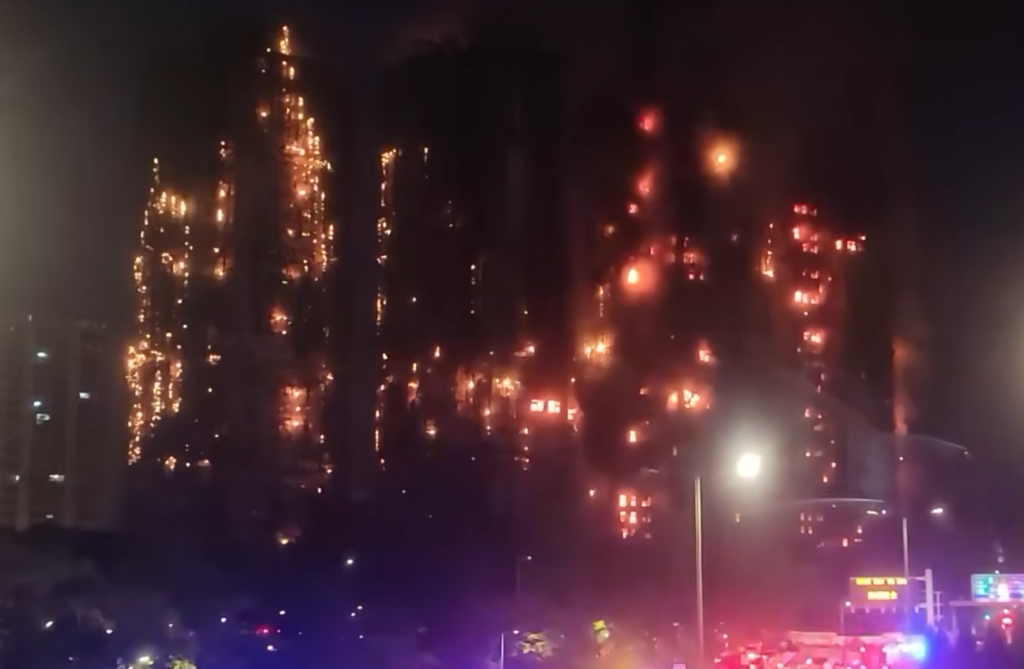
A fatal fire coupled with an explosion at a residential high-rise building in Shenzhen, China, has led to the death of one person, confirmed reports show. The event took place on December 11, 2024, and has sparked renewed scrutiny over safety protocols within the city’s densely packed residential zones.
Shenzhen, a special economic zone situated along the eastern bank of the Pearl River estuary, is recognized for its swift expansion and modernization. As of 2020, the city housed 17.5 million residents, making it one of China’s most populous urban centers. Its skyline is defined by tall skyscrapers and apartment towers that accommodate a broad and varied populace.
The city’s administrative limits generally align with those of Bao’an County, covering an extensive and intricate mix of residential, business, and industrial districts. While Shenzhen has emerged as a leading global city, with a gross domestic product that has recently exceeded those of Hong Kong and Singapore, it continues to grapple with issues in urban planning, safety, and environmental sustainability.
The Port of Shenzhen, ranked as the fourth-busiest container port worldwide, serves as a key economic engine, producing substantial revenue and job opportunities. Yet, its operations also contribute to environmental strains, including air and water pollution, noise, and waste management difficulties. As the city advances, officials and stakeholders are urged to emphasize environmental sustainability and safety to ensure that economic gains are broadly distributed while reducing hazards and adverse effects on the community.
Shenzhen’s position on the central coast of Guangdong, adjacent to Hong Kong to the south, Dongguan to the north, Huizhou to the northeast, and Macau to the southwest, establishes it as a vital trade and commerce hub. This proximity to major cities offers chances for joint efforts and knowledge exchange on sustainability and safety matters.
In the wake of the fatal incident, residents and policymakers are advocating for greater funding in safety measures and emergency response capabilities. This involves upgrading fire safety equipment, enhancing training for emergency personnel, and enforcing stricter building codes and inspection routines. By focusing on safety and sustainability, Shenzhen can maintain its status as a global metropolis while safeguarding its residents and environment.
Adopting renewable energy sources like solar and wind power could further support a cleaner urban setting, decreasing dependence on fossil fuels and promoting energy security and cost efficiency. Looking ahead, Shenzhen has the potential to become a leader in environmental sustainability and safety, both domestically and internationally.
By utilizing its economic and technological strengths, the city can devise creative solutions to urban environmental problems, such as green buildings, sustainable transit, and waste reduction initiatives. As growth continues, it remains crucial for policymakers and stakeholders to prioritize the welfare of people and the planet, striving for a cleaner, safer, and more sustainable urban future. With its robust economy, varied population, and dedication to innovation, Shenzhen is well-placed to realize this goal and set an example for sustainable urban development in the 21st century.




