
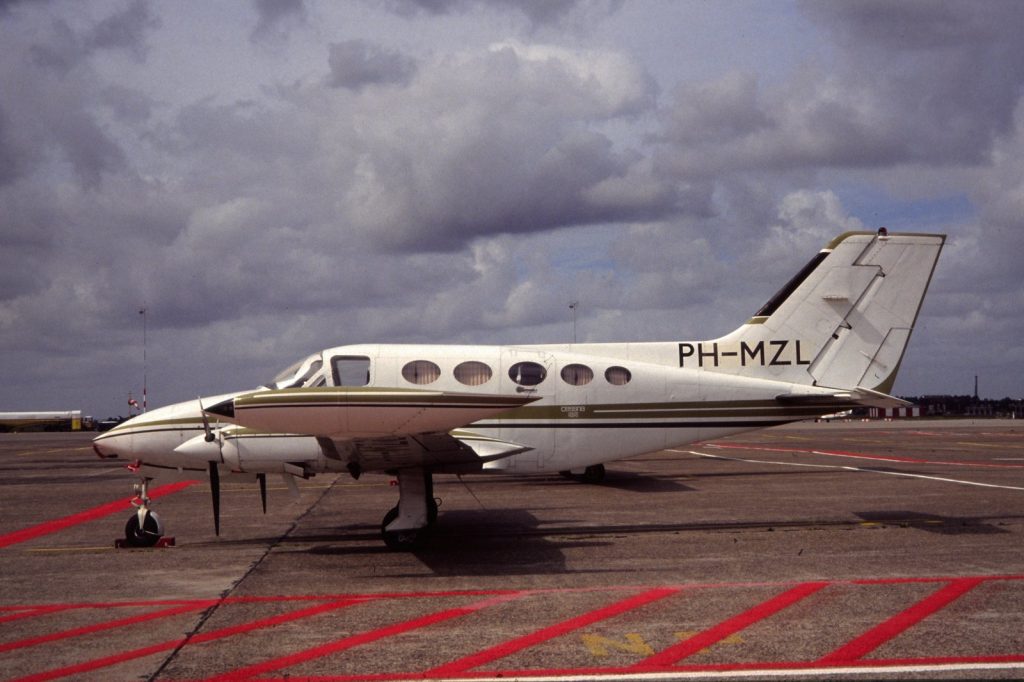
San Diego, California, June 8, 2025 — infopulsetoday.com — Six people are dead after a Cessna 414 crashed into the ocean near Point Loma, California, on June 8, 2025. The twin-engine aircraft had just taken off from San Diego International Airport. All aboard were lost.
The crash happened fast. The plane, a pressurized light transport that first flew in 1968, went down in the water off the coast.
San Diego International — also called Lindbergh Field — sits right on the bay. Its runways point at the ocean. Pilots who fly out of there deal with a tight urban approach and a quick climb over water.
One mistake, one mechanical failure, one bad gust, and there is no runway to come back to. There is only the Pacific.
That geography is part of what makes this crash a hard one to understand. The Cessna 414 has been flying for decades. An improved version, the 414A Chancellor, came out in 1978.
Operators have trusted these planes. They are not experimental or rare. They are workhorses.
But workhorses break. They age.
They require meticulous maintenance, and every part has a limit. Investigators will look hard at that maintenance log. Weather will get scrutiny too.
Coastal San Diego in early June can be socked in by marine layer. Visibility can drop fast.
Or it can be clear and calm. The report does not say what the conditions were at the time of takeoff. But the NTSB will pull the radar data.
They will pull the air traffic control tapes. They will interview anyone who saw the plane go down. Pilot experience is another piece of the puzzle.
The report names no pilot. It gives no hours, no certificates.
That information will come out, and it will matter. A tired pilot, an undertrained pilot, a pilot pushing a plane past its limits — any of those could be a factor. Or none of them.
The plane could have lost an engine on climbout. A fire could have started.
A control cable could have snapped. What is at stake here is straightforward. Six families will never see their people again.
That is the first and worst stake. But beyond that, this crash puts pressure on the whole system that keeps small planes in the air. The Cessna 414 is not a new plane.
The oldest ones are approaching 60 years in service. Parts get harder to find.
Mechanics who know them get rarer. The FAA and the NTSB have to decide whether the fleet is still safe enough, or whether something needs to change. There is also the question of what happens at San Diego International.
It is a busy airport in a tight space. A crash like this, close to shore, raises the risk profile for every flight out of there.
It does not mean the airport is unsafe. But it means the margin for error is thin. The investigation will have to tell the public whether that margin was respected on June 8.
This is not a mystery novel. It is a wreckage scattered on the ocean floor. The NTSB will piece it together, but that takes time.
In the meantime, six people are gone. The community around Point Loma felt the shock.
The aviation community felt it too. A plane that many people have flown in, that many people have maintained and trusted, ended in the water. That fact alone demands answers.




