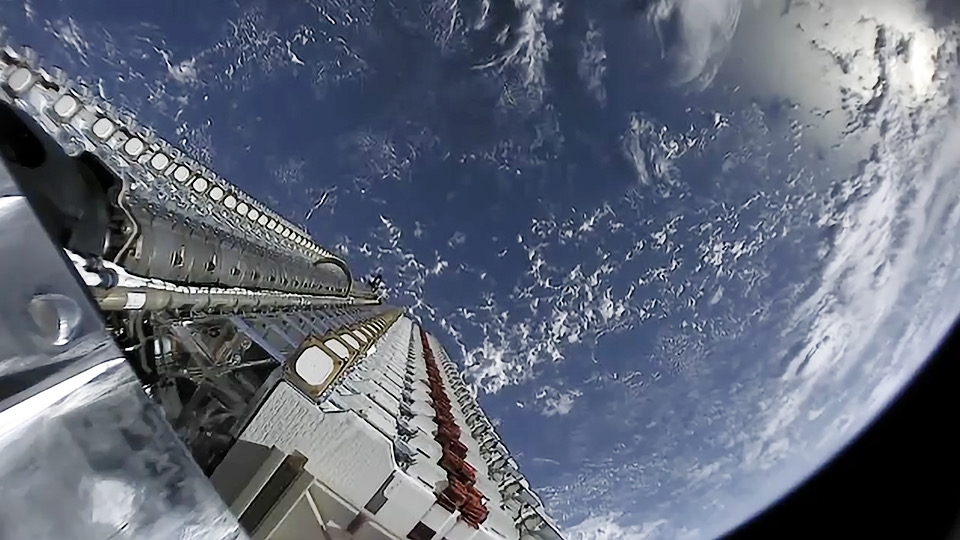
The latest milestone in the satellite internet race came from the Federal Communications Commission on a Friday in January 2026. The agency let SpaceX fly another 7,500 second-generation Starlink satellites, taking its authorized fleet to 15,000, while explicitly holding back 14,988 more proposed craft for later review. SpaceX already ran about 9,400 satellites at that point, and the new batch is meant to carry direct-to-cell phone service outside the United States and broadband rates reaching 1 gigabit per second.
The FCC chair, Brendan Carr, framed the order plainly: “This FCC authorization is a game-changer for enabling next-generation services,” he said. The agency also cleared the satellites to work across five frequencies and waived earlier rules against overlapping coverage.
The decision lands on a timeline the two rivals have been building for seven years, and the deadlines now run deep into the next decade.
2019: The 42,000-Satellite Plan
The race began on paper. In October 2019, Business Insider reported that SpaceX had asked the International Telecommunication Union for permission to fly 30,000 additional Starlink satellites, on top of nearly 12,000 already sought from the FCC, a notional maximum of 42,000 craft. Amazon’s answer was the Kuiper System, 3,236 satellites of its own. Elon Musk sized the economics modestly at the time: “For the system to be economically viable, it’s really on the order of 1,000 satellites”. Gwynne Shotwell, his president, had estimated the build at $10 billion or more, while Musk floated revenue of perhaps $30 billion to $50 billion a year.
The Collision Question
Early findings from the first 60-satellite batch in May 2019 were sobering in a small way: three stopped working after deployment. Musk had warned beforehand that “There is a lot of new technology here, so it’s possible that some of these satellites may not work,”. The stakes scale with the fleet. Filings by Amazon, detailed by IEEE Spectrum, put numbers on it: if 5% of a large constellation fails, the collision risk reaches roughly 6%, a level the company called “well beyond what Amazon would view as expected or acceptable,”. Debris researcher John Crassidis of the University at Buffalo went further. “At a 6% chance of collision, astronauts would be put into an escape hatch to possibly escape,” he said. The FCC began tightening collision rules, first rewritten since 2004, toward a fleet-wide lifetime risk of 0.1%.
Deadlines Deep Into the Next Decade
Under the January 2026 order, SpaceX must launch half its authorized Gen2 craft and have them operating by December 1, 2028, and the rest by December 2031, with first-generation deployment due by late November 2027. The agency wrote that it acted “even as the Gen2 Starlink Upgrade satellites remain untested on orbit” , deferring satellites planned above 600 kilometers. Amazon’s side of the race has its own clocks, and Carr’s predecessor, Jessica Rosenworcel, had urged more competition back in 2024, noting Starlink then accounted for almost two-thirds of every active satellite in orbit.
Space is also being rearranged in the meantime. Starlink said it would pull its roughly 550-kilometre orbit down to 480 over the course of 2026 for safety, and in December it disclosed a rare orbital accident: one satellite broke up at 418 kilometres, leaving a “small” amount of debris. For all the billions on the line, the encouraging part is that both companies are being forced to plan, publicly, around failure.
Sources
- SpaceX Wants to Launch 42,000 Starlink Satellites Over the Next Decade – Business Insider
- FCC Greenlights SpaceX's Plan for 7,500 New Starlink Satellites to Enhance Global Internet Services, ETManufacturing