
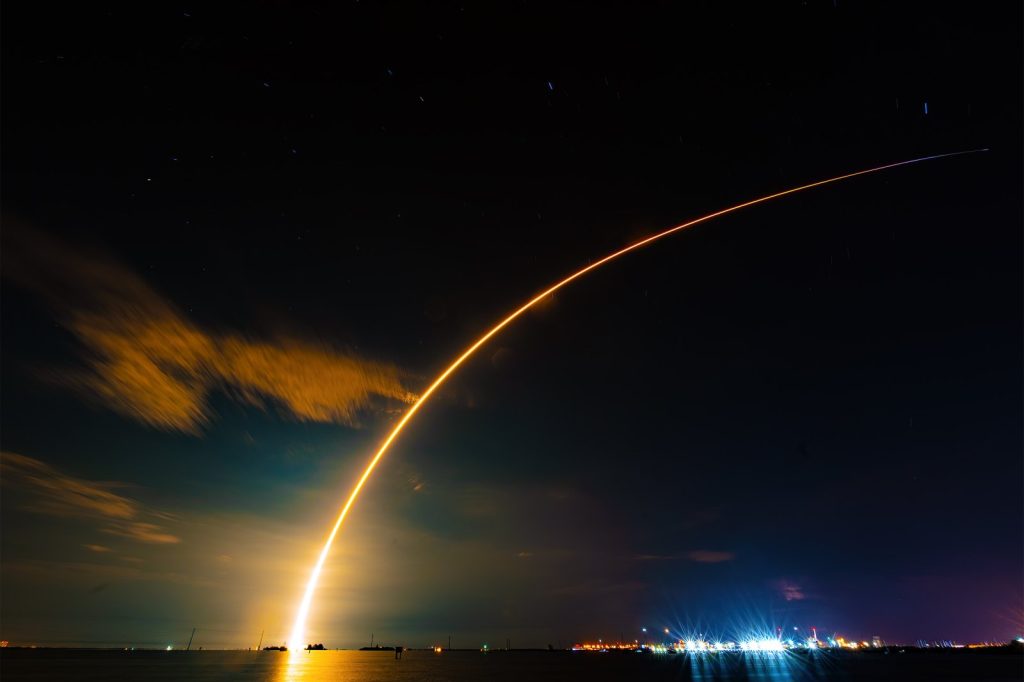
On July 4, 2019, Amazon filed a request with the Federal Communications Commission to launch 3,236 communications satellites. The target was clear. Elon Musk’s SpaceX had already put up its first batch of 60 spacecraft that May, and Amazon wanted a share of the same low orbits. Bloomberg’s Todd Shields reported the filing the next day.
Two fleets, one sky
The numbers were lopsided from the start. The FCC had by then approved nearly 13,000 low-Earth orbit satellites, and 11,943 of them belonged to SpaceX. Amazon, under the name Kuiper, said its satellites would fly at about 370 to 390 miles (590 to 630 kilometers) up. Jeff Bezos had said a month earlier that the project would cost “multiple billions of dollars”. Kuiper is separate from his rocket company, Blue Origin.
Others were circling too. Bloomberg named London-based OneWeb, backed by SoftBank and Richard Branson’s Virgin Group, and LeoSat Enterprises of Washington, which had partnered with Thales Alenia Space. Boeing had also sent the FCC paperwork for its own constellation.
Why so many satellites
Satellites at that height have to keep moving. Bloomberg explained that low-Earth orbit runs from about 180 to 2,000 kilometers, and a satellite can finish a lap in as little as 90 minutes. As one slips toward the horizon, the next takes over the signal. Continuous coverage needs a lot of them.
Who both companies said they wanted to reach
For families and businesses without a decent connection, the pitch was the same on both sides. Amazon told the FCC that Kuiper would bring broadband to tens of millions of consumers and businesses that lack adequate access. In April it had put it this way: “This is a long-term project that envisions serving tens of millions of people who lack basic access to broadband internet.” The application also promised fixed service “to rural and hard-to-reach areas” and mobile connectivity for aircraft, ships and land vehicles. It said the system would help mobile network operators expand their wireless services.
SpaceX had said its coverage would reach customers in the U.S. and around the world, “including areas underserved or currently unserved by existing networks.” In mid-June, Musk narrowed the picture. The broadband plan’s main value, he said, was reaching “rural or semirural areas, places that don’t have connectivity right now.”
The gap is real. Amazon’s application put the number of people worldwide without fast, reliable broadband at 3.8 billion. In the United States, an FCC report from May found that more than 26% of rural residents lacked terrestrial broadband in 2017, and 33 million Americans had no access to speedy mobile service. Industry experts estimated that only 10% to 20% of the Earth’s land area is covered by cell towers.




