
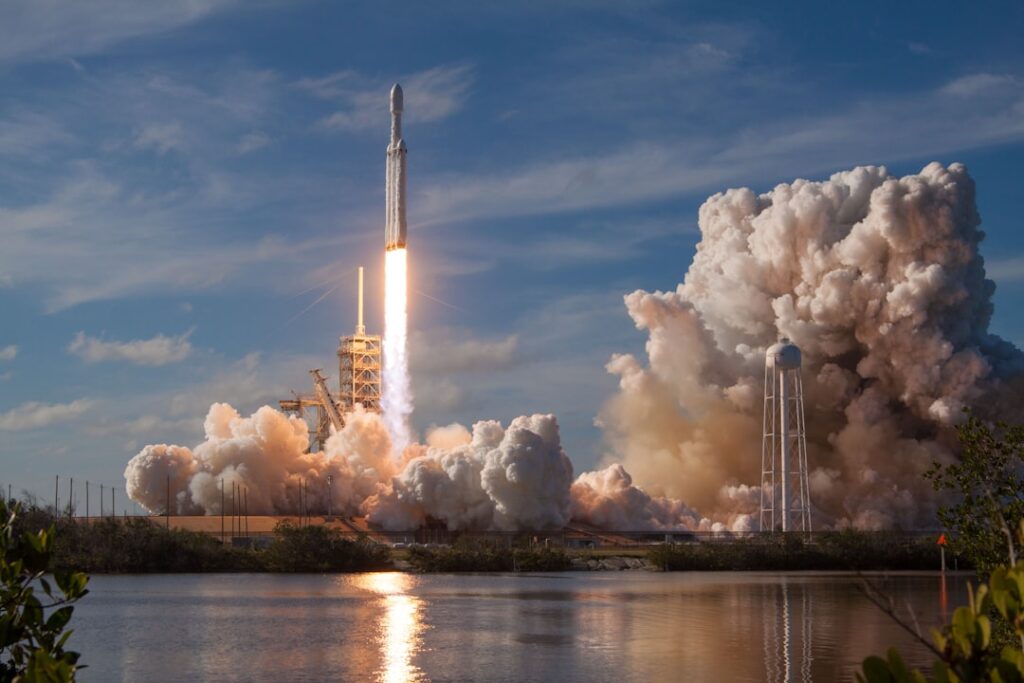
Sixteen million pounds of thrust. That is what the Super Heavy booster’s 33 Raptor engines produce, and it was the figure behind SpaceX’s 11th Starship test flight on October 13, flown from the company’s Starbase site in South Texas. The 403-foot-tall (124-meter) stack flew a clean mission. Booster and upper stage both came back for precise splashdowns.
It was also the last outing for the Version 2 hardware. SpaceX said its attention now moves to Version 3, a taller and stronger design that the company sees as the point where Starship stops being an experiment and starts preparing for real missions to the Moon and Mars.
How the numbers stack up
The thrust figure puts Starship well ahead of the rockets it is measured against. NASA’s Space Launch System, which flew Artemis I, makes around 8.8 million pounds. Saturn V, the Apollo-era launcher, made 7.6 million pounds.
Payload tells a similar story. SpaceX is aiming for up to 100 metric tons to low Earth orbit with the reusable version and as much as 200 tons if the vehicle is flown expendable. Saturn V’s record was 140 tons, and the SLS is credited with 95 to 105 tons. Falcon Heavy, today’s operational record-holder, carries 63.8 tons.
Cost is the real divide. Each SLS launch costs billions and burns a whole new vehicle. Starship’s two stages are built to fly back, be caught by the “chopstick arms” on the launch tower, and go up again. Falcon 9 and Falcon Heavy proved the approach at smaller scale.
A mixed record, and what V3 changes
Eleven flights have produced six successes and five failures. The program dates to 2012, when Elon Musk announced plans for a fully reusable system far beyond Falcon 9. Version 2 stood 52 meters tall and carried more propellant and third-generation Raptor engines, along with a new forward flap, a thinner hull and a vacuum-jacketed propellant feed system.
Version 3 adds about five feet of height and an overhauled propulsion system built around Raptor 3, which is more powerful and efficient. Space.com reported that it will also bring energy-storage upgrades, new avionics and external docking adapters so ships can pass propellant to each other in orbit. The booster is being reworked too: a redesigned fuel-transfer tube, integrated hot-stage separation, and three grid fins in place of four. The new fins are 50 percent larger and stronger.
The tower arms have caught the Super Heavy booster three times. The ship itself has yet to be caught, and that is a goal for later tests.
Refueling and the lunar lander role
A trip to Mars needs far more fuel than one vehicle can carry up. SpaceX’s plan is to send tanker Starships to top up a main ship in orbit before departure. The company intends to demonstrate that propellant transfer next year.
NASA has a stake as well. Starship is slated to serve as the lander that takes astronauts from lunar orbit to the Moon’s surface and back, and the agency’s Artemis III, the first crewed landing since Apollo, is targeted for 2027.
On the ground, SpaceX is upgrading Pad 1 with a new flame-trench system, an orbital launch mount and reinforced tower arms. Test operations will shift to Pad 2, which is nearing completion, while that work goes on. A still larger Version 4, at 466 feet tall with 42 Raptor engines, is expected to debut around 2027.
Remaining hurdles include heat-shield reliability, orbital docking and quick turnaround between flights.




