
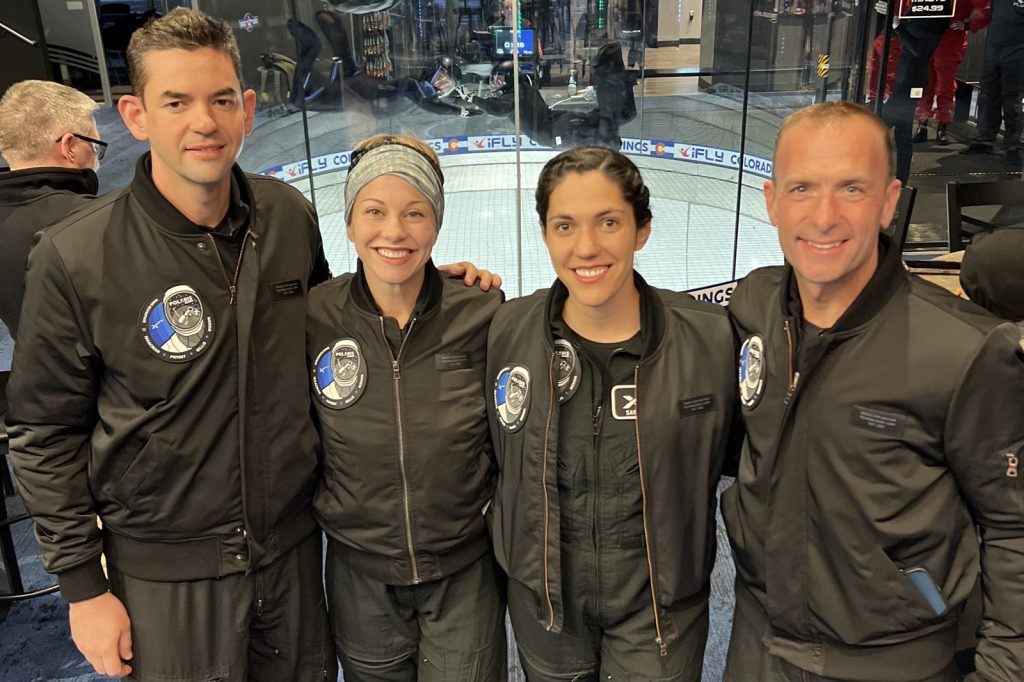
After a five‑day flight, the SpaceX‑built Polaris Dawn capsule has touched down safely on Earth, marking the end of a mission that was deliberately designed as a stress test for both hardware and the commercial space model that backs it. The vehicle’s successful re‑entry is the headline, but the real significance now lies in the extensive analysis that will follow. During its brief orbit the spacecraft was exposed to conditions that would normally be fatal to most human‑rated vehicles: extreme temperature swings, heightened radiation levels and the vacuum of space.
SpaceX engineers have returned with a hard drive full of telemetry captured throughout the flight. The next weeks will see them pore over propulsion burn logs, life‑support system margins and the performance of communications equipment while the capsule was on the far side of its orbital track, out of direct contact with ground stations.
This post‑flight work is far from glamorous, yet it is decisive. A single component that held up this time but showed signs of hidden stress—such as a micro‑fracture in a weld, a marginal seal, or a power subsystem running hotter than expected—could force a rethink of timelines, raise insurance costs and shake investor confidence. Conversely, clean data would accelerate plans for longer missions, orbital habitats and lunar ventures, reinforcing SpaceX’s claim that its commercial spacecraft can be relied upon.
Polaris Dawn was not a government‑funded experiment with an indefinite safety net; it was a privately financed test driven by a billionaire client’s schedule. The capsule serves as a prototype for a future commercial model, so its performance sends a clear financial signal.
A successful five‑day “up‑and‑down” loop demonstrates that the vehicle’s systems are repeatable rather than one‑off achievements, a crucial benchmark for any company hoping to run routine private flights. Industry observers and space enthusiasts watched the re‑entry closely, not merely for spectacle but to gauge the reliability of the hardware. In private spaceflight, the line between success and failure often hinges on a single data point—a parachute that fails to deploy, a heat shield that cracks. Polaris Dawn avoided those pitfalls, but engineers will still scrutinize how close the margins were to those failure thresholds.
The capsule’s ability to endure harsh thermal and radiation environments is evident, yet the question now is how many similar cycles it can survive before a critical component reaches the end of its service life. Answering that question rests entirely on the data collected during this inaugural mission.
In short, the splash‑down is not the conclusion but the opening act of a rigorous, data‑driven review. The findings will shape the pace at which private operators can expand beyond short orbital hops to more ambitious deep‑space objectives. The future of commercial spaceflight will be measured not by the excitement of a launch, but by the reliability metrics unearthed in the months ahead.




