
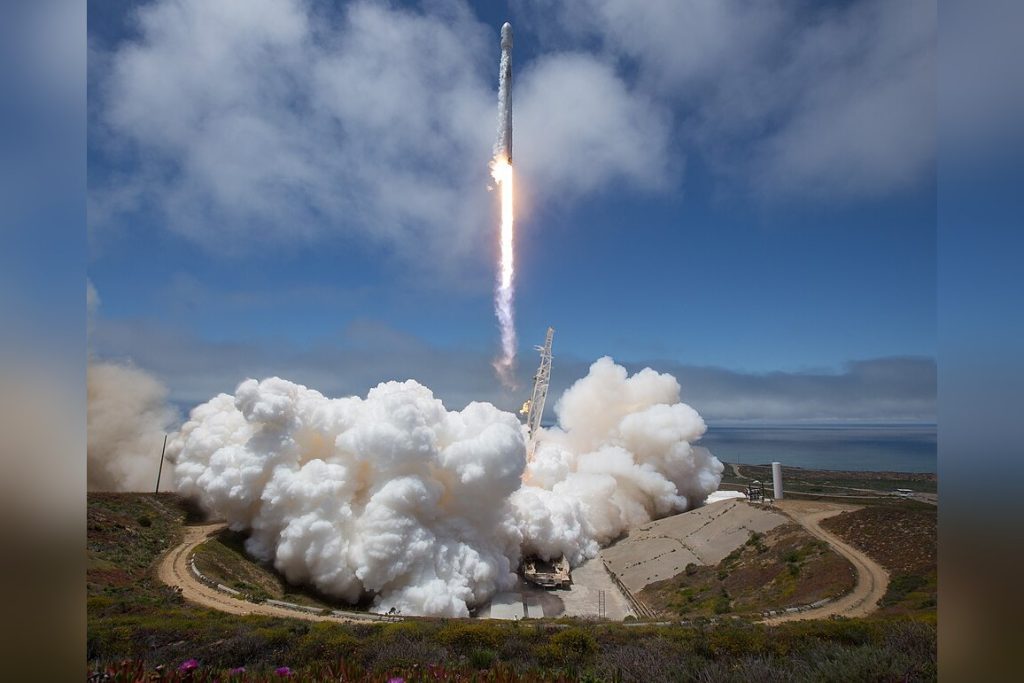
The vision of a global satellite internet network, first seriously studied by the U.S. government in the mid-1980s, has evolved into a massive operational system whose end-of-life procedures are now a routine but closely monitored aspect of spaceflight. SpaceX, the company that revived and realized that vision, has deorbited more than 500 Starlink satellites since the constellation’s first launches in 2019, with the pace accelerating as newer models replace older ones.
Each deorbit is a controlled burn-up designed to leave no debris on the ground, but the sheer scale of the operation means that design choices now influence both space traffic management and upper atmospheric chemistry.
Decades of Development Come to Fruition
The concept of low Earth orbit satellite constellations for low-latency communications dates to the mid-1980s, when the U.S. Strategic Defense Initiative explored such networks for missile defense and recognized their potential for rapid data relay. Commercial ventures followed in the 1990s, including Celestri, Iridium, and Globalstar, each launching smaller LEO systems. Teledesic, a more ambitious proposal, envisioned a broadband network of hundreds of satellites.
Most of these early efforts either failed or scaled back after encountering financing challenges, leaving the concept largely dormant until the mid-2010s. SpaceX revived the idea in 2014, when Elon Musk publicly described a global broadband network built on thousands of small satellites.
Development accelerated, culminating in the first operational Starlink launches in 2019. Starlink is designed to deliver high-speed, low-latency internet connectivity to users worldwide, including remote and underserved regions. The constellation operates in low Earth orbit, with satellites relaying signals between ground stations and user terminals.
As the network has grown, it has also become a tool for government and military communications. Its rapid expansion has raised concerns about orbital congestion, interference with astronomical observations, and the long-term sustainability of LEO operations.
Precision Controlled Reentry
When a Starlink satellite reaches the end of its useful life, SpaceX commands it to fire its ion thrusters and lower its orbit, initiating a controlled descent into Earth’s atmosphere. Once atmospheric drag takes over, the satellite’s trajectory becomes a one-way descent.
Its speed and angle of entry are carefully calculated to ensure complete burn-up over open ocean. During reentry, each satellite travels at roughly 17,500 miles per hour, generating intense friction with air molecules that heats the vehicle to temperatures exceeding 3,000 degrees Fahrenheit. At those extremes, the satellite’s aluminum structure, electronics, and solar panels melt and vaporize, breaking into tiny particles.
The burn-up altitude is typically between 50 and 80 kilometers (about 31 to 50 miles) above the surface, placing the disintegration in the mesosphere and lower thermosphere. SpaceX has stated that the satellites are fully demisable, meaning they are designed to disintegrate completely during reentry.
Any fragments that might survive the heat are intended to fall into remote ocean areas. The company’s design philosophy aims to ensure that no debris reaches the ground.
Atmospheric and Orbital Implications
Each satellite contains about 1,000 pounds of aluminum. As the spacecraft burns up, that aluminum oxidizes and forms aluminum oxide particles in the upper atmosphere.
The altitude range where these burn-ups occur — between 31 and 50 miles up — places the debris in a region of the atmosphere that is already subject to natural processes. Nonetheless, the rapidly growing number of deorbits has made the practice a focus of scientific and regulatory attention. The constellation has expanded quickly since 2019, and as newer satellite models enter service, older versions are retired in increasing numbers.
The deorbit pace has picked up accordingly, with SpaceX commanding more frequent controlled reentries. The controlled reentry process begins when SpaceX commands a satellite to fire its ion thrusters, lowering its orbit until atmospheric drag takes over.
At that point, the satellite’s path becomes a one-way descent, with its speed and angle precisely managed to ensure disintegration over open water. This method aims to minimize debris risks, but the sheer volume of the constellation — and the cumulative effect of hundreds of burn-ups — means that SpaceX’s design choices now influence both space traffic and atmospheric science. The company has now deorbited over 500 satellites since 2019, a milestone that underscores the operational maturity of the network and the routine nature of its end-of-life procedures.
As Starlink continues to expand, the number of controlled reentries is expected to climb, making the careful management of satellite retirement a permanent feature of the LEO environment.
{“@context”: “https://schema.org”, “@type”: “NewsArticle”, “headline”: “SpaceX deorbits over 500 Starlink satellites safely”, “description”: “HAWTHORNE, California, July 7 — The vision of a global satellite internet network, first seriously studied by the U.S. government in the mid-1980s, has evolved…”, “datePublished”: “2026-07-07T09:30:00+00:00”, “author”: {“@type”: “Person”, “name”: “Isabella Moore”}, “publisher”: {“@type”: “Organization”, “name”: “InfoPulse Today”, “url”: “https://newsfeed.infopulsetoday.com/”}}




