
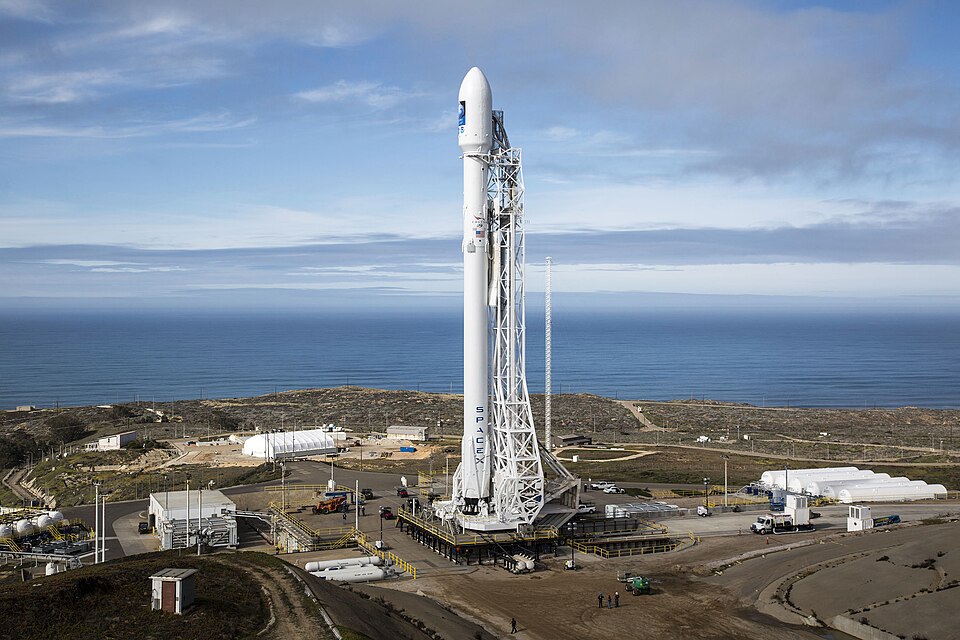
CAPE CANAVERAL, July 9 — SpaceX has quietly built a business that is far more than just rocket launches. The company, valued at $180 billion, now operates three distinct revenue engines: its workhorse launch services, the Dragon spacecraft for crew and cargo, and the rapidly expanding Starlink satellite internet network. Think of it like a transportation company that started with long-haul trucking and then added a parcel delivery service and a global broadband division.
Each piece feeds the others, but they also stand on their own financially. Here’s what that means in plain terms: SpaceX isn’t putting all its eggs in one rocket-shaped basket.
The Launch Workhorse
The foundation of the business remains the Falcon 9 rocket. This is the vehicle that has fundamentally changed the economics of spaceflight. The Falcon 9 has now completed over 300 successful launches, and here is the key statistic that explains the cost savings: each booster can be reused up to 15 flights.
For a company that used to throw away multi-million-dollar hardware after a single flight, that reuse rate is the equivalent of an airline being able to fly the same plane thousands of times without buying a new one. The practical upshot is that SpaceX can offer competitive pricing for commercial satellite operators and government agencies alike.
Dragon and the Government Checkbook
Then there is the Dragon spacecraft, which has flown over 40 missions. This includes both cargo resupply runs to the International Space Station and crewed flights for NASA and private astronauts. The government contracts here are substantial.
NASA’s Commercial Crew Program alone is worth $2.6 billion. That is a reliable, multi-year revenue stream that gives the company a financial floor.
It also serves as a powerful credibility marker — when NASA trusts you to fly its astronauts, it signals to other customers that the hardware is proven.
The Starlink Wildcard
The most transformative segment, however, may be Starlink. As of 2024, the satellite internet service already has over 5,000 satellites in low Earth orbit and serves more than 2 million subscribers globally. It is generating an estimated $4 billion in annual revenue.
For context, that is a subscription business that did not exist a few years ago and is now pulling in billions. The so-what for ordinary people is straightforward: Starlink is the part of SpaceX most likely to touch your daily life, whether you live in a rural area with no broadband options or you are traveling in an RV.
It is also the segment that provides the company with recurring, predictable cash flow — a very different financial profile from the lump-sum, project-based revenue of a satellite launch. Taken together, these three segments — launch services, Dragon missions, and Starlink subscriptions — explain the company’s $180 billion valuation. The revenue model is diversified, mixing large government contracts with commercial launch fees and consumer subscription payments.
It is no longer a startup betting on a single rocket; it is a mature, multi-line business. What to watch next: how Starlink continues to scale its subscriber base and whether the company can maintain its launch cadence as the Falcon 9 fleet ages.
The financial health of SpaceX now depends on keeping all three engines firing at once.
{“@context”: “https://schema.org”, “@type”: “NewsArticle”, “headline”: “SpaceX’s Revenue Boosters: Falcon Rockets, Dragon Spacecraft & Starlink”, “description”: “CAPE CANAVERAL, July 9 — SpaceX has quietly built a business that is far more than just rocket launches. The company, valued at $180 billion,…”, “datePublished”: “2026-07-09T09:30:00+00:00”, “author”: {“@type”: “Person”, “name”: “Erika Johnson”}, “publisher”: {“@type”: “Organization”, “name”: “InfoPulse Today”, “url”: “https://newsfeed.2bme.xyz/”}}




