
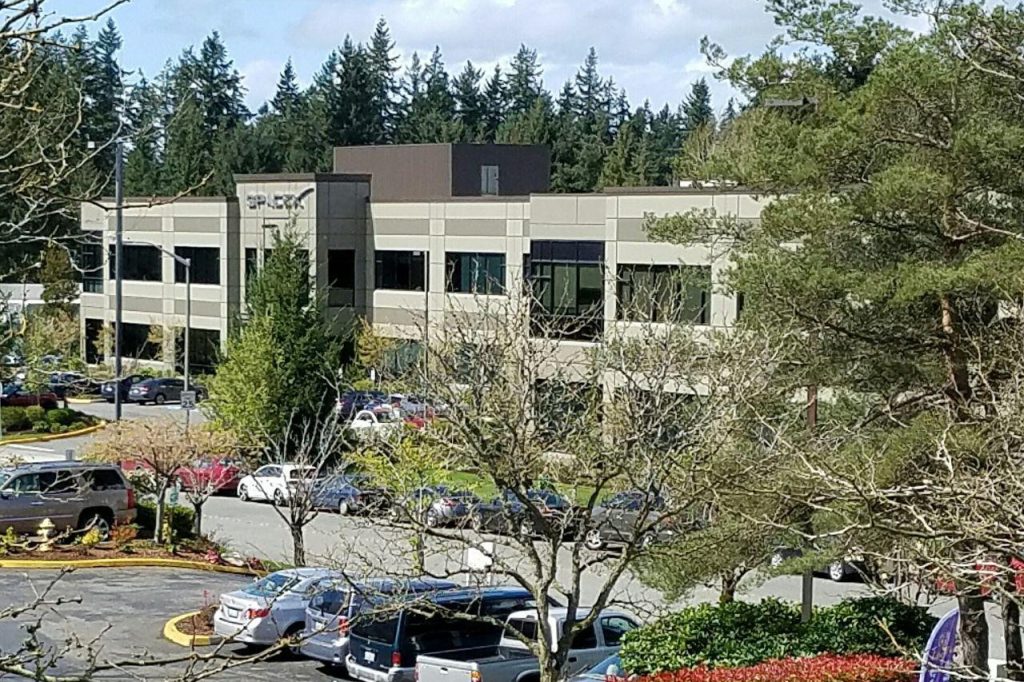
REDMOND, Wash., July 21 — On a quiet street in this Seattle suburb, the low-slung satellite development facility that SpaceX opened a decade ago now anchors a business that has become the company’s financial engine. Inside, engineers fine-tune the user terminals that connect more than 12 million subscribers, in roughly 160 countries and territories, to a constellation of more than 10,000 low Earth orbit satellites. By nightfall, another batch of those satellites will likely be streaking across the sky—a sight that has become as routine as it is controversial.
The financial numbers are staggering. By the end of 2025, Starlink had generated $11.4 billion in revenue and $4.4 billion in operating income, making it SpaceX’s largest business segment.
That cash flow is exactly what CEO Elon Musk envisioned when he publicly announced the project in January 2015, standing in this very Redmond facility. Musk said then that unmet global demand for low-cost broadband justified the project, and that Starlink’s positive cash flow would fund SpaceX’s long-term plans to send humans to Mars. The company has since trademarked the name Starlink—inspired by John Green’s 2012 novel The Fault in Our Stars—and has already begun sketching a version of the system for the Red Planet.
But the business didn’t come cheap. In May 2018, SpaceX estimated the cost to design, build and deploy the constellation at no less than $10 billion.
Launching began in 2019, and the network has grown rapidly. As of June 2026, the constellation consisted of approximately 10,413 satellites, of which 10,397 were operational. Those satellites now account for about 75 percent of all active maneuverable spacecraft in Earth orbit.
Subscribers crossed 12 million by June 2026.
Beyond Consumer Broadband
Starlink is no longer just a rural broadband fix. Airlines now offer Starlink in-flight internet to passengers. Government and military clients rely on it for secure communications; its role in the Russo-Ukrainian war has been widely documented.
The system works by linking user terminals—the familiar flat dish—with ground stations that are themselves connected to the broader internet. The satellites, packed with phased-array antennas and ion thrusters, relay signals across the sky.
Yet that sky is getting crowded. Astronomers have raised alarms about satellite streaks ruining telescope images. Orbital congestion is a growing concern among space agencies.
Each new launch adds to a traffic jam where collisions become harder to avoid. SpaceX says its satellites are maneuverable, and with the vast majority of active maneuverable satellites now under Starlink’s control, it has an outsized responsibility for keeping low Earth orbit safe.
What to Watch Next
With the constellation already covering some 160 countries, Starlink’s next phase may be regulatory rather than technological. National licensing battles, spectrum rights and orbital slot disputes loom. And Musk has made no secret of his ultimate goal: use Starlink’s profits to build a city on Mars.
Whether the business can sustain that ambition through the years of heavy capital spending and growing competition remains the open question. For now, on the ground in Redmond, the engineers keep building.




