
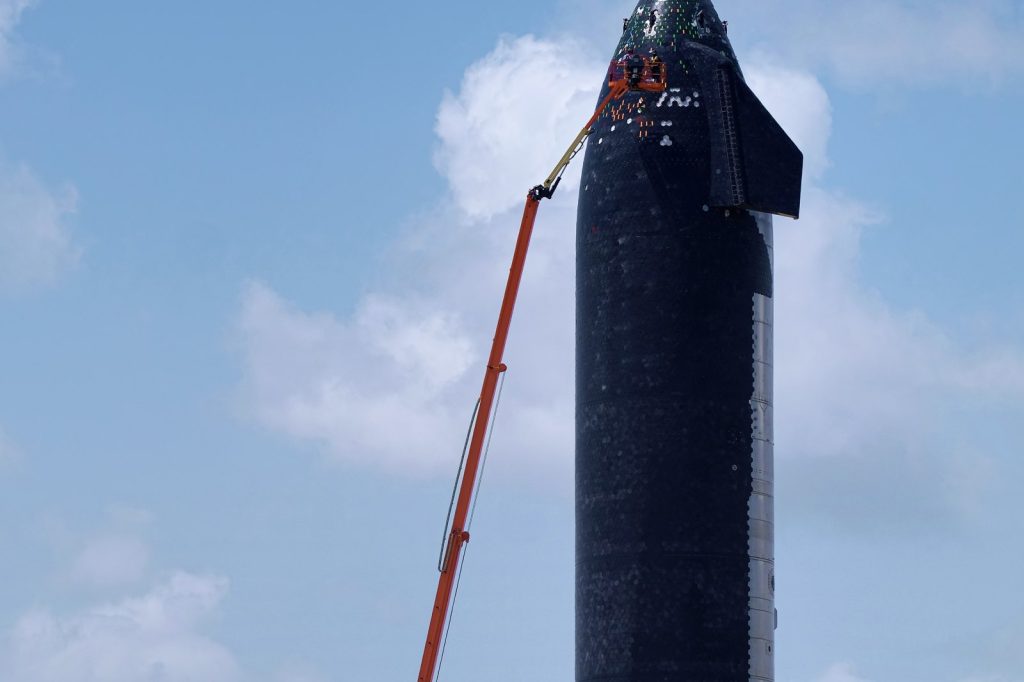
HAWTHORNE, Calif., July 27 — SpaceX’s ambition to fly Starship to Mars hinges on a piece of technology that sounds almost mundane: the heat shield. But as the company works through prototype testing, the thermal protection system (TPS) has emerged as the single make-or-break element for the vehicle’s operational debut. Without a reusable shield that can survive multiple scorching entries — both on Earth and in the thin Martian atmosphere — the entire low-cost, rapid-reuse business model collapses.
SpaceX has indicated it will test a new ‘metallic’ heat shield design on future prototypes. The thinking goes that steel-alloy panels fastened mechanically could replace the ceramic tiles that shed during earlier flight tests.
It’s a pivot that could address what a 2022 study by NASA’s Mars Architecture Team flagged: current Starship TPS, the study concluded, could not handle multiple Mars mission cycles.
Why Mars is tougher than the Moon
Starship has already been selected by NASA as the Human Landing System for the Artemis III and IV missions, with lunar deliveries possible as early as 2025. But the Moon is forgiving on heat shields. The lunar variant uses only a portion of the thermal protection — for Earth reentry after returning from the Moon — and the descent and ascent on the lunar surface don’t require aerodynamic TPS at all.
Mars is an entirely different beast. Starship must survive entry into an atmosphere that is thin but capable of generating temperatures around 1,500 °C.
That’s on top of the heat from Earth reentry, effectively doubling the TPS exposure.
Timeline pressure
A third integrated orbital test (IFT-3) is expected early next year. SpaceX will likely use that flight to attempt improved tile retention and to show that the reentry performance holds up. The practical upshot for the company: if the heat shield reusability problem is not solved within the next two to three years, Starship’s promised low-cost model may collapse.
A forced pivot to expendable or partially reusable configurations would undermine the economics that make Starship attractive for crewed Mars missions. It would also directly affect US launch competitiveness.
Competitors such as Blue Origin’s New Glenn and ULA’s Vulcan are developing reusable stages, but none aim for Starship’s extreme reuse rate.
So what for ordinary readers?
Right now, no other company is pushing for the kind of rapid, fully reusable rocket that SpaceX envisions. If Starship cannot make the heat shield work as intended, the timeline for crewed Mars missions slips further. But if the metallic panels prove themselves, the door opens to a transportation system that could one day make interplanetary travel routine.
Sources
{“@context”: “https://schema.org”, “@type”: “NewsArticle”, “headline”: “Starship Heat Shield Issue Delays Mars Mission Timeline”, “description”: “HAWTHORNE, Calif., July 27 — SpaceX’s ambition to fly Starship to Mars hinges on a piece of technology that sounds almost mundane: the heat shield….”, “datePublished”: “2026-07-27T09:30:00+00:00”, “author”: {“@type”: “Person”, “name”: “Erika Johnson”}, “publisher”: {“@type”: “Organization”, “name”: “InfoPulse Today”, “url”: “https://newsfeed.infopulsetoday.com/”}, “citation”: [{“@type”: “CreativeWork”, “url”: “https://en.wikipedia.org/wiki/SpaceX_Mars_program”}]}




