
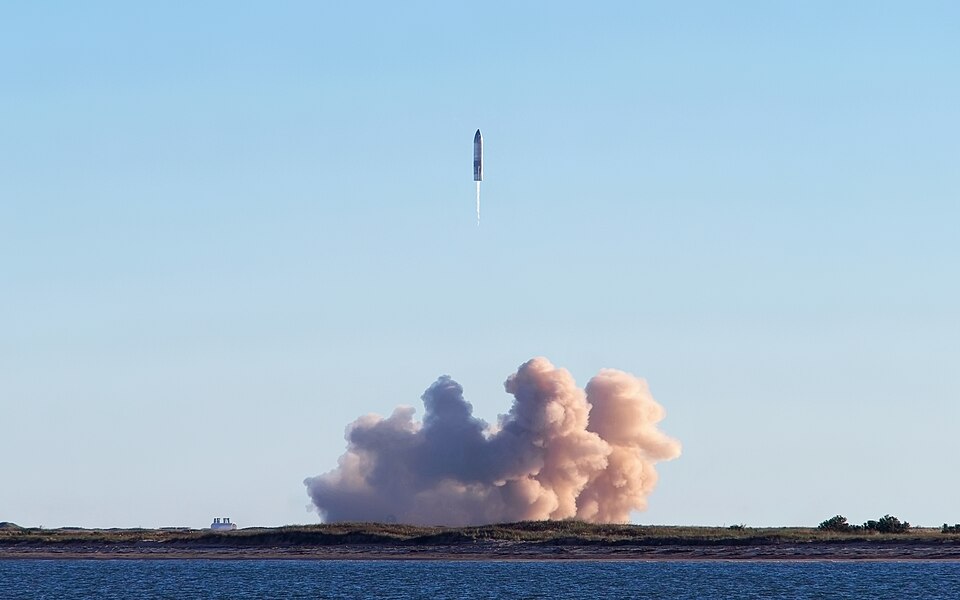
BOCA CHICA, Texas, July 16 — The heavy-lift rocket race is no longer a theoretical competition. SpaceX’s Starship and Blue Origin’s New Glenn are both real, both aiming for the same government and commercial markets, and both built on similar technology — yet they represent two very different bets on the future of spaceflight.
Think of it like the early days of commercial aviation. You had companies pursuing different designs for the same basic job: moving people and cargo through the sky. Here, the job is moving massive payloads beyond Earth’s atmosphere. Starship, first announced in 2016, is SpaceX’s fully reusable answer. New Glenn, also announced in 2016, is Blue Origin’s partially reusable contender. Both use methane-liquid oxygen engines — SpaceX’s Raptor, in development since 2012, and Blue Origin’s BE-4, which has been in the works since 2011.
The practical upshot of that engine choice is performance and reusability. Methane burns cleaner than kerosene, which means less engine buildup over multiple flights. That matters because both companies are chasing a market that a 2023 report from MarketsandMarkets projects will grow to $4.5 billion by 2030.
What each rocket can actually do
Starship completed its first successful integrated test flight on March 14, 2024, reaching an altitude of 234 kilometers before reentry. That’s a key milestone — it showed the full stack could fly. SpaceX designed the vehicle to carry 100 metric tons to low Earth orbit and 21 metric tons to geostationary transfer orbit.
New Glenn, meanwhile, has not yet launched. Its first flight is scheduled for 2025, after multiple delays. Its payload capacity is 45 metric tons to low Earth orbit and 13 metric tons to geostationary transfer orbit — less than Starship, but still squarely in the heavy-lift class.
The BE-4 engine that powers New Glenn also powers ULA’s Vulcan Centaur rocket, which first launched in January 2024. That gives Blue Origin a second revenue stream for its engine development, while SpaceX keeps its Raptor work in-house.
Track records and competition
SpaceX has conducted over 300 successful Falcon 9 launches since 2010. That operational history is a major advantage when bidding for contracts. Blue Origin has flown its suborbital New Shepard rocket 24 times since 2015, but that’s a much smaller vehicle for tourism and research — not a direct competitor to Starship.
The real prize is national security launches. In 2023, the U.S. Space Force awarded contracts to SpaceX, ULA, and Blue Origin. All three are now competing for those missions. The heavy-lift market is projected to grow to $4.5 billion by 2030, according to a 2023 report by MarketsandMarkets.
Here’s what it means in plain terms: the government wants options. It doesn’t want to rely on a single company for launching its most sensitive satellites. So even though Starship is further along and has a bigger payload capacity, Blue Origin still has a path forward.
What to watch next
New Glenn’s first launch, currently scheduled for 2025, will be the next big test. If it succeeds, Blue Origin will have a working heavy-lift vehicle. If it slips again, SpaceX’s lead only grows.
Starship, meanwhile, is already flying. The question now is how quickly SpaceX can move from test flights to operational missions. For both companies, the heavy-lift market is projected to grow to $4.5 billion by 2030 — and neither wants to be left on the launch pad.




