
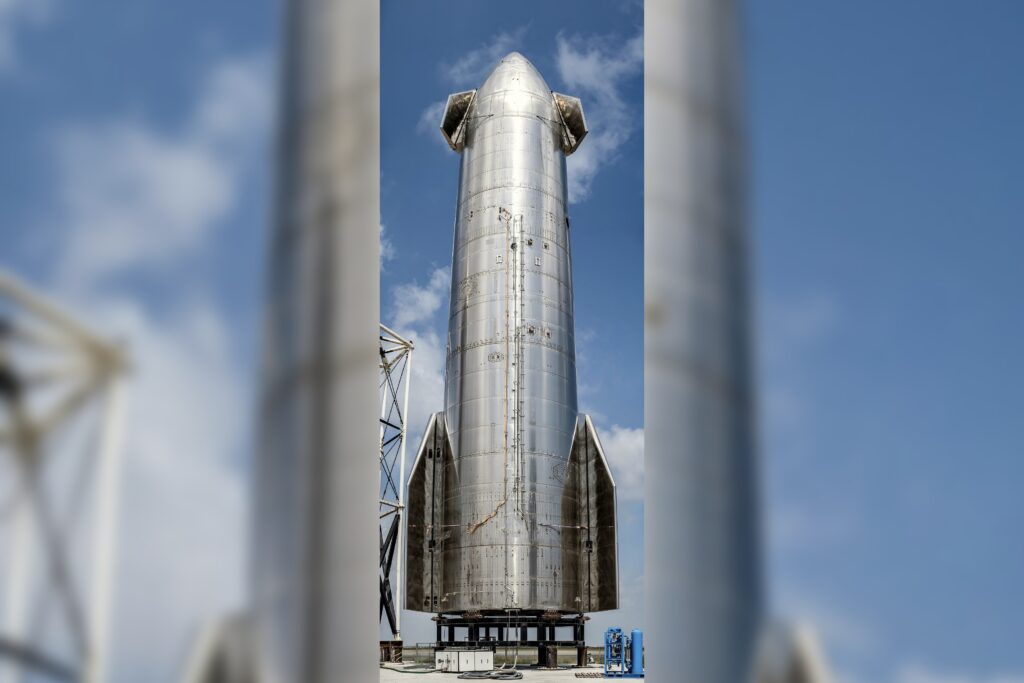
“I don’t want to jinx it or anything, but I think I would call the heat shield problem solved at this point.” Elon Musk said that on SpaceX’s first-ever earnings call, and he did not stop there. “All indications from data and visual inspection is we have solved it,” he said, adding that SpaceX sees “no technical obstacles to achieving rapid reusability at this point.”
He called it “arguably the single biggest problem” facing Starship.
Why the tiles mattered
Starship’s windward side is covered by roughly 18,000 hexagonal ceramic tiles. On the way down, friction heats the air to several thousand degrees Celsius and creates plasma that can melt bare metal. The tiles absorb, radiate and insulate against that heat so the stainless-steel ship underneath survives. Think of them as armor plating on a skin that would otherwise burn through.
They were a headache for years. On earlier test flights, plenty of tiles came off during ascent, shaken loose by vibration and aerodynamic loads, or let go because the pins and adhesive did not hold well enough. Gaps let hot plasma seep in, which caused hot spots and secondary damage to the structure.
NASA’s Space Shuttle had a similar problem in a different form. Its ceramic tiles needed long, labor-intensive inspections and replacements between missions, so turnaround was slow.
Fixes, then Flight 13
SpaceX kept changing things. It improved the materials, standardized tile shapes, refined how tiles are attached and added secondary ablative layers. It also tried sealing gaps with a felt called “crunch wrap.” Flights 10 through 12 showed steadily better tile retention, though nobody could yet say whether the shield could handle rapid reuse with minimal refurbishment.
Flight 13 on July 24 supplied the test. Ship 40 flew a deliberately harsh profile with higher dynamic pressure, meant to push the shield past normal operating loads. It deployed 20 operational Starlink V3 satellites, the first such payload on a Starship mission, relit a Raptor engine in space and made a controlled reentry.
Cameras on six of those satellites, plus onboard sensors, recorded the shield throughout. The ship then made its softest splashdown yet in the Indian Ocean. It stayed intact and afloat instead of breaking apart or exploding as on earlier missions, so drones could inspect it and telemetry kept flowing in near-real time.
Post-flight analysis found most tiles still attached, with only minor damage and limited plasma streaking at the seams. Musk said the flight delivered “all the heat shield data we needed and then some.” Improvements will continue, he said, but he does not expect any technical barrier to rapid reuse.




