
Ten days without a single tanker leaving the Gulf, and the storage tanks were nearly full. Saudi Arabia, Iraq and Kuwait had each cut output at their oilfields. Crude that cannot be loaded onto a ship has to be pumped into storage, and the storage had run out of room.
The cause was the U.S.-Israeli war on Iran, which effectively closed the Strait of Hormuz. The strait is a narrow lane between Iran and Oman, and around a fifth of the world’s daily oil and liquefied natural gas (LNG) supply normally passes through it. Reuters called the stoppage “the nightmare scenario for the global energy system.” Spare capacity elsewhere cannot cover the shortfall. Refineries worldwide are therefore burning through their inventories to keep fuel moving to transport and industry, and the International Energy Agency was preparing to recommend a release of 400 million barrels, the largest in its history.
Prices and the pinch on consumers
Oil climbed to $119 a barrel on Monday, its highest level since 2022, before slipping back ahead of the close. Gasoline, diesel, jet fuel, natural gas, power, petrochemicals and fertilizer have all jumped since the fighting began. If the disruption drags on, prices could keep rising until the damage to the economy cuts demand.
Households and businesses are feeling it as inflation. Basic foods cost more. Farmers in the Northern hemisphere, who are putting crops in the ground now, are paying more for their inputs.
Asia is the most exposed region, since it leans harder on Middle Eastern crude, gas and fuel than anywhere else. China has told refiners to stop exporting fuel. South Korea set price caps on fuel for the first time in 30 years. Bangladesh closed its universities to save power and fuel.
Few ways around the strait
Only the Strait of Malacca, between Malaysia and Indonesia, carries more oil tanker traffic than Hormuz. Two producers have pipelines that avoid the waterway, and neither is a full answer.
Saudi Arabia normally ships about 6 million barrels per day (bpd) through Hormuz. Its East-West Pipeline runs to the Red Sea port of Yanbu and can take up to 5 million bpd, though Yanbu has rarely loaded more than 2.5 million bpd. The United Arab Emirates has the Abu Dhabi Crude Oil Pipeline, also called the Habshan-Fujairah Pipeline, which moves up to 1.5 million bpd from Abu Dhabi’s fields to Fujairah on the Gulf of Oman.
Refineries hit and slow to recover
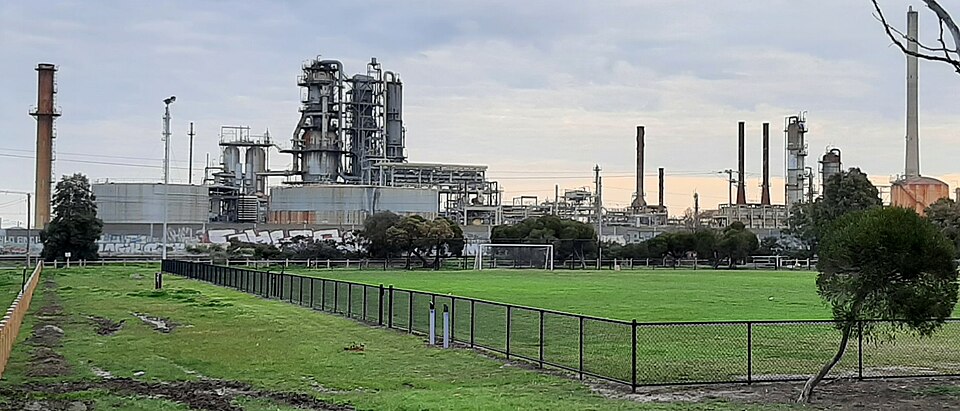
Fuel is affected as well as crude. Gulf refineries cannot ship what they make, including Kuwait’s Al Zour plant, which has a capacity of 615,000 bpd and is a key jet fuel supplier to Europe and Africa. Some plants have been damaged outright. Bahrain’s Sitra refinery, a 380,000-bpd facility run by Bapco Energies, was struck on Monday and declared force majeure. A drone strike the previous week led Saudi Aramco to shut Ras Tanura, its largest refinery and the site of the kingdom’s biggest marine export terminal.
A quick end to the conflict would not mean a quick return to normal. Refinery repairs take time. Qatar’s LNG plant may need several weeks to ramp up from a full shutdown, and oilfields that have scaled back can lose pressure, which sometimes cuts their long-term output. Shipping costs are likely to stay high while ships risk drone attacks in the strait.
For now, hundreds of vessels sit at anchor on both sides of the waterway, waiting for any sign that sailings will resume. Tankers near the strait have been attacked since the conflict started.




