
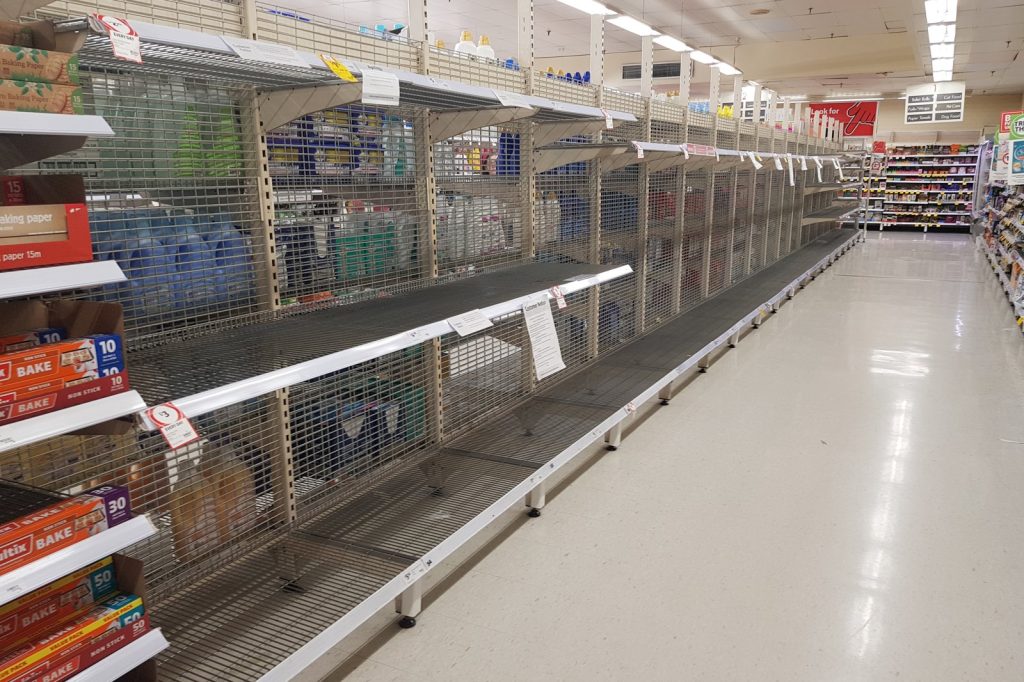
Here is what it meant, in plain terms, when Russia invaded Ukraine in 2022: two of the invisible pipelines of ordinary life, the gas that heats Europe and the grain that feeds much of Africa and the Middle East, were cut at the same moment. Food and fuel prices did not simply climb. They swung, sometimes violently, because every day’s military and political news moved the commodity markets.
Why food prices moved first
The world eats from one interconnected market, and as the agriculture site Dirt to Dinner put it that March, “No country can credibly claim complete food self-sufficiency.” Russia and Ukraine sat near the center of it. Between them they supplied 80 percent of the world’s sunflower seed oil and meal, 30 percent of world wheat, 30 percent of barley trade and 16 percent of corn exports. Russia alone was the largest wheat exporter, over 19 percent of the trade, worth roughly $8 billion; Ukraine added about 9 percent, some $3.6 billion, and sent almost 41 percent of its wheat to African countries. For comparison, the United States and Canada each covered 14 percent of world wheat exports, about $13 billion between them.
Think of it like a bathtub draining faster than the taps run: filling the 7 million metric-ton gap left by collapsed Russian and Ukrainian wheat exports was the immediate problem. Buyers also watched insurance costs for regional shipping jump, altering trade flows, while farmers everywhere faced costlier fuel for field equipment and dearer fertilizer, itself an energy-intensive product. How long prices would stay at historic highs was, in the site’s words, nearly impossible to predict, because open conflict made planted acreage in the region unknowable. And the stakes were not abstract. The analysis reminded readers that “wheat is the food of the here and now”, the daily bread of a majority of the world’s population.
Europe’s energy answer
The European Union, whose fuel bills had been volatile since mid-2021, responded with a stack of emergency measures its Council has catalogued. At Versailles in March 2022, the 27 member states agreed to wean the bloc off Russian fossil fuels as fast as possible. On 30-31 May 2022 they approved a ban covering almost 90% of Russian oil imports by year end, pipeline crude excepted. Gas demand was to fall 15% that winter under an August 2022 regulation, later extended to 31 March 2024, and a June 2022 rule obliged states to fill shared gas storage before each winter. October 2022 brought three emergency measures: cutting electricity use, capping the revenues of power producers, and taking a solidarity contribution from fossil fuel companies. In December 2022 ministers added a market correction mechanism to blunt excessive gas prices, and set the now famous cap on Russian crude at USD 60 per barrel.
The food diplomacy
On food, the EU positioned itself as both defendant and donor. Council conclusions in June 2022 stressed that the sanctions were designed so that agricultural and food products, and humanitarian aid, could keep flowing. Leaders backed the solidarity lanes moving Ukrainian grain out by rail and road and through EU ports after the Black Sea blockade, and a Team Europe package of emergency relief, production support and trade help for developing countries. Their political verdict was blunt. “Russia, by weaponising food in its war against Ukraine, is solely responsible for the global food security crisis it has provoked”, the European Council conclusions of 23 June 2022 stated. Inside the EU itself, the common agricultural policy kept shelves stocked; affordability, with maize, wheat, rapeseed and sunflower imports from Ukraine disrupted, was the worry. For the world’s poorest importers, the shock arrived faster than any communiqué.
Sources
- Impact of Russia's invasion of Ukraine on the markets: EU response – Consilium
- March 2022 – Dirt to Dinner




