
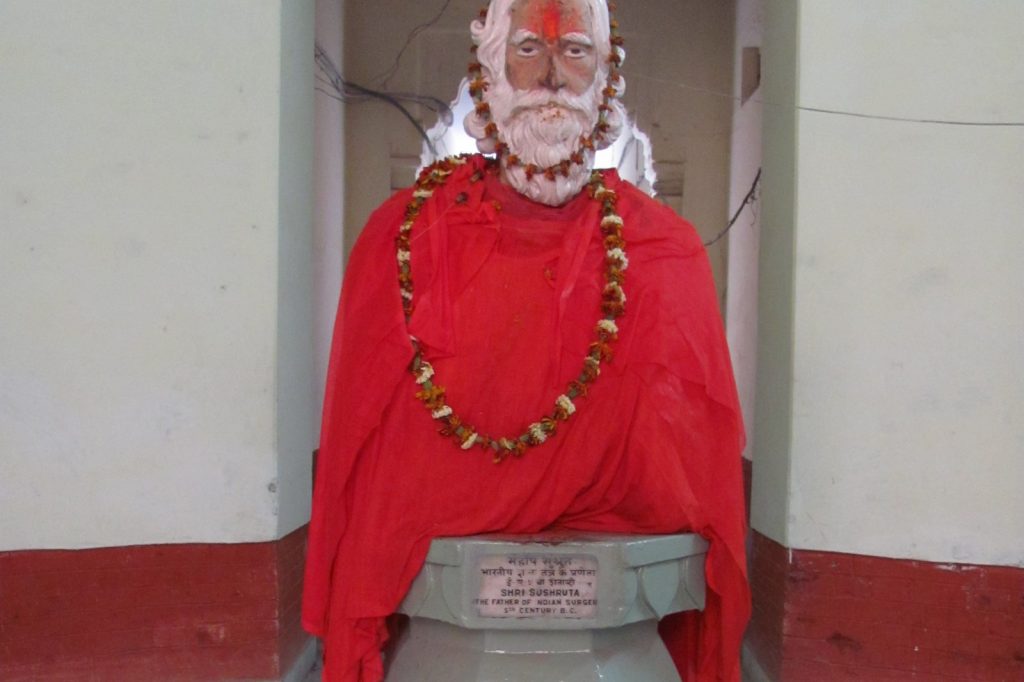
NEW DELHI, July 19 — What can a surgeon who described instruments and procedures two thousand years ago teach us about building a healthcare system that doesn’t trash the planet? That is the question some educators and historians are now asking as India’s National Education Policy 2020 (NEP 2020) opens the door for ancient knowledge to sit alongside modern STEM curricula.
The key figures in this conversation are Sushruta and Charaka, central names in the Indian scientific tradition. Sushruta is remembered for his early, detailed descriptions of surgical techniques and instruments. Charaka is linked to the Charaka Samhita, the foundational text of Ayurveda. Neither man left behind a tidy, single-volume textbook; their knowledge was passed down and refined across generations. But what researchers have found in those traditions is a systematic approach to medicine that stressed natural remedies and an ethical duty to the patient—principles that, intriguingly, line up with today’s push for sustainable healthcare.
The ancient roots of sustainable medicine
How it works: the old texts do not separate human health from the environment. A remedy is not just a compound; it is tied to where it grows, the season it is harvested, and the method of preparation. That is a systems view of health—a lens that modern sustainable healthcare advocates argue we have lost. The Sushruta Samhita and Charaka Samhita describe materia medica almost exclusively from plants, minerals, and animals, and they emphasise prevention and balance over aggressive intervention.
That emphasis on non-invasive, nature-based treatments carries obvious resource implications. Fewer synthetic drugs means less chemical runoff. Shorter, less invasive surgical recoveries (where appropriate) reduce hospital waste. And the ethical framework in these texts—the physician’s duty to do no harm and to treat all patients—mirrors the value system that underlies today’s conservation medicine movement. The link is not metaphorical; it is a practical alignment of method and ethics.
STEM education meets the Samhitas
Under NEP 2020, India has the flexibility to weave this kind of knowledge into its science and technology curriculum. The policy explicitly encourages the integration of traditional Indian knowledge with modern scientific disciplines. The source material notes that integrating Sushruta and Charaka’s work into STEM education could promote a more holistic understanding of health that includes environmental factors.
That is a concrete mechanism, not a slogan. A student studying botany, for instance, might also learn the Ayurvedic classification of plant properties. A course in public health could examine the ethical framework of the Charaka Samhita as an early model of patient-centred care. A materials science module could reference the manufacturing of early surgical instruments described by Sushruta. The goal is not to replace modern surgery with ancient techniques, but to foster a generation of doctors and engineers who think about health in a connected, resource-conscious way.
What researchers in this field are watching next is how state boards and universities actually interpret the NEP 2020 guidance. Pilot programmes that pair archaeology departments with medical colleges are one possibility. Another is the development of textbooks that present the Samhitas not as mythology, but as a seriously documented, systematic body of knowledge with measurable principles—principles that happen to align with a cleaner, quieter, more responsible way of practicing medicine.




