
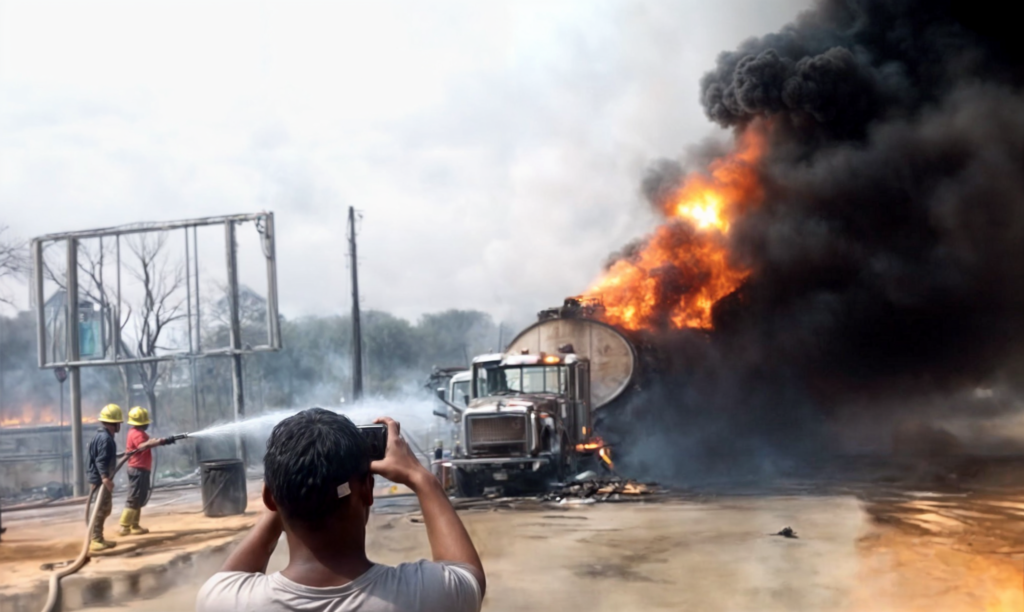
A fuel tanker explosion in Nigeria’s Ondo State on July 23, 2023, claimed eight lives. The incident began when a tanker was involved in an accident, and the explosion occurred as individuals were attempting to siphon fuel from the vehicle.
The event underscores the dangers inherent in handling petroleum products and the critical need for strict adherence to safety protocols. Ondo State is situated in southwestern Nigeria and is known for its cultural heritage and varied geography. Its landscape transitions from mangrove-swamp forests along the Bight of Benin to the capital city, Akure, which historically served as the capital of the ancient Akure Kingdom.
The state ranks as the 18th most populous in Nigeria and is predominantly inhabited by Yoruba-speaking communities. Often referred to as the “Sunshine State” due to its favorable climate and natural scenery, the explosion has cast a shadow over the region.
The tragedy highlights the importance of robust emergency response systems and safety measures, particularly when hazardous materials like fuel are involved. Authorities are expected to conduct a thorough investigation to determine the precise cause of the accident and the subsequent explosion. Identifying these factors could lead to improvements that help avert similar disasters in the future.
Proactive safety measures can reduce risks to both human life and the environment. As Nigeria expands its energy sector, there is increasing attention on energy security and cost-effectiveness.
Renewable energy sources, such as solar and wind power, present an alternative to traditional fossil fuels, offering cleaner and more sustainable options for meeting national energy demands. Investment in renewables could decrease Nigeria’s dependence on petroleum products, potentially lowering the likelihood of accidents like the one in Ondo State. This shift may also yield economic advantages, including reduced energy costs and job creation.
The Ondo State government holds a key role in promoting sustainable development and ensuring the safe management of petroleum products. Enforcing strict safety regulations can help prevent accidents and limit environmental harm.
Public education and awareness initiatives could further inform residents about safety protocols and the risks of handling hazardous materials. Collaboration among the government, local communities, and the private sector is essential for fostering a safer environment. In the wake of this loss, there is a renewed call for prioritizing safety, sustainability, and environmental protection. Developing renewable energy sources and implementing effective safety measures can help Nigeria reduce its reliance on fossil fuels and build a cleaner future.
The Ondo State explosion serves as a reminder of the need for environmental stewardship and sustainable development. Increased investment in renewable energy, along with enhanced safety protocols and emergency response systems, could prevent future tragedies and support a more sustainable energy sector.




