
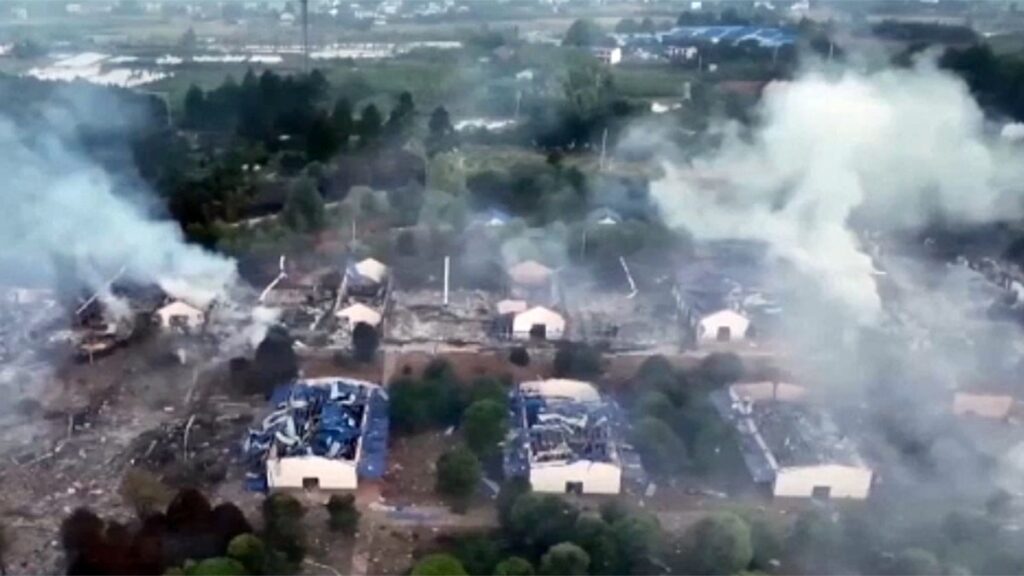
A powerful explosion tore through a fireworks manufacturing facility in Suphan Buri, Thailand, on January 17, 2024, resulting in at least 19 fatalities and leaving three individuals unaccounted for. Rescue operations remain ongoing as authorities search for survivors amid the wreckage.
The blast has cast a spotlight on the inherent risks of fireworks production, where workers routinely handle volatile materials. While the precise trigger for the explosion has yet to be determined, the scale of destruction has been immense, devastating families and the local community. The factory was believed to be operating in preparation for the upcoming festive season, a period of heightened demand for such products.
As investigations commence, questions are emerging regarding the safety protocols at the facility. The tragedy underscores the daily dangers faced by employees in this industry and is expected to prompt renewed calls for stricter oversight of safety standards and worker protections across Thailand’s fireworks sector.
Beyond the immediate human toll, attention is turning to the potential environmental consequences. Fireworks manufacturing involves a variety of chemicals that can be hazardous if released into the environment. The explosion may have dispersed these substances into the air and local water sources, posing risks to nearby ecosystems and the health of residents in surrounding areas.
Thai authorities face the complex task of assessing the environmental damage and implementing measures to mitigate any harm. This effort will require coordination among government agencies, local communities, and environmental specialists. The use of fireworks remains a deeply rooted tradition in Thai culture, often employed in celebrations and festivals. However, the incident also raises broader concerns about the industry’s reliance on non-renewable energy sources and its environmental footprint.
Looking forward, the disaster is likely to drive a push for more sustainable practices within the fireworks industry. This could involve adopting new technologies and manufacturing methods that reduce waste and minimize the use of dangerous chemicals. By pursuing a more sustainable approach, the industry could lessen its environmental impact and contribute to a cleaner future.
The Thai government and regulators are expected to work closely with manufacturers to develop and enforce enhanced safety standards and environmental protections. The recovery process for Suphan Buri will be lengthy and challenging, but with concerted effort, there is potential to build a safer and more sustainable industry. The explosion serves as a stark reminder of the critical need to prioritize safety, sustainability, and environmental stewardship to prevent such tragedies in the future.




