
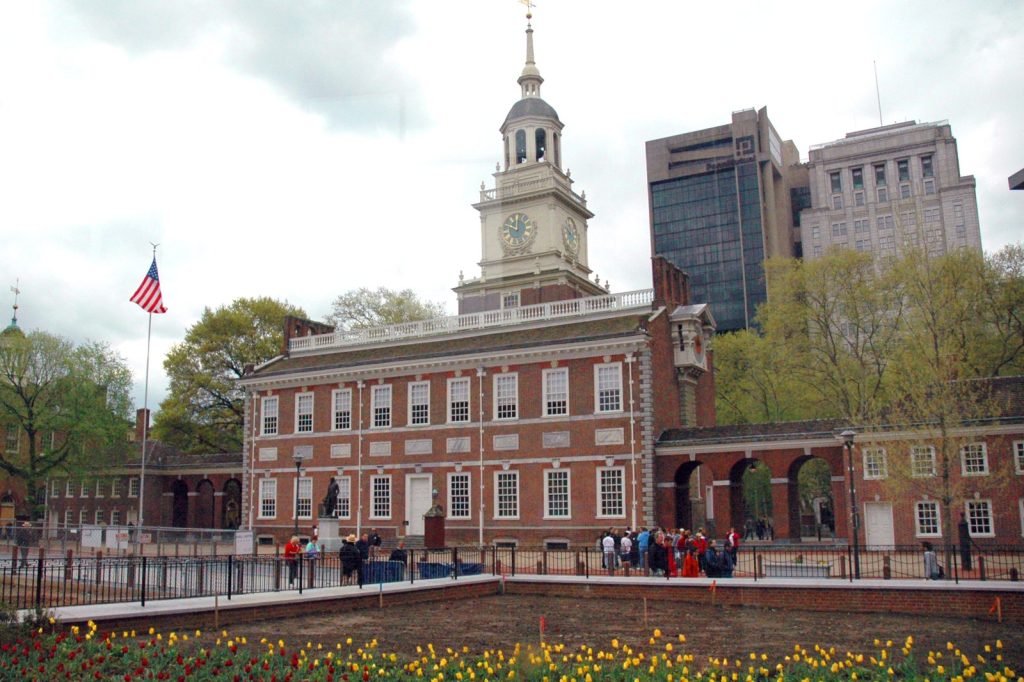
Walter Isaacson has called it “The Greatest Sentence Ever Written.” Thomas Glessner, president and founder of the National Institute of Family and Life Advocates (NIFLA), agrees, and in a commentary published as America approached its 250th anniversary he used the line to make a case against abortion.
The sentence opens the Declaration of Independence, signed on July 4, 1776: “We hold these truths to be self-evident: that all men are created equal and endowed by their Creator with certain unalienable rights, among them life, liberty, and the pursuit of happiness.”
Jefferson, Blackstone and the womb
Glessner points to Thomas Jefferson’s legal training. Jefferson was a lawyer, and Glessner says the wording came out of his study of law and of Sir William Blackstone, whose Commentaries on the Laws of England appeared in 1757. That book set the legal framework for common law in England, in the American colonies and, later, under the Constitution.
In Glessner’s reading, Blackstone held that the natural rights given by the Creator include life, liberty and the pursuit of happiness, and that the right to life begins in the womb. It belongs to unborn children as much as to those already born. Glessner writes that Jefferson and the other Founders understood this clearly.
The argument about drift
America honored all human life, born and unborn, at its founding, Glessner argues, but has since lost its way. He blames radical feminism, far-left and woke politics, an “anemic and ineffective” church and a major media with a progressive agenda. He also writes that more than 70 million unborn children have been killed by abortion since 1973, and that chemical abortion now adds hundreds of thousands more through the abortion pill regimen.
Glessner asks how the country drifted so far, and answers himself: Americans have become a culture centered on self-pleasure and concern for their own lives. These are his views, offered as advocacy, and they are contested by abortion rights supporters.
Pregnancy centers and the courts
The remedy, in his telling, is a culture of life in which all human life is respected and protected under the law. He says the movement already has the network to get there: 2,500 pro-life pregnancy centers, most of them medical clinics that offer supportive and medical services to pregnant women considering abortion. According to Glessner, they provide thousands of resources free of charge and save taxpayers millions of dollars each year.
He says abortion providers have attacked that work as “fraudulent” and “deceptive.” Planned Parenthood led what he calls a smear campaign beginning in the early 1980s, he writes, and it has produced attempts by legislatures in Democratic-led states to restrict the centers. Seven cases are now in federal court, with laws in states including California and New York challenged as unconstitutional. Glessner says centers led by NIFLA are winning in court.
He also describes a role for churches, which he says join with local centers to supply resources and care, meeting both spiritual and physical needs. Through that support, he writes, many women choose life over abortion.
Glessner closes by tying the anniversary to his cause: a country that builds a culture of life, he says, will reaffirm the Declaration’s vision for the most vulnerable members of society.




