
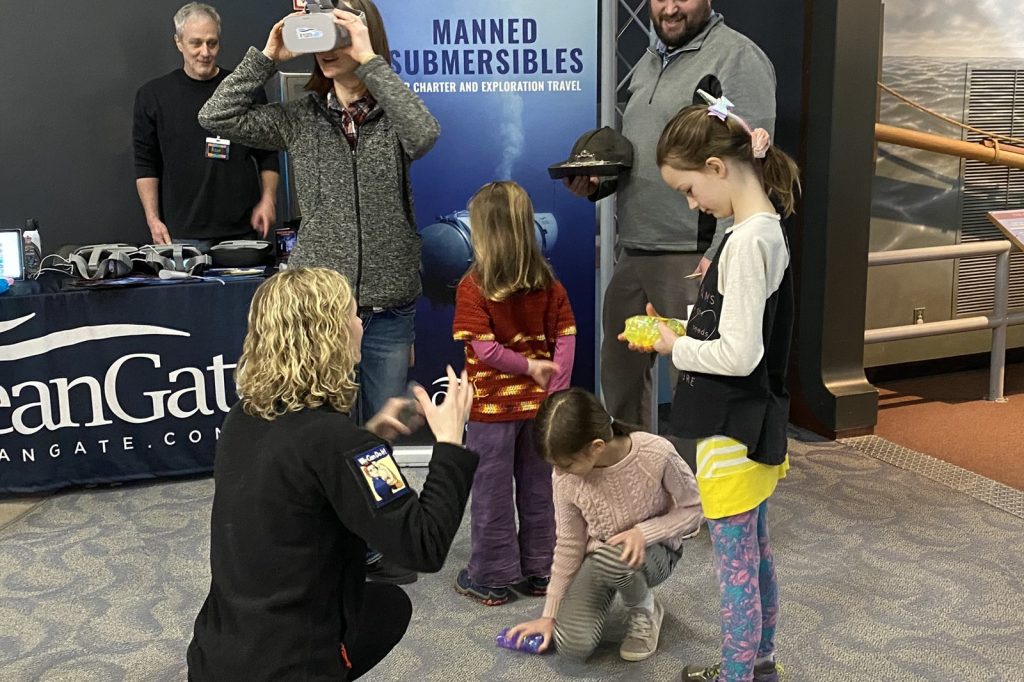
On June 18, 2023, the Titan submersible, operated by OceanGate Inc., suffered a catastrophic implosion at a depth of roughly 12,000 feet in the North Atlantic, killing all five occupants. The incident has reignited debate over the safety of commercial deep‑sea tourism and the value placed on such experiences. OceanGate, founded in 2009 by Stockton Rush and Guillermo Söhnlein, began its operations with a second‑hand craft named Antipodes before constructing its own vessels, Cyclops 1 and later Titan.
The Titan was specifically designed for passenger trips to the wreck of the RMS Titanic, a site that rests at the same depth. In 2022, a seat on the submersible was priced at $250,000, a fee that covered a journey to the historic ship’s remains.
Since 2021, OceanGate marketed the Titan as a means for civilians to experience deep‑sea exploration, arguing that such ventures should not be limited to government agencies. The company’s business model relied on ticket sales to fund its dives, positioning the experience as both adventurous and financially sustainable. Operating at 12,000 feet subjects a vessel to pressures exceeding 5,500 psi.
A breach at that depth results in an instantaneous implosion, leaving no opportunity for warning or rescue. Although OceanGate had completed several successful expeditions prior to the June incident, those achievements may have fostered a perception that the risks were manageable.
The tragedy demonstrates that prior success does not eliminate the inherent dangers of extreme‑depth travel. The five passengers, whose identities are known to investigators, paid for a chance to stand on the deck of a century‑old maritime graveyard. Their families now face profound loss, while the company confronts a crisis that includes ongoing investigations by the U.S. Coast Guard, upcoming congressional hearings, and anticipated civil lawsuits.
Regulators and industry observers are questioning whether a commercial model that sells seats to individuals with limited training can ever meet the zero‑margin‑for‑error environment of the deep ocean. Insurers have already signaled potential premium increases, and investors are reassessing the viability of similar ventures.
OceanGate’s history includes providing submersibles for research and industrial purposes, but the shift to passenger tourism introduced a new set of challenges. The company’s claim that deep‑sea voyages could be “safe enough” for paying customers now appears to hinge on a variable standard that may not align with the unforgiving physics of the deep ocean. The Titanic wreck itself remains a solemn site, surrounded by debris from the 1912 disaster. The recent loss adds another layer of tragedy to the location, underscoring the stark reality that the ocean does not differentiate between curiosity and caution.
As the investigation proceeds, the broader deep‑sea tourism sector faces heightened scrutiny. Potential travelers are likely to weigh the allure of witnessing historic shipwrecks against the stark possibility of fatal outcomes.
The Titan incident serves as a somber reminder that some environments may remain beyond the reach of commercial visitation, regardless of technological advances or market demand.




