
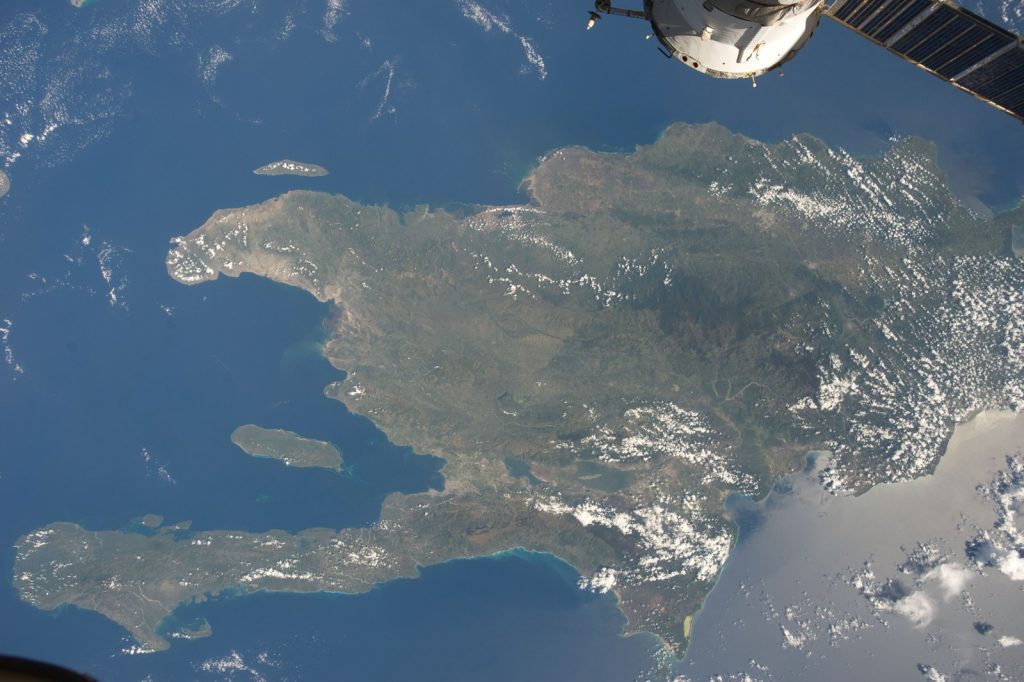
Tropical Storm Franklin, which made landfall on August 23 2023, is now unleashing intense rainfall across the mountainous spine of Hispaniola. The island’s steep terrain—characterized by 45‑degree slopes in the Cordillera Central of the Dominican Republic and the Massif du Nord and Chaîne de la Selle in Haiti—fails to absorb the deluge, turning soil into a fast‑moving slurry that threatens homes, roads and lives.
Hispaniola, the Caribbean’s second‑largest island, is defined by its vertical relief. Dense forest cover on the slopes provides limited anchorage, and when a storm such as Franklin brings sustained heavy rain, the protective effect of vegetation quickly erodes. History shows that similar events have buried entire towns, underscoring the danger posed by the island’s topography.
The storm now presents a dual‑nation emergency, with each country’s capacity to respond differing sharply. The Dominican Republic, spanning roughly 48,445 km², benefits from relatively more developed infrastructure and an operational emergency response system. Authorities there are deploying heavy equipment, coordinating evacuations and working to restore power, although drainage systems are already being overwhelmed, leading to outages and disrupted communications.
Haiti, covering about 27,750 km², faces a more precarious situation. Its infrastructure is less developed, and emergency services are less robust. The western side of the island, where much of Haiti lies, is more deforested, exposing hillsides that generate immediate runoff when rain strikes. Without a canopy to slow water flow or deep roots to hold soil, landslides and flash flooding are occurring with little warning, leaving the nation with a razor‑thin margin for error.
International aid offers are already flowing from neighboring states and global organizations, reflecting the urgent need for external support, especially for Haiti.
Beyond the immediate human toll, the storm threatens Hispaniola’s agricultural sector, a cornerstone of both economies. The island’s fertile soils and climate support coffee, sugarcane and tobacco—crops that require years to mature (coffee), precise harvest timing (sugarcane) and careful moisture management (tobacco). Franklin’s rains and winds are arriving at a critical stage, flooding fields, rotting roots and lodging stalks, which could wipe out an entire season’s yield on both sides of the border.
Farmers are already bracing for significant losses, and the broader economic impact is expected to be tangible rather than abstract. Power outages, damaged roads and disrupted communications further complicate relief efforts and market access.
As the storm continues its passage over the island, strong winds and heavy rain are being reported in multiple locations. Damage is no longer speculative; it is occurring on steep slopes, in low‑lying neighborhoods and across agricultural lands that may not produce again this year.
The international community remains attentive, with assistance pledged, but Franklin’s forces do not pause for aid to arrive. The situation underscores how Hispaniola’s geography amplifies the hazards of tropical storms, turning rain into a deadly slurry that endangers lives, infrastructure and livelihoods across the island.




