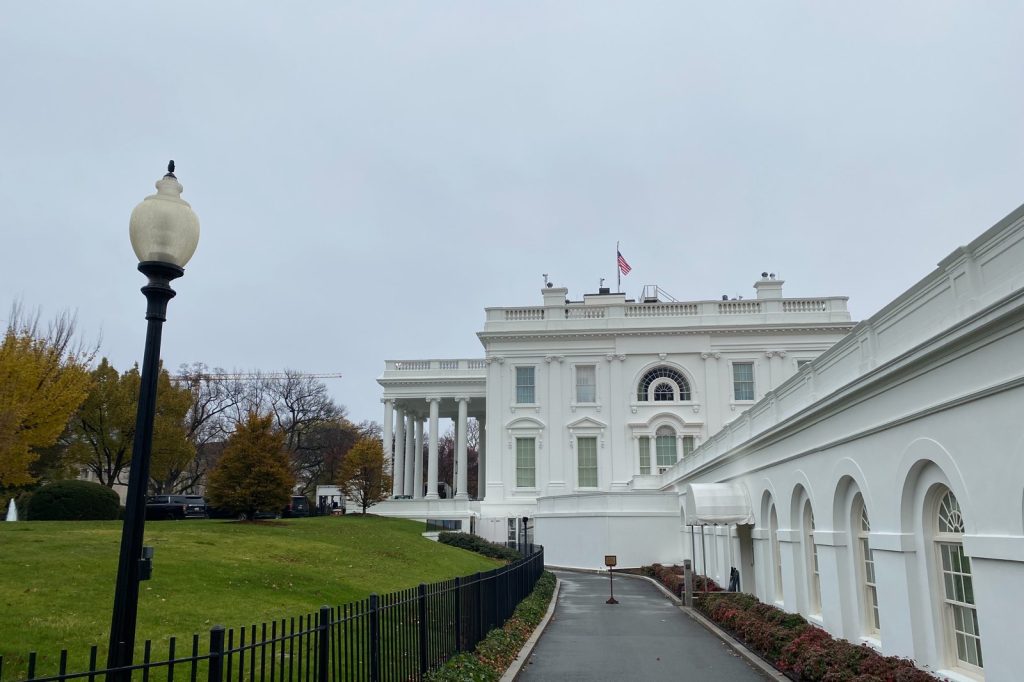
Donald Trump signed a Russia sanctions bill on Friday that lets him hit buyers of Russian energy with tariffs of up to 100%. The House had passed it two days earlier, 262-159, a bipartisan margin that still left some members uneasy about how much discretion it hands the White House.
The law carries the name of Lindsey Graham, the hawkish Republican senator who died in July. Its stated aim, according to The Guardian, is to drain the oil and natural gas income Russia uses to keep fighting in Ukraine, a war now in its fifth year. Trump’s administration had been cool on new sanctions against Moscow. That changed, The Guardian reported, once repeated efforts to end the fighting stalled.
What the law does
The bill adds sanctions on Russian political and military officials and on foreign networks that supply the Russian war effort or help it dodge existing penalties. Al Jazeera reported that Vladimir Putin is among those named, along with more than 20 top officials and companies tied to Russia’s defence industry. It also goes after the “shadow tankers” that keep Russian crude moving around the world despite earlier restrictions.
The enforcement route runs through the International Emergency Economic Powers Act. Under it, the president can put tariffs of up to 100 percent on exports to the US from the five biggest purchasers of Russian energy, and from countries found to be helping Russia get around sanctions. Russian goods entering the US directly could face tariffs of up to 500 percent. The US imported $3.8bn in goods from Russia in 2025, Al Jazeera said, so that second lever has little trade to bite on.
Nothing is automatic. Analysts told Al Jazeera the open question is how hard Trump will use the power, since the bill allows the tariffs but does not trigger them.
Criticism at home
Many Democrats objected to the breadth of the text. They said it gives Trump too much authority over tariffs, which he has already imposed on several countries even though the US Supreme Court ruled against his using the 1977 emergency powers law that way. The bill also leaves it to him to pick which countries face tariffs, at what rate, and whether sanctions provisions can be waived for particular states.
China and India in the frame
The two countries most exposed are China and India. Figures cited by Al Jazeera from the Centre for Research on Energy and Clean Air, covering August, show China taking about half of Russian crude exports and India 37 percent. Turkiye and the European Union each take about 5 percent.
India’s Ministry of External Affairs responded within hours of Congress approving the bill. It said New Delhi had raised the matter with various US interlocutors in recent months and had “very clearly articulated” what it could mean for relations and for the international energy market. “The Indian side has also made clear its determination to take all necessary measures to protect its trade and economic interests,” the ministry said.
India has bent to Western pressure before. International Energy Agency data cited by Al Jazeera put its Russian crude imports at 1.1 million barrels per day in January, the lowest since November 2022 and down from an average of 1.7 million in 2025. Over the same month, deliveries to China hit a record. Beijing’s foreign ministry spokesperson, Guo Jiakun, said China “systematically opposes extraterritorial jurisdiction” and that its trade with other countries “is not directed against third parties.”
China also has a supply line India lacks. Part of its Russian oil comes through the Eastern Siberia-Pacific Ocean pipeline, which the Strait of Hormuz disruption does not touch.
A tight oil market
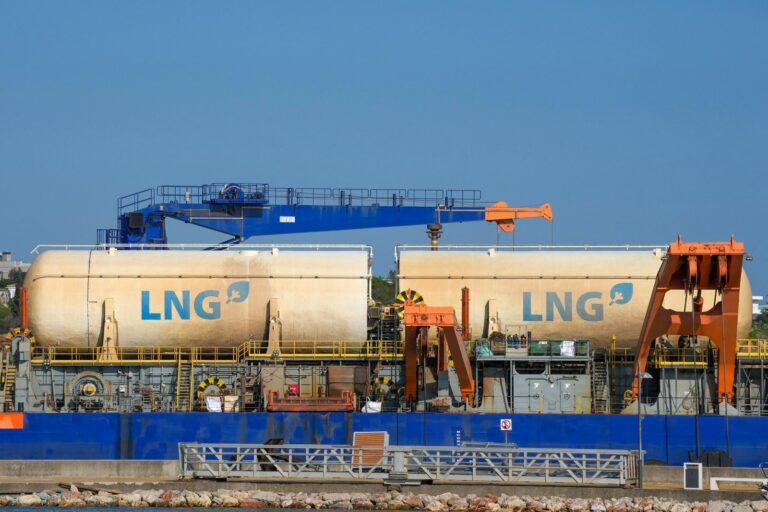
The timing is awkward. Iran has effectively controlled shipping through the Strait of Hormuz since late February, in retaliation for joint US-Israeli attacks, and about one-fifth of global oil supplies moved through the waterway before the war. Saudi Arabia shut its East-West pipeline for a time after a drone attack last week and cancelled some deliveries to European customers. If tariffs push big importers away from Russian crude, Al Jazeera noted, they would be bidding for barrels in an already short market, which could send prices sharply higher.
Sources
- Trump signs bill imposing sanctions on Russia and giving him more power to levy tariffs
- US tariffs against Russian oil buyers pass: What it means for China, India