
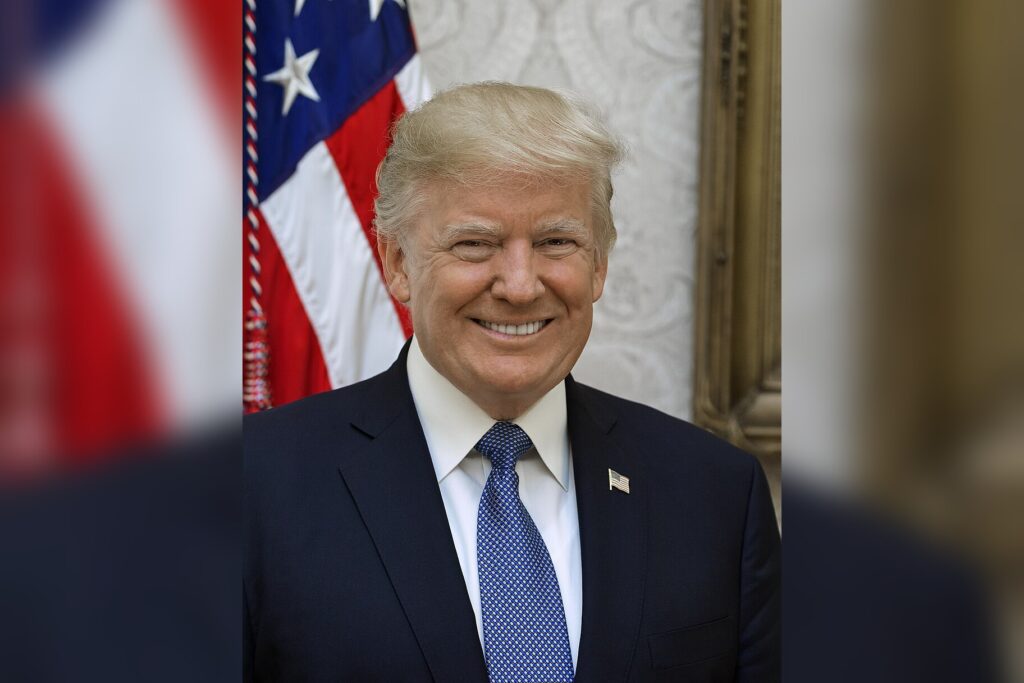
A single declaration by President Donald Trump more than a year ago continues to reverberate through global energy markets, serving as a stark reminder of how quickly geopolitical decisions can reshape the price of crude. On March 30, 2025, Trump announced that the ceasefire with Iran was “over,” triggering an immediate surge that lifted oil prices nearly 6% in a single day.
Benchmark Brent crude rose to $74.74 per barrel, while West Texas Intermediate, the U.S. benchmark, reached $71.48. Those price levels reflected the market’s abrupt recognition that months of fragile truce negotiations had collapsed, reopening a volatile chapter in one of the world’s most strategically sensitive energy regions.
The Collapse of a Fragile Truce
The ceasefire talks that fell apart had been mediated by Qatar and Oman since early 2024, holding together through a tense period of diplomatic maneuvering. However, the foundation for this latest escalation was laid years earlier.
The Trump administration’s decision in 2018 to withdraw the United States from the Joint Comprehensive Plan of Action and to reimpose sanctions on Tehran had already set the stage for recurring tensions. Iran, a major member of the Organization of the Petroleum Exporting Countries, produced roughly 3.2 million barrels per day in 2024. That production capacity means any disruption involving Tehran has immediate implications for global supply calculations.
When the president declared the ceasefire over, markets reacted instantly, pricing in the risk of renewed instability in a region that remains central to the world’s oil flow. Iran’s role as a key OPEC producer is deeply rooted in its geography and history.
The nation, historically known as Persia, was first unified under the Medes in the 7th century BC and later expanded under the Achaemenid Empire. Through successive dynasties–Parthian, Sasanian, Safavid, and others–the region developed early advancements in governance, culture, and science, later shaping the Islamic Golden Age. In modern times, the 1979 revolution replaced the monarchy with an Islamic Republic, reshaping its political and religious identity.
Iran is a country in West Asia, bordered by several nations and key waterways, including the Persian Gulf and the Strait of Hormuz. The nation’s stability is directly tied to global energy markets, making its actions and international relations closely watched by economies dependent on steady crude supply.
The Strait of Hormuz Factor
The Strait of Hormuz remains the most strategically significant chokepoint for global oil transit. Roughly 20% of all petroleum consumed worldwide passes through that narrow waterway, connecting the Persian Gulf to the open ocean.
Any disruption there–whether from military confrontation, mine-laying, or simply the threat of it–would have immediate and severe consequences for oil-dependent economies on every continent. Analysts at Goldman Sachs have warned that a full disruption of traffic through the Strait could push global oil prices above $100 per barrel. The key variable remains whether the waterway stays open and flowing.
Iran’s geographic position at the northern edge of the Strait gives it a direct ability to threaten or secure passage. The March 30 declaration that the ceasefire was over renewed this fear in the market, even as actual hostilities remained contained.
Strategic Reserves and Market Calculus
The United States maintains a strategic cushion against such supply shocks. The U.S. Energy Information Administration reported that American strategic petroleum reserves stood at 375 million barrels as of February 2025.
That stockpile was built precisely for moments like this–to provide a buffer when geopolitical events threaten the steady flow of crude. The effectiveness of that reserve, however, depends on the nature and duration of any disruption. A brief spike can be absorbed, but a prolonged closure of the Strait of Hormuz would quickly drain such stocks. Analysts note that any military escalation in the region that threatens tanker traffic through the waterway would likely trigger the kind of price spike Goldman Sachs has outlined.
For now, the March 30 price jump stands as a marker of how quickly geopolitical news can reshape energy markets. The ceasefire is over, and the consequences are still being felt more than a year later.
The interplay between Iran’s production capacity, the strategic bottleneck at Hormuz, and the size of America’s emergency reserves will continue to define the market’s sensitivity to every twist in U.S.-Iran relations.




