
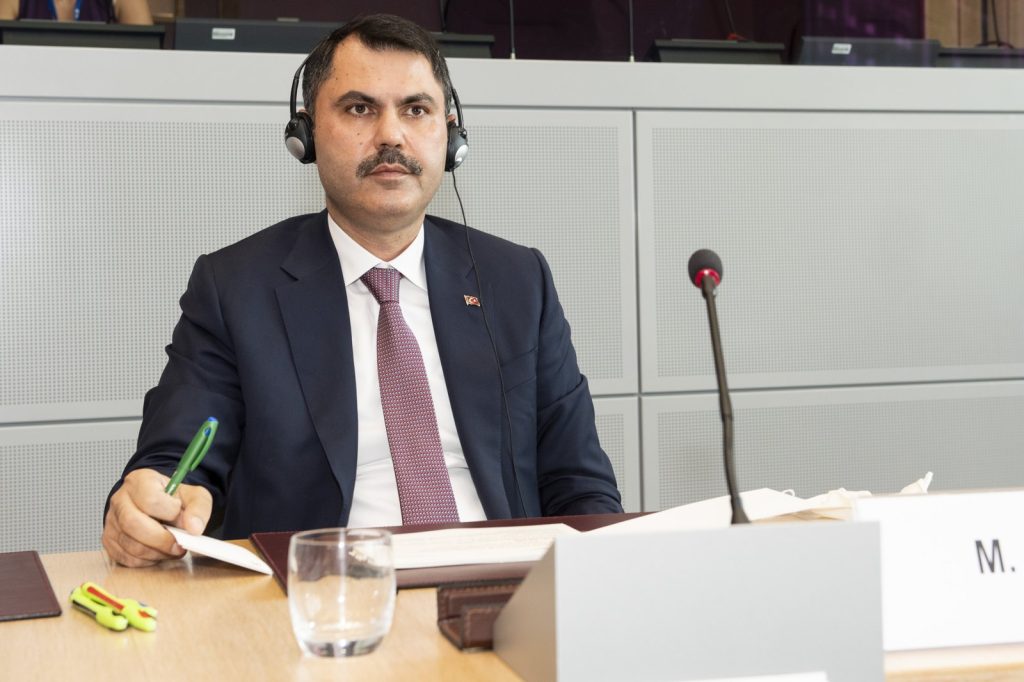
“By electrifying daily life, from transport to buildings and industry, we can protect families and businesses from volatile energy markets,” said Murat Kurum, Turkey’s environment minister. He wants electricity to cover 35% of global energy demand by 2035, up from 20% today.
Turkey hosts the UN’s COP31 climate summit in Antalya this November, and Kurum will preside over it alongside Australian representatives. At a June meeting where government delegates talked through priorities for the conference, he called the 35% target “one of the defining priorities of our COP31 presidency.” He also asked the world to cut its waste growth rate by 50 per cent by 2035.
The gap
Renewables now generate around one-third of global electricity, a share that has climbed in recent years. The harder cases are transport, heating and heavy industry, which still run mostly on oil, gas and coal. Around 80 per cent of global energy still comes from fossil fuels.
Tools exist to change that, from electric vehicles to heat pumps. OilPrice.com reports that uptake has been slower than expected even with fossil fuel prices swinging and household energy bills rising. Falling cleantech prices and government policy in many countries could shift that.
Australia’s climate change minister, Chris Bowen, said COP31 will center on electrifying the global economy. He pointed to Germany’s industry, clean cooking in African communities, and Pacific nations swapping diesel for solar. “Renewable energy is now the cheapest form of power available to us,” Bowen said.
A voluntary goal
The target would not bind anyone. It is still expected to nudge faster electrification among the almost 200 countries that take part in the COP process. The International Energy Agency is expected to write a report on how to reach 35%. Kurum said Turkey will work with all countries, especially developing economies, on technical assistance, capacity-building and financial support.
The push comes with a warning attached. OilPrice.com notes that a “super El Niño,” nicknamed the Godzilla El Niño, is expected to drive temperatures to unprecedented levels over the next year, with a risk of deadly heatwaves and drought.
Turkey at home
Turkey is working on its own grid. Energy and Natural Resources Minister Alparslan Bayraktar announced plans in June for an Azerbaijan-Europe electricity corridor. “We are going to create the electricity version of TANAP, the Trans-Anatolian Natural Gas Pipeline that transports gas from Azerbaijan to Europe via Turkey,” he said. The corridor could eventually reach Georgia and Bulgaria. AzerEnergy, Azerbaijan’s grid operator, has said it plans a 230-kilometre, 400-kV line from Nakhchivan to Turkey.
Turkey also intends to spend around $30 billion over the next decade to modernise its transmission and distribution network, so it can handle more renewable and nuclear output. Ankara plans to upgrade links with Georgia, Azerbaijan and Bulgaria to trade surplus power.




