
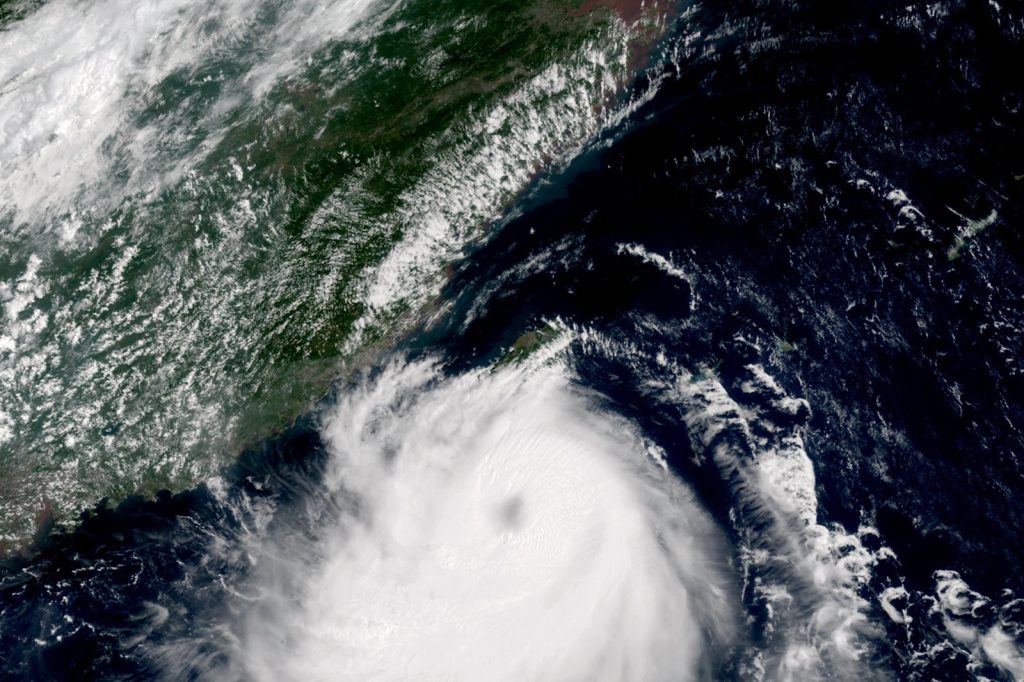
On August 13, 2025, Typhoon Podul made landfall in southern Taiwan, bringing strong winds and heavy rainfall that left a trail of destruction. Official reports confirm that the storm resulted in one fatality, 112 injuries and one person still missing. The severe weather forced the cancellation of hundreds of flights, disrupted travel plans and left many passengers stranded. In response to the danger, authorities ordered the evacuation of thousands of residents to safer locations.
Schools across the affected area were closed as a precaution, suspending classes for students. To protect the public, the Taiwanese government had issued warnings and advisories well before the typhoon’s arrival, urging people to take shelter and follow safety instructions.
Those who were evacuated were placed in temporary shelters where they received food, water and other essential supplies. Rescue teams and emergency services remained on standby throughout the event, prepared to answer distress calls and provide assistance wherever needed. As the typhoon moved across southern Taiwan, its powerful winds uprooted trees, knocked down power lines and damaged numerous buildings.
Many neighborhoods were left without electricity and lacked access to basic services. Intense rainfall produced flooding in several locales, compounding the difficulties faced by residents.
Government agencies reacted swiftly, dispatching crews to clear debris, restore power and repair damaged infrastructure. The primary aim was to return normal conditions as quickly as possible while safeguarding the well‑being of those affected. The storm’s impact on daily life was considerable.
Transportation networks suffered from flight cancellations and road obstructions, education was interrupted by school closures, and businesses experienced interruptions due to widespread blackouts. Industries that depend on a steady power supply faced operational challenges.
In the aftermath, discussions emerged about the potential long‑term consequences for Taiwan’s economy and environment. Analysts warned that recovery could be prolonged and that the disaster might affect sectors ranging from tourism to manufacturing.
Renewable Energy and Energy Security
The typhoon has underscored the importance of energy security and the need for dependable, sustainable power sources. Renewable options such as solar and wind generation offer a cleaner and often more economical alternative to traditional fossil fuels. By expanding investment in renewables, Taiwan could lessen its reliance on imported fuels, lower energy costs and strengthen its overall energy security.
Such a shift would also reduce the environmental footprint of power generation, helping to preserve the island’s natural landscapes and resources. As reconstruction efforts begin, there is an opportunity to reconsider the island’s approach to energy and the environment.
Prioritizing renewable energy and sustainable practices could decrease vulnerability to future natural disasters and foster a more resilient, sustainable future. Possible measures include developing green infrastructure, encouraging sustainable land‑use policies and supporting eco‑friendly technologies. If pursued, these actions could contribute to a cleaner, greener planet where events like Typhoon Podul have a diminished impact.
The road to recovery will be long and demanding, but with determination and a firm commitment to sustainability, Taiwan can emerge from this episode stronger and more resilient than before.




