
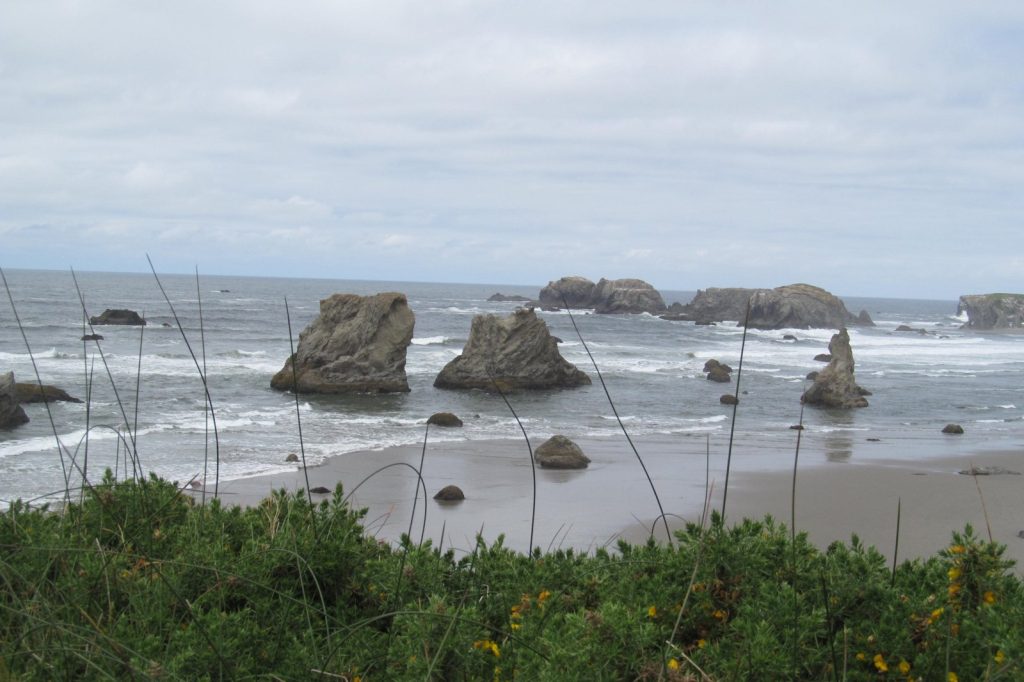
At 11:35 UTC on June 29, the U.S. Geological Survey recorded a magnitude 5.5 earthquake 218 kilometers west of Bandon, Oregon. The quake hit at a depth of just 10 kilometers. That is shallow.
Shallow earthquakes transmit more energy to the surface. A deeper quake of the same size would have produced less shaking.
Only three people had reported feeling it as of the USGS’s initial data. That number will likely rise. The agency collects and analyzes reports over hours.
But the epicenter being far offshore — roughly 135 miles out — reduced the shaking on land significantly. Still, the event matters for what it reveals about the region.
The area off the Oregon coast is seismically active. Over the past 20 years, at least 127 earthquakes of magnitude 5.0 or greater have struck within about 300 kilometers of this location. The largest was a magnitude 6.3 event in 2008.
Today’s 5.5 is moderate. Moderate earthquakes can cause minor to moderate damage near the epicenter. Damage depends on local building standards, population density, and ground conditions.
Well offshore, the risk of structural damage on land was low. But shallow depth raises the stakes.
A 10-kilometer-deep quake means the rupture happened close to the seafloor. That can amplify ground motion. For coastal towns like Bandon, the real danger is not the shaking itself.
It is what a slightly larger, slightly closer shallow quake could do. A magnitude 6.5 at the same depth and location would produce far stronger shaking.
A magnitude 7.0 would be a different story entirely. No tsunami warning was issued. That is standard for a magnitude 5.5 event.
Tsunami generation typically requires larger quakes, usually above magnitude 7.0, and specific fault movements. But the shallow depth and offshore location are the same ingredients that, at higher magnitudes, produce dangerous waves. The USGS monitors for that in real time.
Aftershocks are common after an earthquake of this size. Seismologists expect secondary shaking for days or weeks.
The standard USGS guidance for moderate seismic events advises people in the affected area to be prepared for further shaking. That advice applies here, though the epicenter’s distance from land means most aftershocks will also go unfelt.
What is at stake
This event is a reminder of the underlying tectonic reality. The Cascadia subduction zone runs offshore from northern California to British Columbia. It is capable of magnitude 9.0 earthquakes and tsunamis.
The 127 quakes of magnitude 5.0 or greater recorded in the past two decades are part of that system’s normal activity. Each one is a data point.
Scientists use them to study fault behavior, stress accumulation, and hazard probability. For residents of the Oregon coast, the stakes are concrete. A shallow earthquake closer to shore, or larger, could damage buildings, roads, and utilities.
Tsunami evacuation routes exist in coastal communities. Drills are conducted.
But preparedness depends on awareness. Events like today’s — moderate, distant, widely unfelt — can lull people into complacency. The three people who reported feeling it are a tiny fraction of the population.
Most people in Bandon likely had no idea it happened. That is the risk. Not today’s quake.
But the one that will come. The USGS network detected this event.
It will detect the next one too. But detection is not protection. The only protection is preparation.
And preparation requires paying attention to the moderate events, not just the big ones.




