
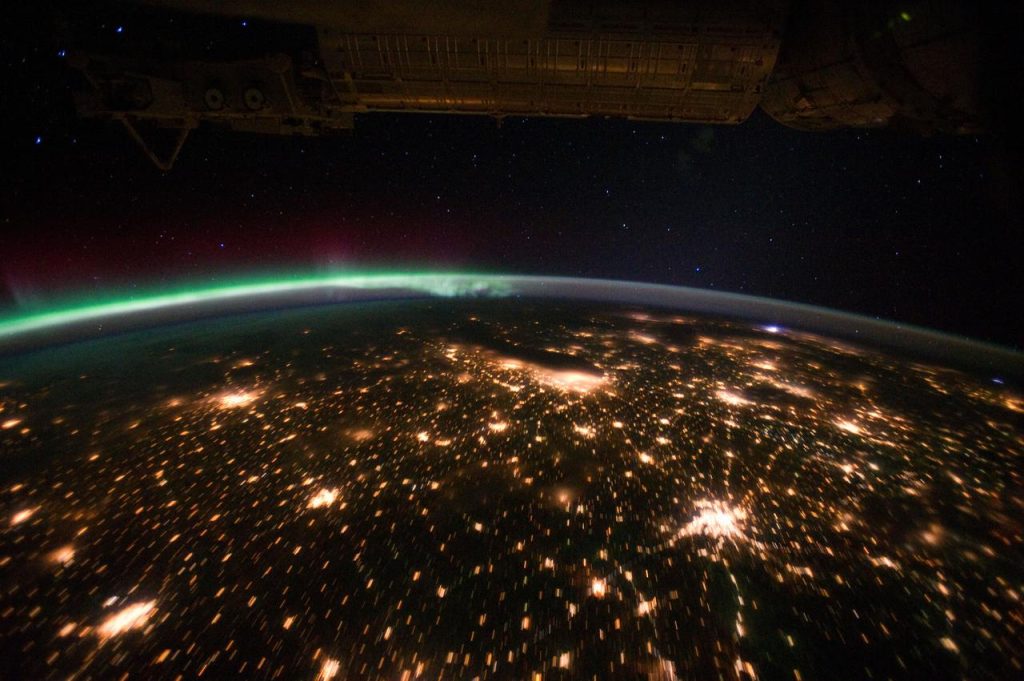
CAPE CANAVERAL, July 14 — On a launch pad by the Atlantic, a satellite unlike any other is being readied for flight. By nightfall in early 2025, if all goes to plan, a 100-square-meter mirror will begin unfolding in orbit, reflecting sunlight onto a patch of Earth below. The United States government has approved the launch of this satellite, designed to illuminate urban and remote regions at night, offering a secondary source of light from the heavens.
The approval came from the Federal Communications Commission on December 15, 2023, after a review process that weighed the promise of the technology against concerns over orbital debris and light pollution. The satellite is the work of Reflect Orbital, a private aerospace company led by CEO Ben Nowack.
The firm has raised venture capital funding to make the project a reality. The satellite will ride a SpaceX Falcon 9 rocket from Cape Canaveral, Florida, into orbit at an altitude of approximately 600 kilometers. The satellite’s reflective mirror is designed to focus sunlight onto a targeted area up to 10 kilometers in diameter.
The illumination, according to the company, will be equivalent to 10 full moons. The primary purpose is practical and urgent: assisting in disaster response, search and rescue operations, and nighttime construction.
On the ground, residents of cities and remote settlements alike may one night look up and see a new point of light moving across the sky. The satellite will operate for a minimum of five years before deorbiting, the FCC conditions require. Those conditions also demand that the satellite avoid reflecting light onto populated areas during certain hours, a measure intended to minimize light pollution.
Not everyone is welcoming the new light. The International Dark-Sky Association has raised concerns about the potential disruption to astronomical observations and wildlife behavior. Astronomers, who already contend with light pollution from cities and other satellites, worry that a moving mirror in the sky could interfere with sensitive observations of the cosmos.
Nocturnal animals, from migrating birds to sea turtles, rely on natural darkness for navigation and breeding; a beam of reflected sunlight could disorient them. The FCC review process considered these objections.
The conditions attached to the approval reflect an attempt to balance innovation with environmental stewardship. The satellite’s mirror will not be a constant presence; it will target specific areas for specific purposes, and only during certain hours. The launch, scheduled for early 2025, will be a test of the technology and the regulatory framework that governs it.
Reflect Orbital has raised the capital to build and launch the satellite. The company’s CEO, Ben Nowack, has positioned the project as a tool for humanitarian aid and infrastructure development.
Whether the mirror satellite becomes a common sight in the night sky or a one-off experiment will depend on the results of this first mission. By nightfall, the scene at Cape Canaveral will be one of anticipation. Engineers will check the Falcon 9’s systems one last time.
The mirror, folded for launch, will wait to unfurl in the vacuum of space. And on the ground, the debate over light versus darkness will continue.
Sources
{“@context”: “https://schema.org”, “@type”: “NewsArticle”, “headline”: “US Approves Mirror Satellite to Reflect Sunlight at Night”, “description”: “CAPE CANAVERAL, July 14 — On a launch pad by the Atlantic, a satellite unlike any other is being readied for flight. By nightfall in…”, “datePublished”: “2026-07-14T09:30:00+00:00”, “author”: {“@type”: “Person”, “name”: “Isabella Moore”}, “publisher”: {“@type”: “Organization”, “name”: “InfoPulse Today”, “url”: “https://newsfeed.infopulsetoday.com/”}, “citation”: [{“@type”: “CreativeWork”, “url”: “https://en.wikipedia.org/wiki/Satellite”}]}




