
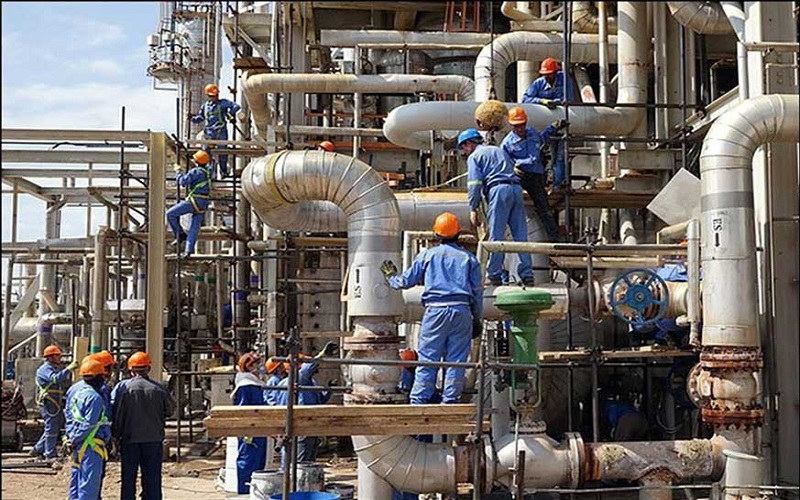
TEHRAN, July 25 — The petroleum industry in Iran sits at the center of a global energy calculus, where a single miscalculation could send oil prices climbing in ways that affect consumers and markets far beyond the Persian Gulf. For the families and business owners who watch fuel costs rise and fall with each geopolitical tremor, the stakes are not abstract. They are measured in the monthly budget, in the cost of a commute, in the price of heating a home.
Past confrontations between the United States and Iran have demonstrated just how quickly these shocks can arrive. After the assassination of Qasem Soleimani on January 3, 2020, Brent crude jumped from $66 to $71 per barrel over three days.
Markets were pricing in the risk to the Strait of Hormuz, the narrow waterway through which about 20% of global oil transits daily. The price then dropped sharply as no further escalation occurred. In 2019, after a drone incident, oil briefly rose 4% on the day of the shoot-down.
These episodes are now part of a pattern that traders and analysts track closely.
The 2025 Near-Strike and Its Aftermath
When a near-strike scenario unfolded in 2025, oil did not initially spike. Markets were assured by the hold. But the calm may be deceptive.
Analyst reports from Goldman Sachs and the International Energy Agency (IEA) estimate that an actual strike could push Brent crude to $95–105 per barrel. The reason lies in a supply picture that is already tight.
OPEC+ cuts led by Saudi Arabia and Russia have removed 2 million barrels per day from global markets since 2023. Into that constrained environment, a disruption to Iranian output would be acutely felt. Iran produces about 2.5 million barrels per day—a 2024 estimate—and its exports, mostly sent to China through sanctions evasion, would face significant disruption.
The most dramatic scenario involves a retaliatory Iranian blockade of the Strait of Hormuz. In that event, analysts warn, oil could surge above $150 per barrel.
The US Navy has contingency plans for such a blockade, but the economic consequences would be severe and immediate.
Strategic Reserves and the Human Dimension
The US administration has released about 5 million barrels from the Strategic Petroleum Reserve (SPR) following the hold as a signal of readiness. But the SPR is at its lowest level since 1984, holding roughly 350 million barrels as of March 2025. That reserve is a critical buffer, but its diminished size means less room for error if a crisis deepens.
Behind the numbers are real choices for policymakers and real consequences for consumers. Every jump in oil price ripples through the economy—transportation costs rise, goods become more expensive, and households feel the pinch.
For people in communities that depend on stable energy prices, the risk of a prolonged disruption is a source of genuine concern. What happens next depends on decisions made in capitals far from the oilfields. The market is watching for any sign of escalation or de-escalation.
The history of these confrontations offers a clear warning: volatility can arrive without notice, and the price of inattention is measured in the cost of a barrel.




