
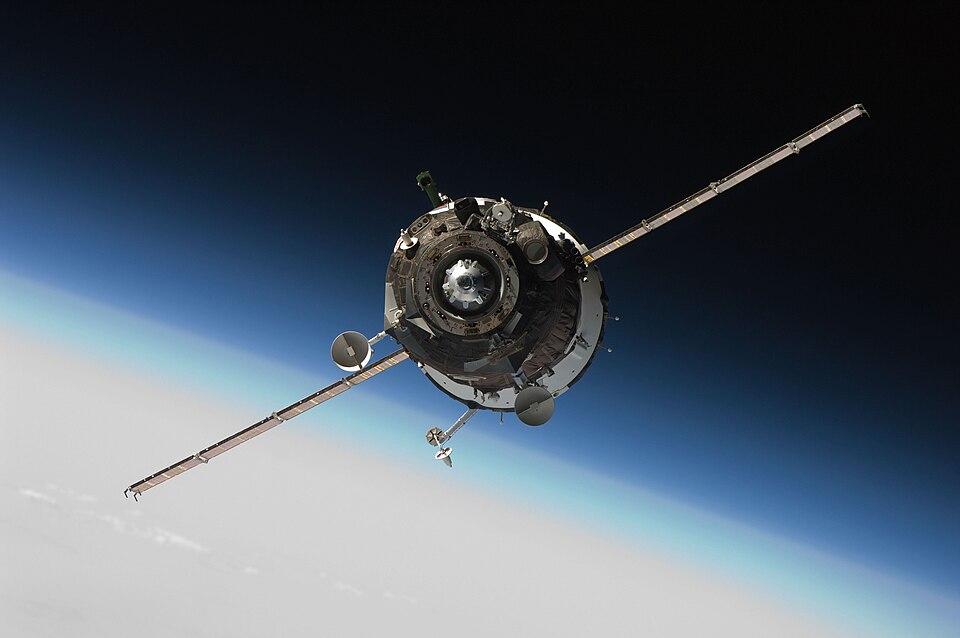
Every Starlink that comes home leaves a receipt: roughly 30 kilograms of nanoparticles of aluminum oxide, invisible, chemically reactive, slow to settle. SpaceX deorbited about 120 of the satellites in January 2025 alone, by satellite tracker Jonathan McDowell’s count at Harvard’s Center for Astrophysics, four to five a day, and the pace has held into 2026 as first-generation hardware is retired for upgraded replacements. By mid-April this year, tracking data already put several hundred Starlink reentries in the books.
The numbers that matter come from the University of Southern California. Its 2024 study in Geophysical Research Letters calculated that satellites coming down released a combined 17 metric tonnes of aluminum oxide into the upper atmosphere in 2022. At full megaconstellation build-out, with Starlink alone holding approval for up to 42,000 satellites, the projection climbs to 360 metric tonnes a year, 646% above the natural input from cosmic dust.
The technical reality is plumbing, not fireworks. Most ablation happens in the mesosphere, 50 to 85 kilometres up, well above the stratosphere where some 90% of ozone lives. But the particles do not stay put: they drift down through global circulation within one to three years and persist for years to decades, and and, since nothing consumes them in chemical reactions, the residue accumulates with every burn-up. Under the hood, the oxide works as a heterogeneous catalyst, converting inert reservoirs of chlorine, hydrogen chloride and chlorine nitrate among them, into ozone-destroying chlorine, particle after particle, year after year.
The empirics are already in. A NOAA-led team, writing in PNAS, Proceedings of the National Academy of Sciences, in 2023, flew a particle mass spectrometer on a high-altitude research aircraft and found more than 20 metals, aluminum, copper, lithium and lead among them, inside stratospheric sulfuric acid particles. About 10% of acid particles larger than 120 nanometres already carry spacecraft-derived metal, and for several elements the reentry flux now exceeds what cosmic dust delivers. “The influence of this level of metallic content on the properties of stratospheric aerosol is unknown,” the team wrote. Joseph Wang, the USC professor behind the modelling, put it plainly: “Only in recent years have people started to think this might become a problem”, said Wang.
As ever, the gap is regulatory. Debris policy counts trackable objects, the 7-kilometres-per-second kind; chemistry leaves no catalogue entry. Boley and Byers flagged the atmospheric angle in 2021 in Scientific Reports, and nothing in the Montreal Protocol was drafted with satellite smoke in mind. The detail that matters: this mess needs no collision. It is delivered on schedule, one clean reentry at a time.
Sources
- Starlink Reentries and Atmospheric Aluminum Oxide | FODNews
- ESA Tracks Satellite Reentry by Aircraft as 'Metal Particulate' Warnings Mount — BigGo Finance




