
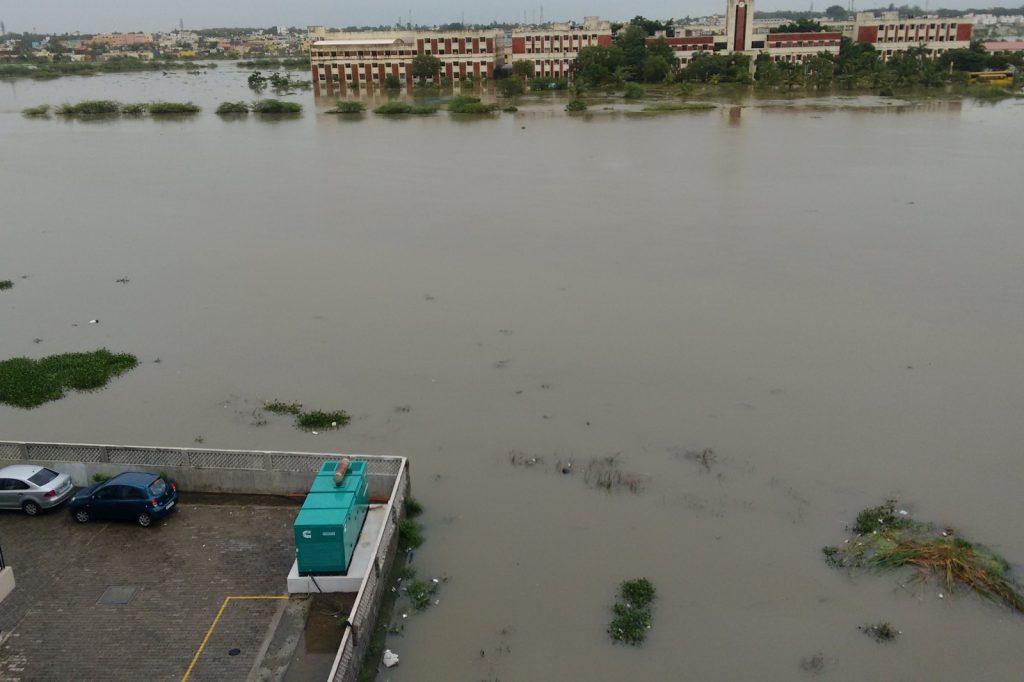
For thousands of families in this low-lying Chennai neighborhood, the coming monsoon season brings a familiar anxiety. The worry centers not simply on the rainfall itself, but on what occurs when rain meets waterways that are heavily choked with water hyacinth. Residents are pressing authorities to clear these aquatic weeds from local canals and stormwater drains before heavy storms arrive, arguing that unchecked plant growth blocks the free flow of rainwater and puts homes at direct risk of flooding.
Residents Cite 2023 Waterlogging Crisis
Geetha Ganesh, secretary of the AGS Colony Residents Welfare Association, recalled that blockage caused by water hyacinth in the Okkiyam Maduvu canal was a primary factor behind severe waterlogging that struck the area in 2023. She said several localities — AGS Colony, Vijaya Nagar, Tansi Nagar, and Ram Nagar — were submerged for nearly five days. For families in those neighborhoods, five days under water meant ruined belongings, disrupted lives, and a lingering fear that such an event could recur.
Residents stress that the stormwater drain network in the area often carries sewage, and that this sewage inflow fuels the growth of water hyacinth. V.
Sundar, also of the AGS Colony Residents Welfare Association, stated that the Water Resources Department must take measures against illegal sewage release into waterways and waterbodies. He and other residents called for the Pallikaranai marshland to be cleared of vegetation, particularly near 16 crucial culverts, to allow floodwater to flow freely. Additional requests include dredging of the Adyar river mouth and removal of vegetation from Velachery Lake.
Some of these demands are long-pending. Residents also want desilting of Velachery Lake and removal of encroachments to improve its capacity.
M. Balakrishnan, general secretary of the Tansi Nagar Residents Welfare Association, said residents have been fighting for encroachments to be removed on a six-vent culvert to enable floodwater to flow into the Pallikaranai marshland.
Shrinking Lake and Stalled Plans
Velachery Lake, also known as Velachery Aeri in Tamil, is one of the water bodies inside Chennai in the southern Indian state of Tamil Nadu. It sits in a low-lying part of the city. During the monsoon, rainwater from surrounding neighborhoods drains into it.
Over time, however, the lake has shrunk dramatically. The rapid pace of real estate development in the last two decades led to a sharp reduction in the waterbody’s area.
A large share of the original lake bed was allocated to housing boards for development. The lake has faced encroachments, and residents have long complained about pollution. Sewage flowing into the water has fueled the growth of aquatic weeds and caused local mosquito populations to rise.
In many low-lying parts of Chennai, flood-control infrastructure depends on waterways that link to lakes and marshlands. When those channels are blocked, the system backs up.
Authorities had previously drawn up plans to beautify the lake. That proposal included fencing the entire waterbody, building walking decks and a boating jetty, and planting trees and flowering plants around the banks. The plan also called for removing encroachments in nearby settlements. But many of those projects have languished as residents continue to press for basic measures such as desilting and clearing vegetation.
With the monsoon season approaching, the condition of Velachery Lake and its connecting drains directly affects flood risk for thousands of homes in the area. A lake that is reduced in capacity and filled with weeds cannot absorb or channel stormwater effectively.
For families in low-lying neighborhoods, that means the difference between a wet spell and a prolonged inundation. Residents have made it clear that without steady maintenance of the lake and its drainage network, the cycle of waterlogging is likely to repeat. Their message is straightforward: clear the waterways before the next heavy rain arrives, and ensure the natural drainage system works as it should — not blocked by weeds and sewage.




