
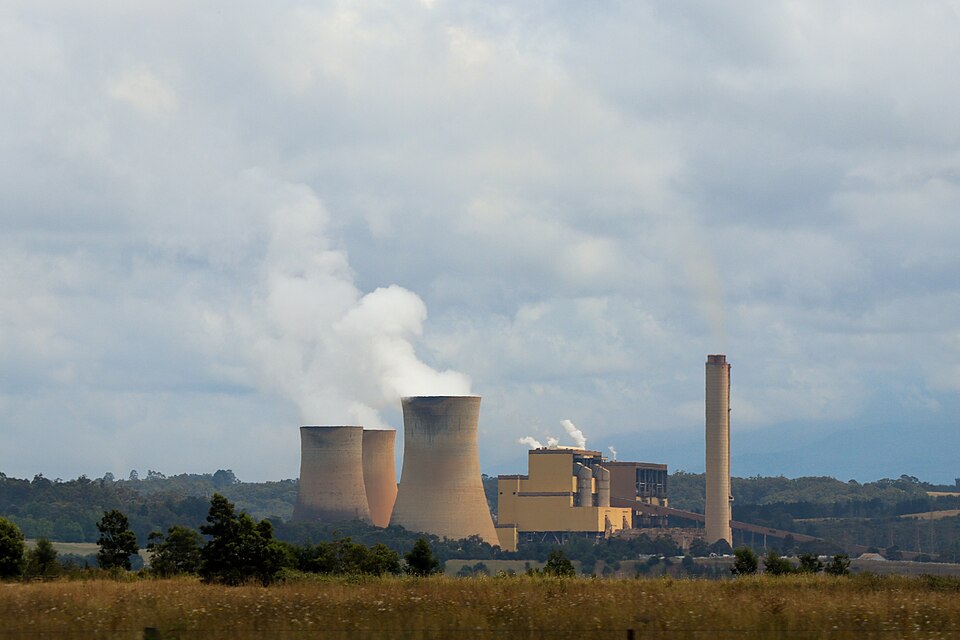
“It’s not asking for more coal plants.” That was the line Martin Cameron, the Nationals member for Morwell, offered the ABC after the Victorian Coalition said it would not force any coal-fired power station to close early if it wins the state election in November. ABC Gippsland reported the pledge on August 14, 2026.
Cameron announced the plan the day before. The Nationals pointed to warnings from the Victorian Auditor-General that the state could face electricity shortfalls once Yallourn Power Station shuts in 2028. The Coalition’s aim is to keep the existing Latrobe Valley generators running as long as possible, he said, “to supply a consistent, constant base load power for Victoria.” Loy Yang A and B would run to the end of their lives, or until other sources can carry the load.
He also conceded a point. Nobody was discussing bringing any closure forward.
Dates already set
The operators say their timetables have not moved. EnergyAustralia, which runs Yallourn, told the ABC the plant will retire at the end of June 2028. A spokesperson said the company gave seven years’ notice so the market and governments could prepare. EnergyAustralia is also weighing an early-stage proposal for the site, a Yallourn Energy Security Precinct built around gas generation, large-scale battery storage and a data centre. Its 350MW Wooreen battery is under construction, with operations expected in 2027.
AGL confirmed that Loy Yang A is still due to close in 2035. Loy Yang B has no firm date. Hazelwood, the other big Latrobe Valley station, closed in March 2017.
A Victorian government spokesperson said renewables remained the “most cost-effective way” to replace coal, and that AEMO and VicGrid had been preparing for Yallourn’s closure since it was announced in 2021. Cameron, for his part, said Labor’s plan to replace Loy Yang A with wind and solar by 2035 was not tracking well.
What the numbers and the experts say
State figures show renewables supplied 44 per cent of Victoria’s electricity in 2025, beating that year’s target. AEMO data showed brown coal generation falling to all-time lows in the last quarter, driven by lower availability.
Bruce Mountain, director of the Victoria Energy Policy Centre at Victoria University, saw no prospect of the 2028 closures arriving sooner than planned. If anything, he said, the Victorian government has contracted with EnergyAustralia to possibly extend Yallourn beyond 2028. He thought the market could absorb the loss of 1000mW there, as it did with Hazelwood in 2017. Shutting either Loy Yang plant within five years was another matter. “Extremely problematic,” he said, and Victoria “will definitely have capacity shortfalls.”
Environment Victoria’s climate campaign manager, Joy Toose, rejected the Coalition’s approach. She said it doubled down on “the aging, unreliable infrastructure that’s causing the problem in the first place,” and noted that last summer a quarter of Victoria’s coal capacity was offline at any given time. Renewable energy, she said, costs roughly half the wholesale price of coal and gas.




