
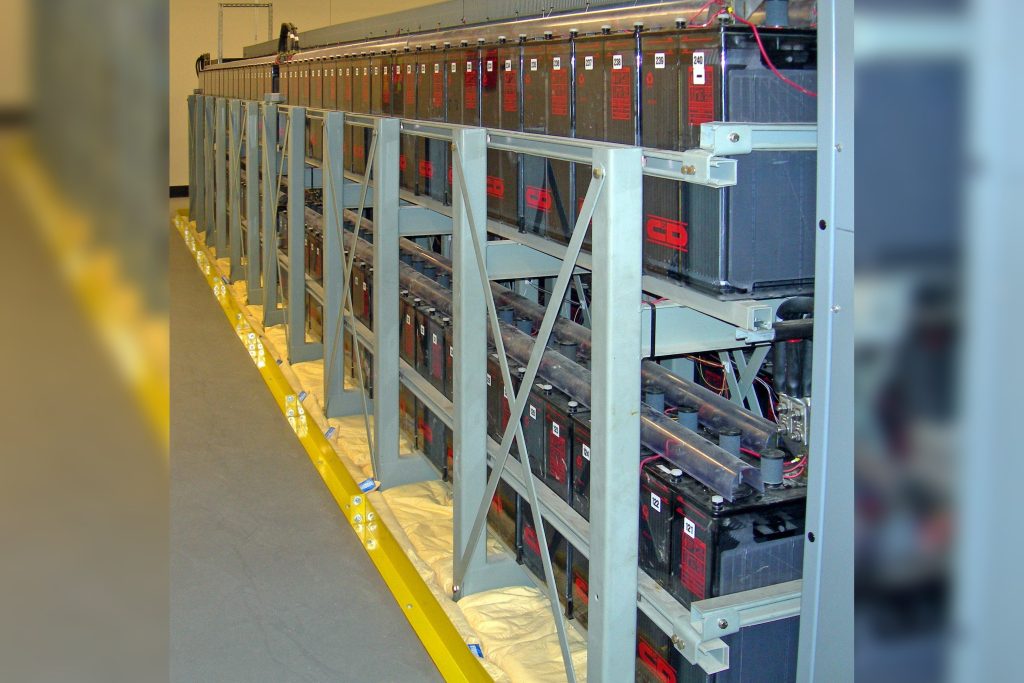
At the Shelton, Connecticut headquarters of OEM Controls, two custom Budderfly-branded battery units are now installed. They are the latest piece of a plan announced June 17, 2026, to put Viridi’s battery energy storage systems into 100 commercial sites that Budderfly manages across the United States.
Viridi describes itself as the industry leader in fail-safe battery storage. Budderfly calls itself the fastest-growing energy-as-a-service company in the country. The first phase of the work is under way in Massachusetts, Connecticut and California. Viridi batteries are already in place at three Dunkin’ and 99 Restaurants locations.
What the customers get
The targets are restaurants, retail, fitness and manufacturing sites. Budderfly’s model means the host business does not pay up front. The company handles deployment, monitoring and optimization, and the batteries run alongside efficiency upgrades, solar and controls rather than as stand-alone equipment.
“Battery storage is a natural evolution of our Energy as a Service model,” a Budderfly executive told The Battery Magazine. The idea is to reduce peak demand and operating costs and improve resilience, without the customer carrying the capital cost or the complexity of running the equipment.
Al Subbloie, Budderfly’s CEO, called the 100-site deal “an important milestone in Budderfly’s multi-phase energy storage strategy, which will see deployments to thousands of commercial sites.”
The safety argument
Viridi’s pitch rests on what happens when a battery cell fails. Lithium-ion cells can go into thermal runaway, and Jon M. Williams, Viridi’s CEO, says even the best cells have a chance of a catastrophic event over their lifetimes. Viridi’s answer is a passive design meant to stop that from spreading. He said its UL 9540A test, slab mounted and indoors, found the pack inert to the space once thermal runaway was triggered, with no measurable heat, fire, smoke or gas.
That matters because the market is moving, in his words, from large systems installed away from people to installations “in neighborhoods and inside of buildings where people live and work.” He said the old practice of letting a battery burn in place for weeks should not carry over into occupied buildings.
“Safety has become one of the most important considerations in commercial battery storage deployment,” Williams said in the announcement. He added that the partnership shows scalable systems can be deployed efficiently “without compromising on safety, reliability, or performance.” Viridi says its commercial-scale system is among the first and only ones installed in an existing, occupied building.
Grid angle
Budderfly says each additional battery adds flexible capacity that can ease pressure on the grid while paying off at the site itself. A bigger connected fleet, the company argues, delivers greater savings at individual sites and opens up grid-responsive uses, using existing assets better instead of leaning only on new large-scale infrastructure.
Sources
- Viridi and Budderfly Partner to Deploy BESS at 100 US Sites
- Viridi and Budderfly Scale Commercial Battery Storage to 100 Sites Nationwide
- Viridi/Budderfly deal will lead to commercial battery storage at 100 sites




