
Forty‑six years after launch, Voyager 1 has stopped transmitting scientific data back to Earth. The spacecraft fell silent on December 13, 2023, although it remains capable of receiving commands from mission controllers. This interruption marks the latest in a series of glitches that have plagued the venerable probe since its inception, and engineers expect further challenges as the mission ages.
Mission Milestones
Voyager 1 was built in the 1970s, its onboard computers possessing less memory than a modern car key fob. Launched on September 5, 1977 — sixteen days after its twin, Voyager 2 — the pair were originally designed for a four‑year flyby of Jupiter and Saturn.
Both spacecraft far exceeded those expectations. Voyager 1 encountered Jupiter, then Saturn, and finally Saturn’s moon Titan, returning images and measurements that reshaped planetary science. Among its discoveries were active volcanoes on Io, the complex structure of Saturn’s rings, and the first detailed view of Titan’s hazy atmosphere.
After the Saturn encounter, Voyager 1’s trajectory was lifted out of the plane of the solar system, leaving no further planetary targets. It continued onward, crossing the heliopause in 2012 — the boundary where the Sun’s solar wind yields to interstellar space — becoming the first human‑made object to leave the solar system.
The data gathered during that crossing altered scientific understanding of the Sun’s outer influence.
Current Challenge
Today Voyager 1 resides 172.59 astronomical units from Earth, a distance equivalent to 25.8 billion kilometers or 16 billion miles. A radio signal traveling at light speed requires more than 21 hours to reach the probe, with an identical delay for a reply.
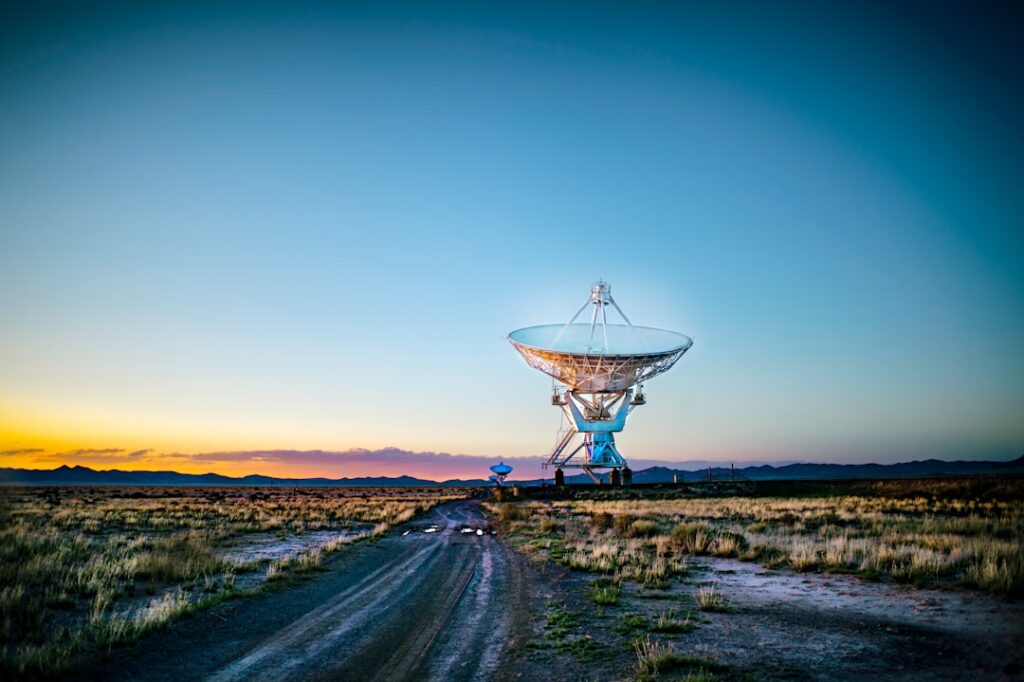
Communication relies exclusively on NASA’s Deep Space Network, a set of giant radio antennas located in California, Spain, and Australia, which have been listening for decades and continue to do so. The present issue lies in the flight data system, which packages information for transmission to Earth. This subsystem is not functioning correctly, halting the flow of scientific telemetry.
Engineers at NASA’s Jet Propulsion Laboratory are investigating the fault, drawing on past experience with similar problems. Voyager 1 retains backup systems for most components, but the spacecraft’s age shows in its aging wiring, diminishing power supply, and the gradual decay of the plutonium that fuels its radioisotope thermoelectric generators.
Each year less power is available, prompting NASA to shut down certain instruments to conserve energy, with additional shutdowns anticipated.
Enduring Legacy
Mission scientists have long known that Voyager 1’s operational lifetime is finite. Every day it still returns data is a day beyond the expectations held at




