
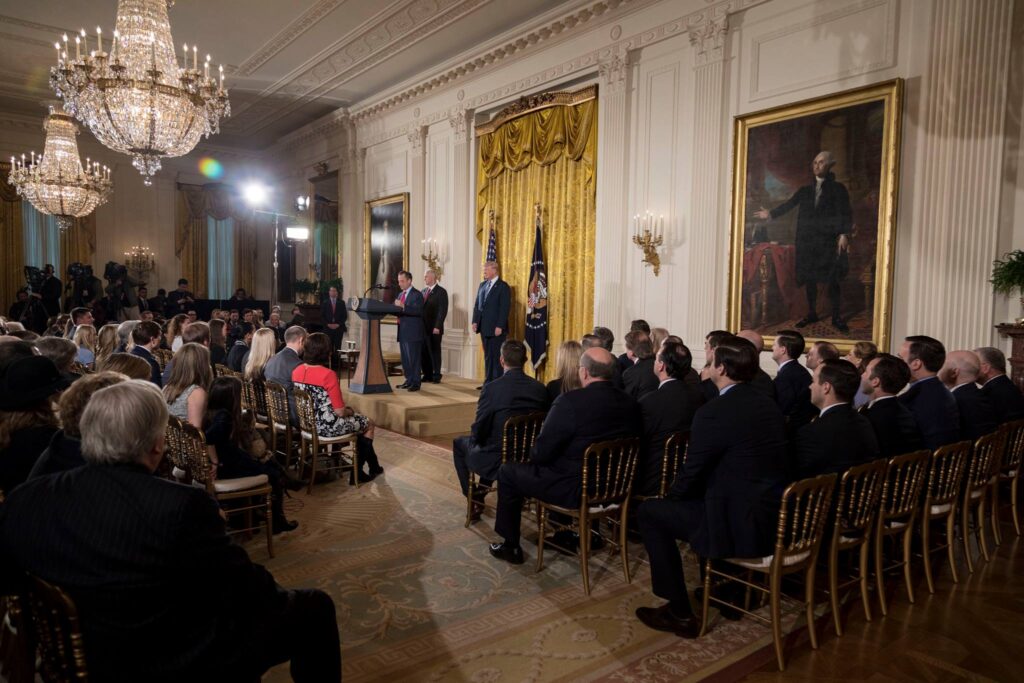
The White House this week issued a Ratepayer Protection Pledge — a proclamation that on its face is about energy bills. But read closely alongside the other actions taken, and a clearer picture emerges of an administration framing consumer protection as a national security issue. The pledge, one of several executive actions announced for the week of March 1, 2026, commits the administration to protecting American energy consumers from unfair practices.
It promises a more equitable energy market. The language is direct: ratepayers, the people who flip on lights and heat their homes, should not be exploited.
That proclamation landed in the same week as a separate order targeting cybercrime, fraud, and predatory schemes against Americans. And a third action: a continuation of the national emergency with respect to Iran. And a fourth: a proclamation on countering cartel criminal activity.
Together, they form a bloc. The administration is not treating energy policy as a standalone utility issue.
It is grouping ratepayer protection with the fight against cartels, with the ongoing posture toward Iran, with the war on cyber fraud. The message is that the same predatory instincts — whether from a drug trafficking organization, a state actor running cyber operations, or a company gaming energy markets — are a threat to American citizens. The Combating Cybercrime, Fraud, and Predatory Schemes Against American Citizens executive order aims to enhance the nation’s defenses.
It does not specify which schemes or which cyber threats. But its placement alongside the ratepayer pledge suggests the administration sees a through-line: Americans are being targeted from multiple directions, and the response must be unified. On foreign policy, the Continuation of the National Emergency With Respect to Iran notice is a routine but pointed reminder.
The Iranian threat, the administration argues, remains. It requires sustained attention.
That attention, in the same week as domestic consumer protections, signals that national security is not just about missiles and borders. It is about the integrity of the systems Americans rely on every day. The Commitment to Countering Cartel Criminal Activity proclamation reinforces that point.
Cartels are not a foreign policy abstraction. They are criminal enterprises that hurt American citizens directly.
The administration is drawing a line from cartel violence to energy market manipulation to online fraud. Each is a form of predation. Each requires a government willing to act.
What is striking is the absence of new legislation. These are executive actions and proclamations. They do not require Congress.
They are statements of intent and priority. The administration is telling the public, and the bureaucracy, where its focus lies.
For ratepayers, the pledge is the most tangible piece. Energy costs are a kitchen-table issue. The administration is betting that voters will notice a government that says it will protect them from unfair pricing.
Whether the pledge translates into lower bills is not yet clear. But the framing is deliberate: the same government that stands up to Iran and cartels will stand up for the person paying the electric bill.
Critics might ask what enforcement mechanisms exist. The report does not specify any. The proclamation itself may be largely symbolic.
But symbols matter in politics. The administration chose to put ratepayer protection in the same category as countering cartels and cybercrime. That is a choice worth noting.
The week’s actions, taken as a whole, argue that the threats facing Americans are not neatly divided into foreign and domestic. A cyber scam run from overseas and a price-gouging energy company and a cartel smuggling drugs across the border — all of them, in this administration’s view, are preying on American citizens.
All of them require a response.




