
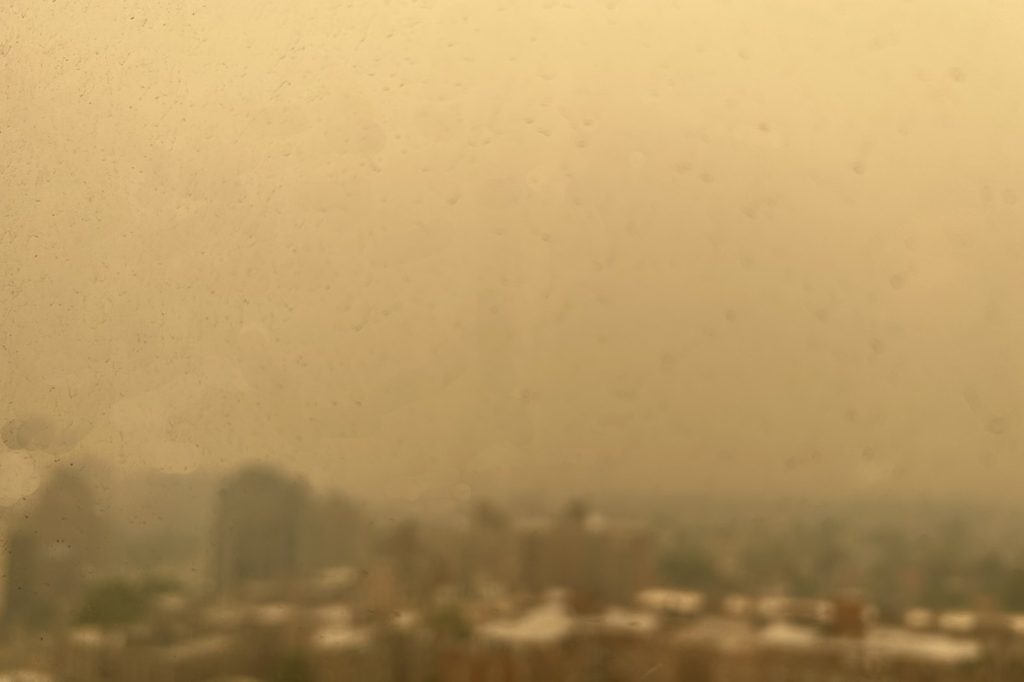
New York was already under an ozone advisory on Tuesday, with the Air Quality Index at 105, in the “Unhealthy for Sensitive Groups” range. Then city officials warned that wildfire smoke could make it worse.
New York City Emergency Management and the Department of Health and Mental Hygiene said smoke from wildfires in western Ontario was expected to show up overhead beginning Wednesday. The plume was crawling across New York State. How much of it would reach street level in the city was, the agencies said, still uncertain. Any spikes were expected to stay below the trigger for an air quality health advisory.
Heat and smoke together
The timing is awkward. A Heat Advisory was in effect through Wednesday, forecast to be the hottest day, with temperatures near 100°F and a heat index as high as 102 to 103°F.
“This week, New Yorkers are facing two environmental health challenges at once, extreme heat and the potential for wildfire smoke,” said Health Commissioner Dr. Alister F. Martin. His advice: stay in a cool, air-conditioned space, check the air quality forecast, and cut back on outdoor activity if smoke worsens. “If you have trouble breathing, chest pain, or severe symptoms, seek medical care right away.”
The city put heat first. Extreme heat is the deadliest weather hazard, officials said, and a bigger immediate threat to life than the air quality now forecast. People without air conditioning should go to a cooling center even if the air is poor. Nearly 600 are open across the five boroughs; callers can dial 311 or use the city’s Cool Options Map. Those with air conditioning should stay put rather than go outside looking for cleaner air.
Where the smoke comes from
A cluster of actively burning fires in northwestern Ontario is throwing up large plumes that satellites can see. They are affecting air across the Great Lakes and the U.S. Northeast. Canada’s 2026 season has run hot nationally, the city said, with warmer-than-normal temperatures and dry conditions raising the odds of more large fires.
Officials pointed to June 2023, when smoke pushed the city’s AQI to hazardous levels and a peak of 465. Current forecasts do not point to a repeat. Still, conditions could reach or pass “Unhealthy for Sensitive Groups” for smoke, and people with heart or lung conditions were told to prepare now.
The AQI runs from 0 to 500 across six levels of health concern. The city’s statement said no one is immune to smoke and that even healthy adults can have symptoms as the index climbs. Those at greatest risk include older adults, children, infants, pregnant people, outdoor workers, and people with heart disease, lung disease or asthma.
Masks and alerts
Free KN95 masks are available at public library branches in all five boroughs. They include Brooklyn Public Library and Queens Public Library locations, and these New York Public Library branches: St. George Library Center on Staten Island, the Bronx Library Center, and the Stavros Niarchos Foundation Library in Manhattan. Emergency Management said it was working to add distribution sites and would name more if air quality worsens.
The state Department of Environmental Conservation issues an updated air quality forecast daily. If observed conditions deteriorate significantly, the city will alert residents through Notify NYC, its free emergency notification system.
Consult your doctor for medical advice.




