
Four Republican members of Congress from Michigan have written to Prime Minister Mark Carney to say Canada isn’t doing enough about its wildfires. Their letter carries a warning: if Canada does not act, “the United States will look elsewhere, and act on our own, to protect our people.”
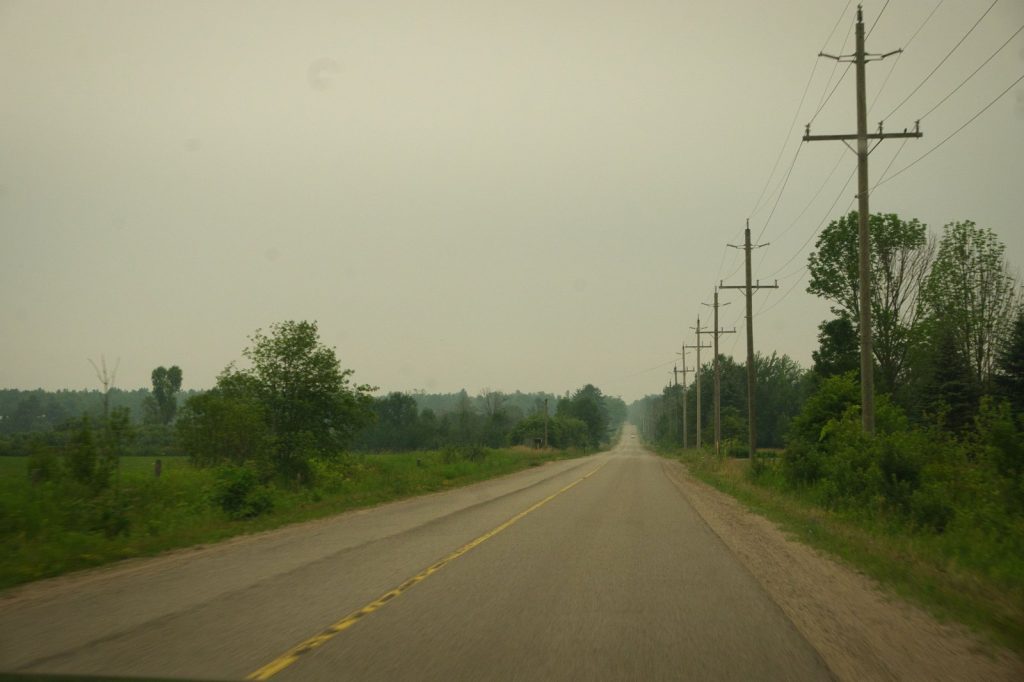
The row follows a week in which Ontario was fighting dozens of fires it could not contain, with thousands of people under evacuation orders. Smoke from those fires has settled over parts of the United States, and a good many Americans are annoyed about it.
Rep. Lisa McClain, one of the letter’s signers, said Canada “needs to do more” to keep the smoke from becoming an “annual crisis.”
A climatologist’s reply
David Phillips, a senior climatologist at Environment and Climate Change Canada, does not think much of the blame game. “The weather doesn’t stop at the international border,” he told Yahoo News Canada. “It’s very wrong to be pointing the finger from one area to another.”
His explanation is mechanical rather than political. Intense fire activity, northwest winds and a heat dome over parts of both countries combined to move the smoke. Phillips compared the heat dome to a “vacuum cleaner” that pulled smoke down from higher in the atmosphere and pinned it nearer the ground. That is what produced the thick haze and the dangerous air readings in Ontario and across the border.
He also pointed out that the traffic runs both ways. “We don’t complain about Alaska fires, or from California, Washington State, Oregon fires, that bring smoke into Canada,” he said.
Nor does he expect relief just yet. “The smoke is still not going to go away, it may move its location,” Phillips said. “If the winds blow from a different direction… that smoke will come back.”
Reaction online
In the northeastern U.S., people woke to hazy skies, orange sunsets and air quality warnings, and posted photos of the murk. Many wanted to know why fires hundreds of kilometres away were fouling their air.
Some users on X took Canada’s side. One reminded readers that Canada has sent firefighting resources, waterbombers among them, to help with U.S. blazes, and likened the complaints to Canadians blaming Americans for hurricanes. Others argued that lightning, weather patterns and climate conditions drive fires, so no single country owns the problem. A few asked why the conversation was about blame at all, and called for the two countries to work together.




