
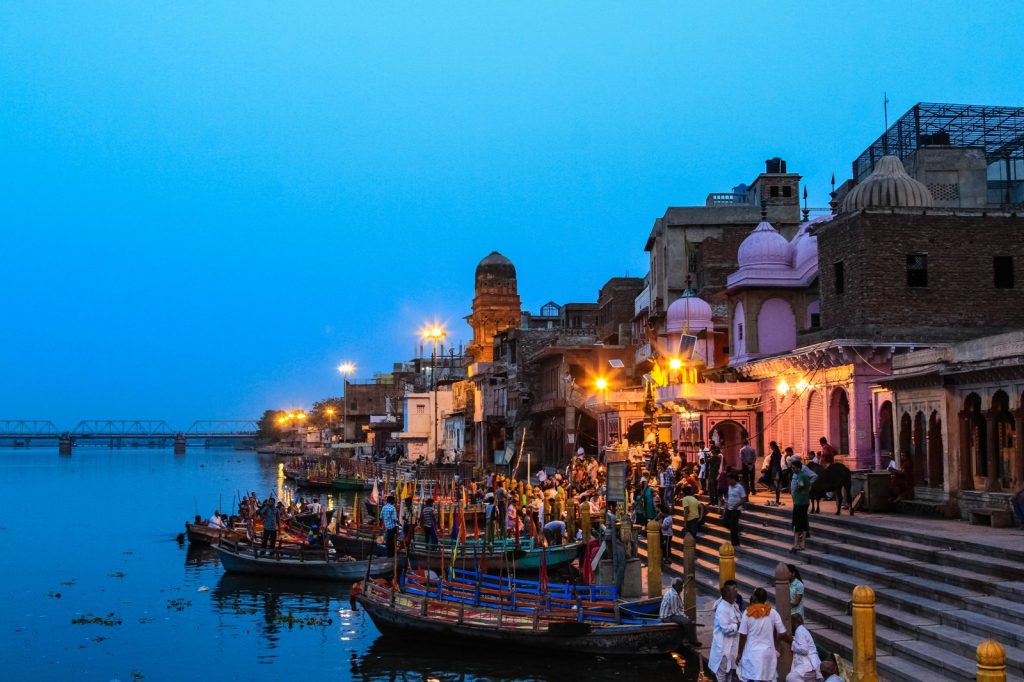
On 10 April 2026, a boat carrying religious devotees overturned in the Yamuna River close to Mathura, Uttar Pradesh, killing at least ten people. Thirteen more were taken to hospitals with injuries, and several passengers remain unaccounted for. The incident occurred amid a devotional gathering, highlighting the challenges of managing large‑scale faith‑based events on a river that is both a sacred waterway and a major tributary of the Ganges.
The Yamuna stretches 1,376 km from its source at the Yamunotri Glacier, draining a basin of 366,223 sq km across the Indo‑Gangetic plains. It is the second‑largest tributary feeding the Ganges and supports a diverse ecosystem of flora and fauna.
Overloaded vessels, insufficient life‑jacket provisions, and lax enforcement of safety rules have long been reported on the Yamuna. The recent capsizing adds to a pattern of accidents that have repeatedly claimed lives during pilgrimages and other religious outings. Religious congregations on the Yamuna are not limited to occasional events.
The Kumbh Mela, held every twelve years at the Triveni Sangam in Prayagraj, regularly draws millions of participants, placing immense pressure on transport, waste‑management and water‑safety systems. Although the Mathura tragedy did not occur during a Kumbh Mela, it took place on an ordinary day of devotion, suggesting that safety lapses are not confined to the largest festivals.
Environmental concerns intersect with the safety issue. The river already bears the strain of industrial discharge, urban sewage and other pollutants. Large gatherings contribute additional waste, noise and physical wear on riverbanks.
While conservation programmes exist, they have struggled to keep pace with the growing volume of pilgrim traffic and the accompanying environmental load. Authorities in Uttar Pradesh are expected to field questions about the enforcement of boat‑capacity limits and the availability of life‑saving equipment.
Short‑term measures may include tighter monitoring of passenger numbers on vessels, but historical trends indicate that such controls often wane after an initial response. Long‑term solutions discussed in reports point to the adoption of sustainable practices and the integration of renewable‑energy technologies for river transport. However, these proposals remain aspirational, and immediate action is needed to prevent further loss of life. The Yamuna flows through both Uttar Pradesh and Haryana, regions experiencing rapid population growth, rising water demand and increasing religious tourism.
More visitors typically translate into more boats, and without rigorous oversight, the risk of accidents rises accordingly. The figure recorded on 10 April—ten fatalities, thirteen injuries and several missing persons—adds to a growing ledger of river‑related tragedies.
Whether this incident will trigger substantive policy reform or become another statistic in a long list of accidents remains to be seen.




