
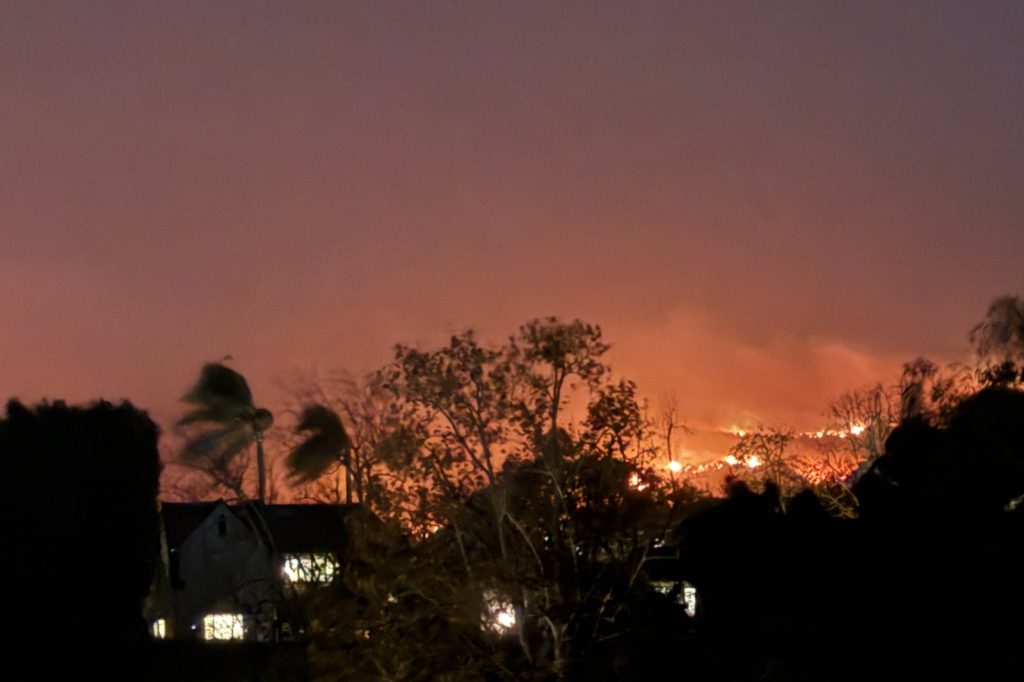
The Palisades Fire, which erupted on January 7, 2025, has become one of California’s most devastating wildfires. Official counts list twelve fatalities, the loss of 6,837 structures and roughly 37 square miles of coastal mountain terrain reduced to ash.
The blaze has razed homes across Pacific Palisades, Topanga and Malibu, prompting a massive emergency response and a federal pledge of assistance. Authorities are now probing whether the disaster could have been averted if earlier actions had been more thorough. The fire is believed to be a rekindling of the Lachman Fire, which first ignited on January 1.
Los Angeles Fire Department crews responded to that initial incident, but the incident report states the fire was not fully extinguished. It continued to smolder, later reigniting under the influence of strong Santa Ana winds.
Those winds are a regular seasonal feature in Southern California, known for turning dry vegetation into rapid‑spreading fuel. Emergency planners anticipate them each year, yet the combination of lingering heat and an incompletely suppressed fire allowed the Palisades blaze to flare into a large‑scale emergency. Complicating matters, the Eaton Fire was burning concurrently, stretching fire‑fighting resources thin across the region. Crews were forced to divide their attention, evacuation routes became congested and the air was filled with smoke from multiple sources, amplifying the challenges faced by responders.
Federal officials, including the President, have pledged support, and state and local agencies are coordinating their efforts. While this level of inter‑governmental response is typical for major wildfires, the scale of reconstruction in the affected neighborhoods will be extraordinary.
Rebuilding nearly 7,000 homes and businesses will take years, insurance claims are expected to linger, and the psychological impact on residents who witnessed the western edge of Los Angeles burn will be long‑lasting. The ongoing investigation into the Palisades Fire’s cause has, so far, not identified an external ignition source. Early findings suggest the fire’s origin may be tied to the incomplete suppression of the earlier Lachman incident rather than a new spark or natural event.
Los Angeles Fire Department officials will be required to explain the handling of the Lachman Fire, including decisions about containment, post‑fire inspections and resource deployment during high‑risk periods. The broader wildfire‑prevention framework—protocols for declaring a fire fully contained and the follow‑up actions that follow—will also face scrutiny.
At present, containment remains the immediate priority. Firefighters continue to battle the flames, and evacuation orders are still in effect for several communities. Residents are coping with the enormity of the loss while authorities begin the long process of recovery.
The emerging consensus among investigators is that the Palisades catastrophe may have been preventable had the earlier fire been fully extinguished. As the region looks ahead to future fire seasons, the same Santa Ana winds will return, and the lessons learned from this dual‑fire event will be critical in shaping more effective response strategies.




