
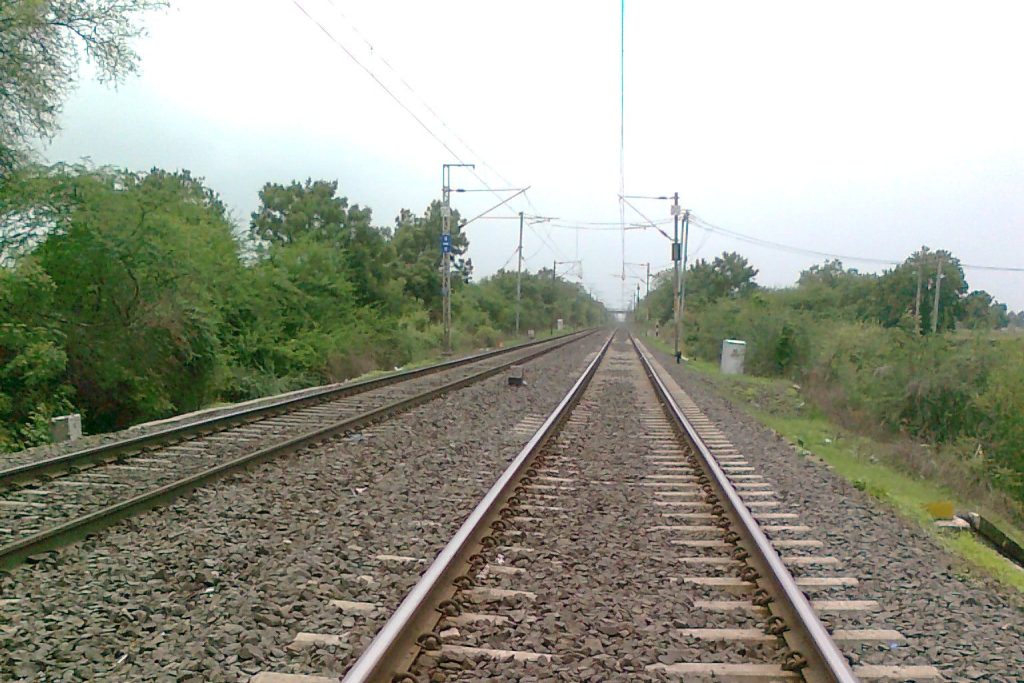
Thirteen people lost their lives in Jalgaon, Maharashtra, on January 22, 2025, after a chain of events that began with an alleged fire alarm. The victims evacuated their train carriage in response to the alarm, crossing onto an adjacent railway line. A second train, traveling at speed on that track, was unable to stop in time, resulting in a fatal collision.
The incident unfolded with devastating simplicity. Passengers, acting on what has been described as an alleged fire alarm, left their carriage in panic.
They moved onto the neighboring track. An oncoming express train struck them. The sequence—a panic, a decision, a collision—highlights a critical failure in emergency coordination. Jalgaon is a city in North Maharashtra and serves as the administrative center of its district.
The region is a major agricultural hub, producing roughly two-thirds of Maharashtra’s bananas, which has earned it the nickname “Banana city of India.” The city is also a transit point for tourists visiting the Ajanta Caves, located 76.3 kilometers away, and is connected by Asian Highway 53. The Girna river flows through the western part of the city.
The rail network is vital for moving passengers, freight, and agricultural produce, including the banana trade. The tragedy is not a story of mechanical failure such as faulty brakes or broken tracks. It is a story of an emergency response that lacked coordination.
The victims did not die from a fire on the first train. They died because the alarm—whether real or not—triggered a scramble with no guidance.
No one directed them to a safe location. No one halted the approaching train. The gap between a fleeing crowd and an oncoming express was not bridged by any control room, platform staff, or train personnel.
India’s railway system is vast, moving millions of people daily across an aging network. While investments have been made in new locomotives, stations, and high-speed corridors, the basics of emergency response—clear communication, coordinated action, and passenger guidance—remain weak.
A fire alarm should not lead to a massacre on the next track over. The question now is what changes will follow. Safety audits are expected, along with promises of better training for railway personnel.
A report on the incident notes the need for enhanced safety measures and effective emergency response protocols. Such statements have been made after previous accidents.
The test is whether this specific tragedy, with its particular horror—killed by the train you fled to—will lead to substantive reform. The cause of the alleged fire alarm remains unclear. What is clear is that the victims followed standard emergency procedure: they got off the train.
The system they trusted to protect them did not. Thirteen families are now mourning.




