
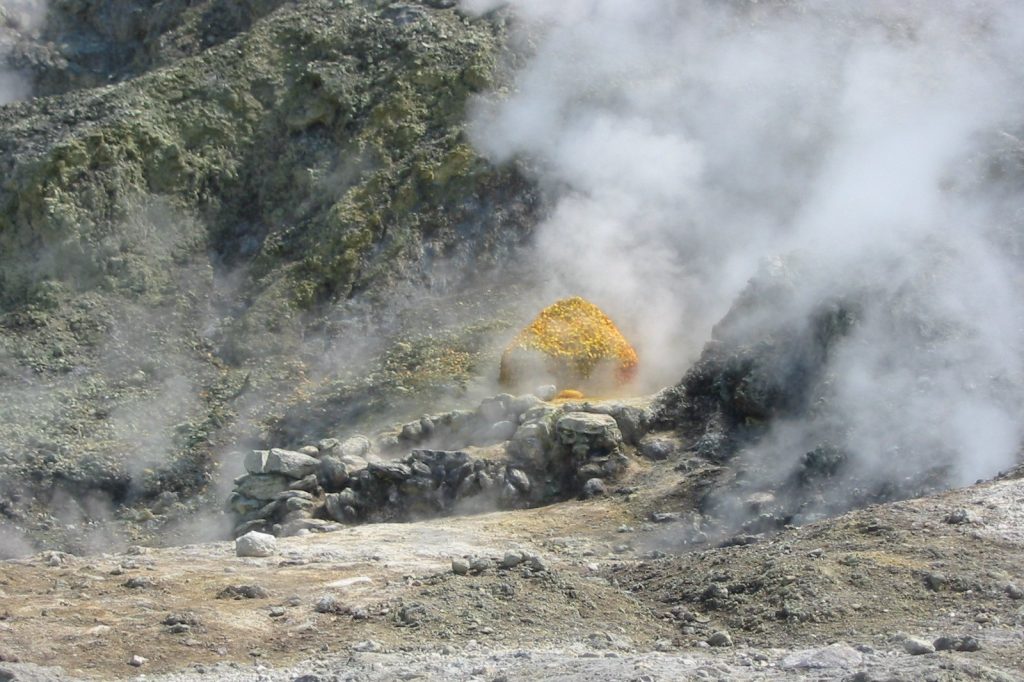
A magnitude 4.2 earthquake struck the Phlegraean Fields supervolcano near Naples, Italy, on September 27, 2023, marking the strongest earthquake to hit Campi Flegrei in 40 years. The tremor has raised concerns about the potential risks associated with the supervolcano, although experts emphasize that an eruption is not imminent. As a precautionary measure, experts have called for an inspection of buildings in the immediate area to assess their structural integrity and identify any potential vulnerabilities.
The Phlegraean Fields supervolcano is a highly complex and dynamic geological system, with a history of intense volcanic activity. Located in the Campania region of Italy, the supervolcano is part of a larger volcanic complex that has been shaped by millions of years of tectonic activity.
The region’s unique geology, characterized by the convergence of the Eurasian and African plates, makes it prone to earthquakes and volcanic eruptions. In fact, Italy is one of the most seismically active countries in Europe, with a long history of devastating earthquakes that have had a profound impact on the country’s landscape and population. According to historical records, Italy has experienced over 1,300 destructive earthquakes in the past millennium, with approximately 500 of these events affecting the central Mediterranean Sea.
The distribution of earthquakes in Italy is closely tied to the country’s tectonic setting, with the majority of seismic activity occurring along the Alpine and Apennine mountain ranges. These regions are characterized by intense tectonic activity, with the Eurasian and African plates converging at a rate of several millimeters per year.
This process has given rise to some of Italy’s most prominent geological features, including the Apennine Mountains and the Po Valley. The Italian government and local authorities are taking a proactive approach to mitigating the risks associated with the Phlegraean Fields supervolcano. In addition to inspecting buildings in the immediate area, experts are monitoring the supervolcano’s activity closely, using a range of techniques including seismic monitoring and gas sampling.
These efforts are designed to provide early warning systems in the event of increased activity, allowing authorities to take swift action to protect people and property. By prioritizing the safety of local communities and the preservation of the environment, the Italian government is demonstrating its commitment to responsible and sustainable management of the country’s natural resources.
Energy Security and Environmental Protection
As Italy continues to navigate the complexities of its geological landscape, the country is also making significant strides in the development of renewable energy sources. By investing in solar, wind, and geothermal energy, Italy is reducing its reliance on fossil fuels and promoting energy security. This approach not only helps to mitigate the environmental impacts of energy production but also enhances the country’s economic resilience.
Looking ahead, the September 27 earthquake serves as a reminder of the importance of ongoing vigilance and preparedness in the face of geological uncertainty. As experts continue to monitor the Phlegraean Fields supervolcano and assess the potential risks associated with its activity, the international community is reminded of the need for cooperation and collaboration in promoting environmental protection and energy security. By working together to address the complex challenges posed by our planet’s dynamic geological systems, we can help to create a safer, more sustainable world for all.




