
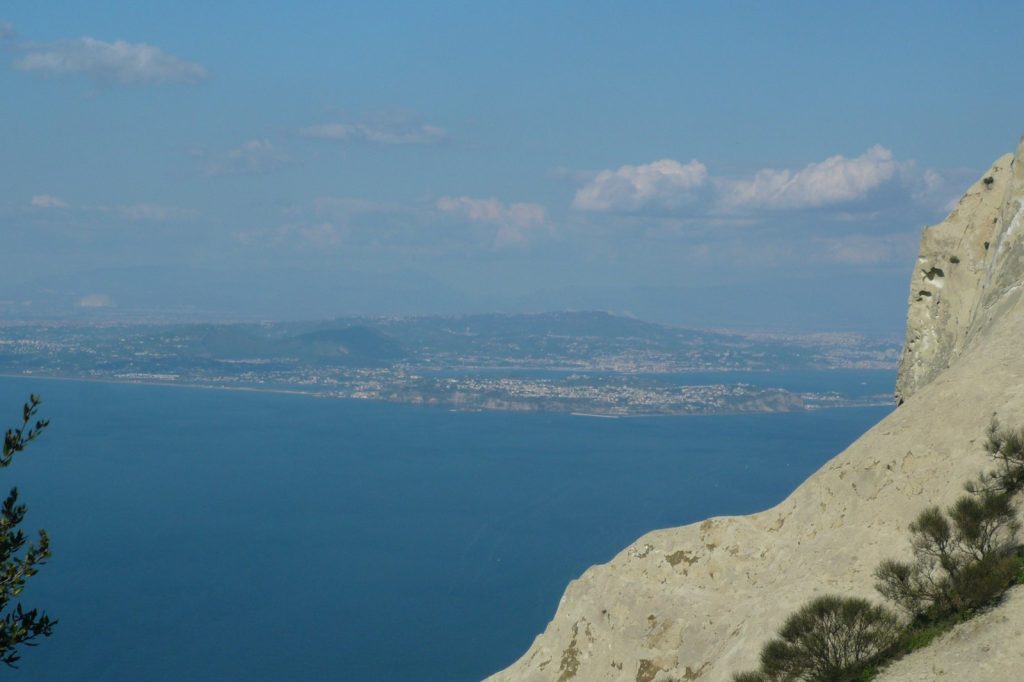
On September 27, 2023, a magnitude 4.2 earthquake struck the Campi Flegrei region west of Naples, marking the most powerful tremor to hit the area in 40 years. The event did not take geologists off guard, as the Phlegraean Fields supervolcano has exhibited persistent ground movement for decades.
The supervolcano, whose name translates to “burning fields,” sits within a densely inhabited section of the Campania region. Its activity stems from a geological process called bradyseism, where the earth rises and falls in response to magma pressure shifts. Since the 1950s, the ground has been swelling as magma pushes upward from a shallow chamber below.
When pressure decreases, the ground sinks. This ongoing motion places stress on the crust, which fractures into earthquakes.
The September 27 quake represents the largest seismic event since the early 1980s, when a crisis forced evacuations in parts of Pozzuoli. Neither that episode nor a similar one in 1970 led to an eruption, and experts currently assess that an eruption is not imminent. However, the pattern remains concerning.
The Campi Flegrei system is part of a broader volcanic complex shaped by the collision of the Eurasian and African tectonic plates, which converge at several millimeters per year. Over millions of years, this movement has formed the Apennine Mountains and contributed to Italy’s history of violent geological events.
The country has experienced more than 1,300 destructive earthquakes in the past millennium, with roughly 500 occurring in the central Mediterranean Sea. Most seismic activity follows the Alpine and Apennine mountain ranges, placing the Campi Flegrei caldera in the middle of this tectonic zone. Unlike a typical volcano with a cone, Campi Flegrei is a caldera—a collapsed depression about 12 kilometers wide filled with craters, fumaroles, and hot springs.
Its magma chamber lies close to the surface, allowing the ground to shift rapidly when pressure changes. The September 27 earthquake has prompted calls for building inspections in the immediate area.
The primary concern is not an imminent eruption but the potential weakening of structures from repeated shaking. Many buildings in the region are old, and some sit on unstable volcanic tuff. If a larger earthquake occurs—a possibility supported by the area’s history—those structures may not withstand the strain.
Italy’s earthquake record includes devastating events such as the 1908 Messina earthquake, which killed tens of thousands; the 2009 L’Aquila earthquake, which killed over 300; and the 2016 Amatrice earthquake, which killed nearly 300 more. Each occurred along the same fault system influencing Campi Flegrei.
However, those were tectonic quakes, while Campi Flegrei’s tremors are volcanic in origin, making them more difficult to predict. The Phlegraean Fields last erupted in 1538, forming the small cone Monte Nuovo. That eruption followed decades of ground uplift and seismic swarms. The current uplift phase began in 2005, with the ground in Pozzuoli rising more than one meter since then.
Earthquake frequency has increased steadily, with the September 27 magnitude 4.2 event being the strongest in this sequence. Seismologists monitor the caldera using GPS stations, tiltmeters, and gas sensors, tracking changes in fumarole gas composition.
Shifts in the ratio of carbon dioxide to sulfur dioxide can indicate magma movement. These readings have been closely watched for months. For now, the focus remains on building safety rather than evacuation.
The supervolcano remains dynamic and active, with the ground beneath Naples continuing to signal its restless state.




