
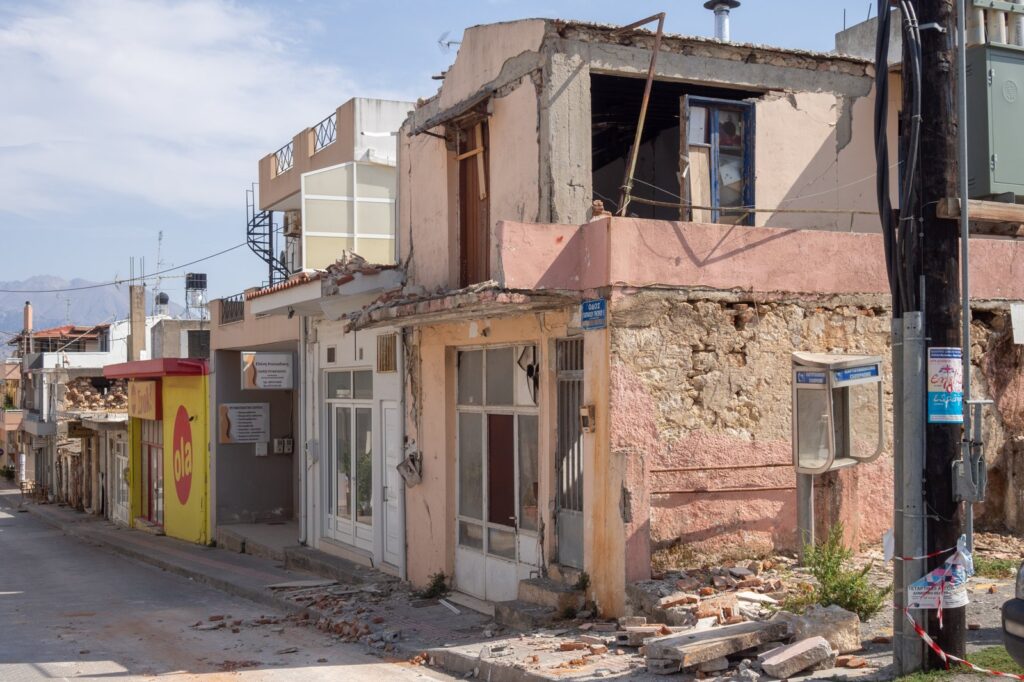
What Causes Earthquakes
An earthquake is the shaking of the Earth’s surface resulting from a sudden release of energy in the lithosphere that creates seismic waves, according to the U.S. Geological Survey. Earthquakes are primarily caused by geological faults, but also by volcanism, landslides, and other seismic events. The initial point of rupture is called the hypocenter or focus, while the ground level directly above it is the epicenter.
How Magnitude and Depth Affect Impact
Two powerful 7.7 and 6.6 magnitude earthquakes and a series of aftershocks struck Panama Friday afternoon, collapsing buildings near the epicenter and prompting evacuations across the country, the U.S. Geological Survey said. The earlier quake, felt as far away as neighboring Colombia, was centered about 10 kilometers southwest of the remote community of Pitaloza Arriba, in the central province of Herrera. Multiple aftershocks continued to rattle Panama, including several measuring magnitude 5.8, 5.5 and 5.2. A magnitude 3.2 earthquake was reported Friday morning before 1 a.m. in Long Beach, according to the U.S. Geological Survey. The earthquake occurred less than a mile from Signal Hill and three miles from Carson about 12:44 a.m., the USGS reported. There were no immediate reports of damage in the surrounding area.
Historical Examples of Destructive Quakes
Significant historical earthquakes include the 1976 Tangshan earthquake in China, with over 300,000 fatalities, and the 1960 Valdivia earthquake in Chile, the largest ever recorded at 9.5 magnitude, according to the U.S. Geological Survey.
Secondary Hazards Like Tsunamis and Landslides
When the epicenter of a large earthquake is located offshore, the seabed may be displaced sufficiently to cause a tsunami. Earthquakes can trigger landslides. The occurrence of earthquakes is influenced by tectonic movements along faults, including normal, reverse (thrust), and strike-slip faults, with energy release and rupture dynamics governed by the elastic-rebound theory.
Current Preparedness Efforts in Vulnerable Regions
Efforts to manage earthquake risks involve prediction, forecasting, and preparedness, including seismic retrofitting and earthquake engineering to design structures that withstand shaking. The cultural impact of earthquakes spans myths, religious beliefs, and modern media, reflecting their profound influence on human societies. Similar phenomena, known as marsquakes and moonquakes have been observed.
How Seismic Retrofitting Reduces Building Collapse
Seismic retrofitting strengthens existing structures to better withstand earthquake forces, reducing the risk of collapse and saving lives. Techniques include adding steel braces, reinforcing walls with shear panels, and bolting buildings to their foundations. These improvements help absorb and dissipate seismic energy during shaking.
In Panama, engineers noted that buildings constructed before modern seismic codes were more vulnerable to failure during the 7.7 and 6.6 magnitude quakes. Retrofitting older structures, especially in central provinces like Herrera and Los Santos, could have prevented some of the collapses observed, including the failure of the Church of San Atanasio.
Earthquake engineering principles, such as base isolation and ductile design, allow buildings to flex rather than break under stress. These methods are particularly effective in regions with frequent seismic activity, where retrofitting critical facilities like hospitals and schools ensures continued operation after a quake.
Role of Aftershocks in Ongoing Seismic Risk
Aftershocks are smaller earthquakes that follow the largest shock of an earthquake sequence and can continue for days, weeks, or even months after the main event. In the Panama earthquakes, seismologists at the University of Panama recorded more than 45 aftershocks, including several measuring magnitude 5.8, 5.5, and 5.2, though many were too weak to be felt. These aftershocks continued to rattle the country, exacerbating damage to already weakened structures and hindering recovery efforts.
The occurrence of numerous aftershocks increases the risk of further building collapses, particularly in areas where buildings were already damaged by the initial quakes. In Panama, damage was concentrated in the central provinces of Veraguas, Herrera, and Los Santos, with reports of partial collapses and cracks in critical infrastructure such as the cathedral in Penonomé’s main square and the governor’s office building. Ongoing seismic activity from aftershocks can compromise the integrity of structures that survived the main shock, making timely inspections and reinforcements essential.
Monitoring aftershock sequences helps scientists understand the stress changes in the Earth’s crust following a major earthquake and improves forecasts of future seismic hazards. The U.S. Geological Survey and local agencies use aftershock data to refine risk assessments and guide emergency response, including decisions about when it is safe for displaced residents to return to affected areas. In regions like Panama, where multiple large quakes have occurred in recent months, tracking aftershocks remains a vital component of earthquake risk management.
Geological Fault Types and Seismic Energy Release
The occurrence of earthquakes is influenced by tectonic movements along faults, including normal, reverse (thrust), and strike-slip faults, with energy release and rupture dynamics governed by the elastic-rebound theory. Normal faults occur when the crust is pulled apart, reverse faults when it is compressed, and strike-slip faults when blocks slide horizontally past each other. These fault types determine the direction and nature of ground motion during an earthquake.
In the Panama earthquakes, the USGS indicated that the quakes resulted from activity along a reverse fault, where one tectonic block was thrust over another due to compressional forces in the region. This type of faulting often produces significant vertical ground displacement, which can amplify shaking and increase the potential for structural damage, particularly in areas with susceptible building stock.
The elastic-rebound theory explains that stress accumulates in rocks on either side of a fault until the strength of the rock is exceeded, leading to sudden rupture and the release of stored elastic energy as seismic waves. This process accounts for the sudden onset of shaking and the generation of aftershocks as the crust adjusts to the new stress state following the main event.
Sources
- Earthquake
- Two powerful earthquakes and multiple aftershocks rock Panama
- Magnitude 3.2 earthquake rattles Long Beach after midnight
Photo: C messier (CC BY-SA 4.0)




