
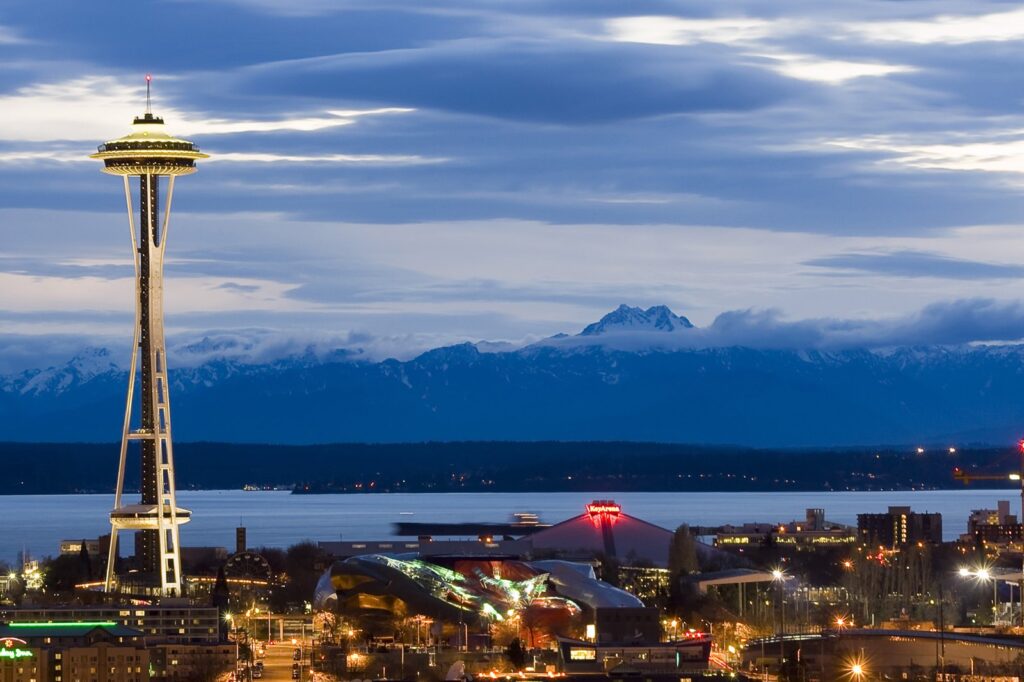
Seismic Risk Overview in Washington State
The state is at risk from multiple seismic sources, including the Cascadia subduction zone, the Seattle Fault, and the Tacoma Fault. Urban centers like Seattle, Tacoma, and Olympia are particularly vulnerable due to soft soils that amplify shaking and proximity to active faults. Washington is a state in the Pacific Northwest region of the United States. It is often referred to as Washington state to distinguish it from the national capital; both are named after George Washington, a U.S. Founding Father and the first U.S. president. Washington borders the Pacific Ocean to the west, Oregon to the south, and Idaho to the east; it shares an international border with the Canadian province of British Columbia to the north. Olympia is the state capital, and the state’s most populous city is Seattle.
History of Major Earthquakes and Fault Systems
The Cascadia subduction zone has the potential to generate a magnitude 9.0 earthquake, which could cause widespread devastation across the Pacific Northwest. A magnitude 9.0 Cascadia event could result in thousands of fatalities, widespread infrastructure collapse, and a destructive tsunami affecting coastal communities. Washington is the 18th-largest state, with an area of 71,362 sq mi (184,830 km2), and the 13th-most populous state, with a population of over 8 million. The majority of Washington’s residents live in the Seattle metropolitan area, the center of transportation, business, and industry on Puget Sound, an inlet of the Pacific Ocean consisting of numerous islands, deep fjords and bays carved out by glaciers.
How the Cascadia Subduction Zone Works
The Cascadia subduction zone is a convergent plate boundary where the Juan de Fuca plate is being forced beneath the North American plate. This process builds up strain over centuries, which is released suddenly in large earthquakes. The zone stretches from northern Vancouver Island to northern California. When it ruptures, it can produce megathrust earthquakes of magnitude 8.0 or greater. The 1700 event, known from oral histories of Indigenous peoples and geological records, caused a tsunami that reached Japan. Scientists study sediment layers and tree rings to estimate the timing and size of past quakes.
Current Preparedness Measures and Drills
Washington state conducts regular earthquake preparedness drills, including the annual ‘Great ShakeOut’ to educate residents on drop, cover, and hold on procedures. Building codes in Washington have been updated over time to improve seismic resilience, especially for new construction, though many older structures remain vulnerable. Emergency management agencies emphasize that individuals should be prepared to be self-sufficient for at least two weeks following a major earthquake. The state’s emergency operations plan includes coordination with federal, tribal, and local partners to manage response and recovery after a seismic event. Washington is a leading lumber producer, the largest producer of apples, hops, pears, blueberries, spearmint oil, and sweet cherries in the U.S., and ranks high in the production of apricots, asparagus, dry edible peas, grapes, lentils, peppermint oil, potatoes and wheat. Livestock, livestock products, and commercial fishing—particularly of salmon, halibut, and bottomfish—are also significant contributors to the state’s economy. Washington ranks third in wine production. Manufacturing industries in Washington include aircraft, missiles, shipbuilding, and other transportation equipment, food processing, metals and metal products, chemicals, and machinery.
Projected Impacts and Mitigation Efforts
A magnitude 9.0 Cascadia event could result in thousands of fatalities, widespread infrastructure collapse, and a destructive tsunami affecting coastal communities. Urban centers like Seattle, Tacoma, and Olympia are particularly vulnerable due to soft soils that amplify shaking and proximity to active faults. The state was formed from the western part of the Washington Territory, the claims to which were ceded by the British Empire in the Oregon Treaty of 1846. Most of the land that would become Washington state was ceded by the Indigenous peoples of the region in the Stevens treaties of 1854–1855. It was admitted to the Union as the 42nd state in 1889. One of the wealthiest and most socially liberal states in the country, Washington consistently ranks among the top states for highest life expectancy and employment rates. It was one of the first states (alongside Colorado) to legalize medicinal and recreational cannabis, was among the first states to introduce same-sex marriage, and permitted legal abortions on request before Roe v. Wade in 1973.
Current Community and Government Actions
Local governments in Washington are expanding seismic retrofitting programs for vulnerable infrastructure, including bridges and unreinforced masonry buildings in urban areas. Cities like Seattle and Tacoma have updated zoning and permitting rules to require stronger foundations in soft-soil zones prone to shaking amplification. Emergency management officials are increasing public outreach through multilingual preparedness campaigns targeting non-English speaking communities. Tribal nations are collaborating with state agencies to integrate traditional knowledge into modern evacuation planning for coastal tsunami risks.
Economic Impacts And Industries
Washington state has a diverse economy with major industries including lumber production, agriculture, and manufacturing. The state is the largest producer of apples, hops, pears, blueberries, spearmint oil, and sweet cherries in the U.S. and ranks high in the production of various other crops. Livestock, livestock products, and commercial fishing also significantly contribute to the state’s economy. Additionally, Washington ranks third in wine production and has notable manufacturing industries in aircraft, missiles, shipbuilding, and other transportation equipment.
The economic impacts of a major earthquake in Washington state could be substantial, affecting not only the local population but also the national and global economy due to the state’s significant role in various industries. Understanding and preparing for such events is crucial for mitigating potential economic losses and ensuring the resilience of the state’s economy.
Sources
- Washington (state)
- Oregon State Sold Out Vs. Washington State – Oregon State University Athletics
- Aggies Pull Off Second-Half Comeback for 17-16 Win Over Washington State – Utah State University Athletics
Photo: Jeffery Hayes (CC BY-SA 3.0)




