
What Rare Earth Elements Are and Why They Matter
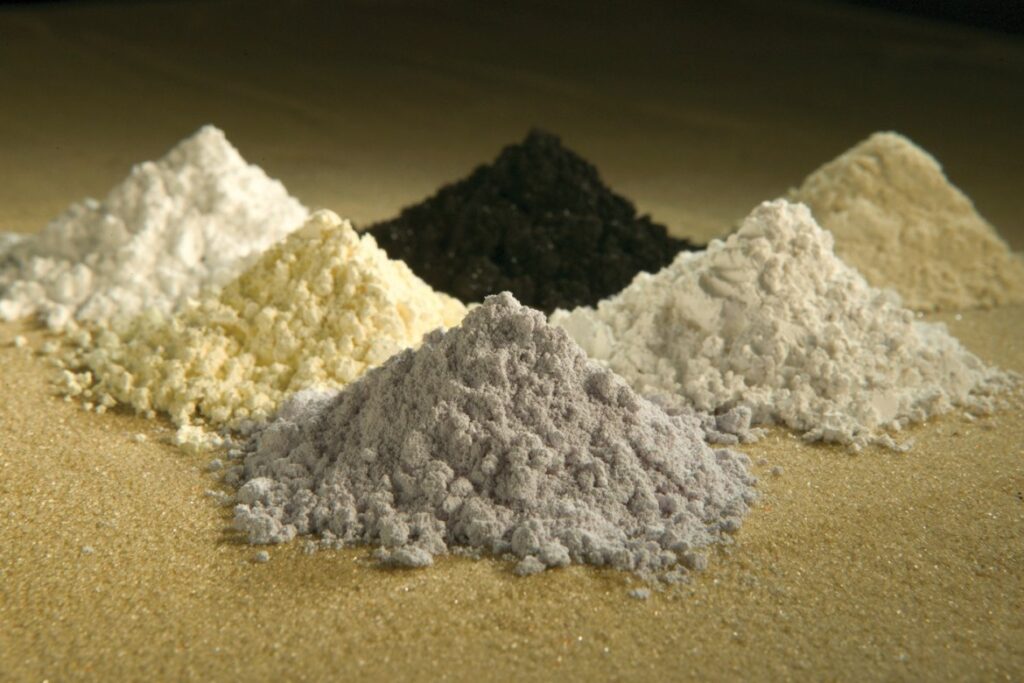
Rare earth elements are a set of 17 nearly indistinguishable lustrous silvery-white soft heavy metals, including the 15 lanthanides, scandium, and yttrium, according to Wikipedia. Though not actually scarce, they are spread thinly as trace impurities in the Earth’s crust, requiring processing of enormous amounts of raw ore to obtain usable purity, the source notes. The first rare-earth mineral discovered was gadolinite in 1787 from a mine in Ytterby, Sweden, and four rare-earth elements bear names from this location. Commercial production describes reserves in terms of ‘rare-earth oxides’ containing mixtures of various rare-earth elements in oxide compounds.
Key Uses in Magnets, Catalysts, and Electronics
Compounds containing rare-earth elements have diverse applications in electrical and electronic components, lasers, glass, magnetic materials, and industrial processes, according to Wikipedia. In 2015, most rare earth elements were being used for catalysts and magnets, the source states. These applications span from consumer electronics like smartphones to industrial systems relying on precision materials.
Role in Renewable Energy and Defense Technologies
The global move towards renewable energy technologies, such as electric vehicles and wind turbines, along with advanced electronics, defence applications, and consumer electronics such as smartphones, has caused increased demand for rare earth elements, according to Wikipedia. Rare earths are essential for high-performance magnets used in electric vehicle motors and wind turbine generators. They also play a role in defense systems, including guidance systems and hardened alloys, as noted in federal project descriptions.
Global Supply Chain Challenges and U.S. Efforts to Diversify
Federal officials voiced support Wednesday for a rare earth mine in southeast Nebraska intended to produce niobium and other rare earth minerals vital for military and civilian purposes, according to Nebraska Public Media. The mine is expected to cost $2 billion to build and employ up to 500 people during its 40-year life. U.S. Energy Secretary Chris Wright said the project is necessary because China has prioritized controlling the market for rare earth minerals mining and processing. Alta Resource Technologies is refining rare earths using immobilized proteins and column chromatography, backed by more than $60 million in funding, according to Chemical & Engineering News.
Future Outlook for Domestic Production and Innovation
The Nebraska mine project remains pending final approval, though officials have signed letters of support and interest, with loan approval contingent on due diligence, according to Nebraska Public Media. Alta Resource Technologies continues to develop biological refining methods that could reduce reliance on traditional, energy-intensive extraction, as reported by Chemical & Engineering News. These efforts reflect a broader push to establish secure, domestic supply chains for materials critical to clean energy and national security infrastructure.
Geological and Environmental Context of Rare Earth Deposits
Rare earth elements are relatively plentiful in the Earth’s crust, with cerium being the 25th-most-abundant element at 68 parts per million, more abundant than copper, though they are dispersed and not often found concentrated in economically exploitable ore deposits. The first rare-earth mineral discovered was gadolinite in 1787 from a mine in Ytterby, Sweden, a black mineral composed of cerium, yttrium, iron, silicon, and other elements. Four of the rare-earth elements bear names derived from this single location. Because of their geochemical properties, rare-earth elements are typically dispersed as trace impurities, requiring processing of enormous amounts of raw ore to obtain usable purity, which is costly and energy intensive.
The co-occurrence of rare earth elements with radioactive elements such as thorium and less commonly uranium in mineral deposits has prompted some nations to consider pollution and human rights implications in mining and processing activities. This association has led to increased scrutiny of rare earth extraction practices, particularly in regions where radioactive byproducts may pose environmental or health risks if not managed properly.
Investment And Funding For Rare Earth Technologies
Alta Resource Technologies has received significant funding for its innovative approach to refining rare earths using immobilized proteins and column chromatography, with over $60 million invested by notable partners such as Valor Equity Partners, Atreides Management, DCVC, and IQT.
This investment underscores the growing interest in developing alternative methods for rare earth extraction and processing, driven by concerns over supply chain security and environmental sustainability.
The financial backing for Alta Resource Technologies is part of a broader trend of increased investment in rare earth technologies, as companies and governments seek to reduce dependence on traditional suppliers and mitigate the risks associated with rare earth mining and processing.
Critical Mineral Designation and Policy Implications
Although rare‑earth elements (REEs) are often grouped with “critical minerals,” the two categories are not synonymous. As Wikipedia explains, critical minerals are defined by individual governments based on strategic or economic importance, and the specific lists vary from country to country. REEs, by contrast, are a distinct chemical group that may appear on many nations’ critical‑mineral inventories, but they are distinguished from other strategic materials that lack the same geochemical characteristics.
This distinction matters for policy because funding, trade controls, and domestic‑production incentives are frequently tied to a nation’s critical‑mineral list. In the United States, for example, the recent $840 million Export‑Import Bank loan under review for the Nebraska Niocorp project is part of a broader effort to secure supply chains for minerals that the government has labeled critical, including REEs and niobium. Similarly, the involvement of senior officials such as Energy Secretary Chris Wright and Export‑Import Bank Chair John Jovanovic underscores how the critical‑mineral framework drives high‑level diplomatic and financial support for domestic mining initiatives.
Sources
- Rare-earth element
- 10 Start-Ups to Watch 2026: Alta Resource Technologies refines rare earths using proteins
- Federal officials boost southeast Nebraska rare earth mining project
Photo: Peggy Greb, US department of agriculture (Public domain)




