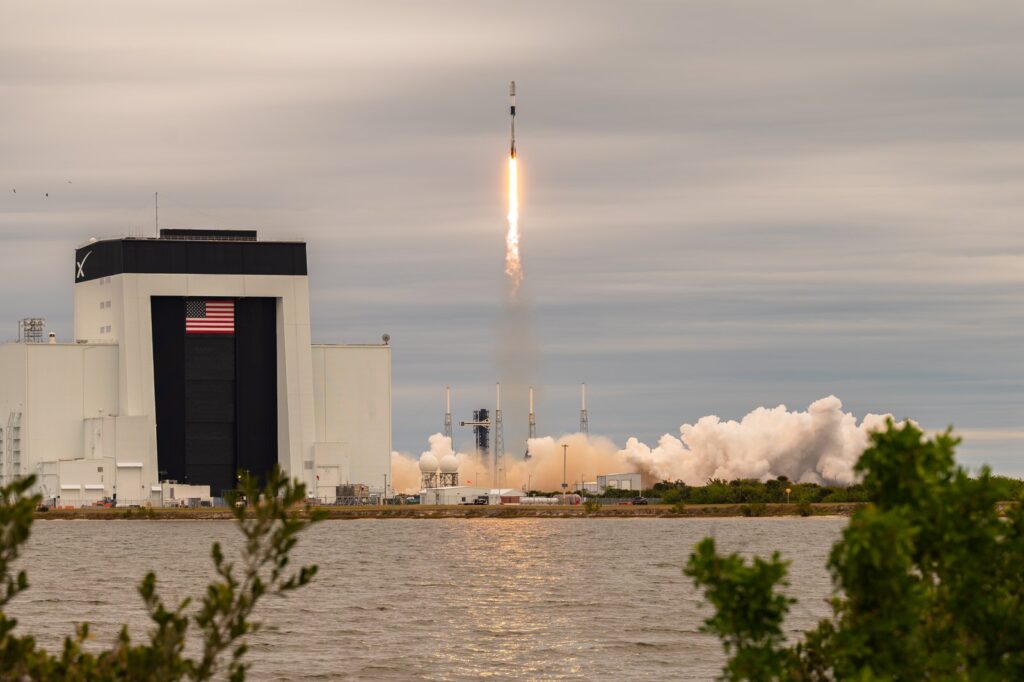
SpaceX launched its Falcon 9 rocket on October 20, carrying 32 payloads on the Bandwagon-5 mission. The increasing frequency of Falcon 9 launches has sparked a debate over the long-term sustainability of low Earth orbit and the need for debris mitigation strategies.
The Rise of Falcon 9 Launches
SpaceX has significantly increased the frequency of its Falcon 9 launches, with an average of three missions per week as of May 2026. This rapid cadence has been made possible by the company’s advancements in reusable rocket technology, which has allowed for more frequent and cost-effective access to space. The reusable first-stage boosters, which have completed more than 650 landings and reflights, are a key factor in this increased launch rate.
The Bandwagon-5 mission, which launched on October 20, included a variety of payloads from multiple organizations, highlighting the growing demand for rideshare missions. One of the mission’s notable payloads was Starfall, SpaceX’s experimental reentry capsule, which supports scientific research and in-space manufacturing. The mission also marked the 19th flight of a Falcon 9 first-stage booster, which successfully landed on a droneship in the Atlantic Ocean.
Orbital Debris Challenges in Low Earth Orbit
The increasing number of Falcon 9 launches has raised concerns about the accumulation of orbital debris in low Earth orbit. With SpaceX’s Starlink constellation becoming a major revenue source, the potential for increased space traffic and debris is a growing concern. The long-term sustainability of low Earth orbit is now under scrutiny, as the number of objects in orbit continues to rise.
Orbital debris poses a significant risk to both active satellites and future space missions. The growing number of objects in low Earth orbit increases the likelihood of collisions, which can generate more debris and create a cascading effect. This issue has prompted calls for more effective debris mitigation strategies and international cooperation to address the challenges of space sustainability.
SpaceX’s Current Mitigation Strategies
SpaceX has implemented several mitigation strategies to address concerns about orbital debris. The company’s use of reusable first-stage boosters is one such strategy, as it reduces the number of spent rocket stages that remain in orbit. Additionally, SpaceX has developed technologies such as Starfall, which is designed to return research payloads from space back to Earth, thereby reducing the amount of debris generated by its missions.
SpaceX has also been working on improving the design of its satellites and spacecraft to minimize the risk of collisions and debris generation. The company’s Starlink constellation, while a significant source of revenue, has also raised concerns about its potential impact on the orbital environment. SpaceX has been actively engaged in discussions with regulatory bodies and industry stakeholders to develop and implement effective debris mitigation measures.
Industry and Regulatory Responses
The growing concerns over orbital debris have prompted responses from both the industry and regulatory bodies. Various space agencies and private companies have been exploring ways to mitigate the risks associated with increased space traffic. Regulatory bodies have also been considering new guidelines and policies to ensure the long-term sustainability of low Earth orbit.
SpaceX has been working closely with regulatory agencies to develop and implement debris mitigation strategies. The company has also been engaging with industry stakeholders to promote best practices and standards for space sustainability. These efforts are part of a broader industry-wide initiative to address the challenges posed by the increasing number of objects in low Earth orbit.
Future Sustainability Efforts
Looking ahead, SpaceX and other industry players are exploring new technologies and strategies to ensure the long-term sustainability of low Earth orbit. These efforts include the development of advanced debris mitigation technologies, the implementation of more stringent regulatory guidelines, and the promotion of international cooperation in space sustainability initiatives.
SpaceX’s continued investment in reusable rocket technology and its commitment to developing effective debris mitigation strategies will play a crucial role in addressing the challenges of space sustainability. As the frequency of Falcon 9 launches continues to increase, the importance of these efforts in ensuring the long-term viability of low Earth orbit cannot be overstated.
SpaceX’s Reusable Technology And Cost Savings
According to SpaceX’s official Bandwagon-5 mission page, the reusable first-stage booster completed its 19th mission, demonstrating the company’s advancements in reusable rocket technology. This technology has been a key factor in reducing the expense and lead time of building a new booster for each launch, making rideshare missions more cost-effective.
The use of reusable first-stage boosters has allowed SpaceX to offer lower-cost access to space, which is part of why rideshare missions like Bandwagon-5 can carry a large number of payloads. As stated in the source material, reusing hardware again saves SpaceX the expense and lead time of building a new booster for each launch.
As of May 2026, Falcon 9 launches averaged approximately three missions per week, and Falcon boosters had completed nearly 650 landings and reflights, showcasing the success of SpaceX’s reusable technology. This technology has played a crucial role in enabling the company to conduct more orbital launches annually than any other launch provider.
Operational Details of the Bandwagon-5 Mission
The Bandwagon-5 mission, which lifted off on October 20, 2026, at 7:04 a.m. EDT, originated from Space Launch Complex 40 at Cape Canaveral Space Force Station in Florida. The flight manifest included a diverse array of payloads, such as Tomorrow.io’s weather satellites, ICEYE satellites, Capella Space’s Acadia spacecraft, and Umbra satellites. Additionally, Exolaunch managed several of the mission’s added payloads. Deployment of these assets commenced approximately 57 minutes after the rocket left the pad.
Among the notable cargo was the W-Series 7, a capsule created by Varda Space Industries designed to host microgravity production experiments before returning materials to Earth. The mission also carried Pelican-12, a satellite constructed by Planet Labs for their Earth-observation fleet. According to the mission timeline, the first-stage booster successfully landed on the autonomous droneship A Shortfall of Gravitas in the Atlantic Ocean about nine minutes after liftoff.
Sources
- Did SpaceX launch a rocket today? Everything to know about the Falcon 9’s 32-payload Bandwagon-5 mission
- SpaceX
- SpaceX Dragon Cargo Mission Approaching Station – NASA
Photo: U.S. Space Force photo by DeAnna Murano (Public domain)