BIRMINGHAM, November 22, 2026 — Alabama Power filed a proposal with the Alabama Public Service Commission on November 20 to reduce customer rates by $160 million starting with January 2027 bills. The reduction applies automatically to all 1.5 million customers and is driven by projected revenue increases from large-load data center contracts.
Rate Cut Details and Household Savings Breakdown
The utility estimates a residential customer using 1,000 kilowatt-hours monthly will save over $50 annually, or roughly $4.17 per month. Savings vary based on electricity consumption and the change applies to every monthly bill without customer action, the company said.
Rate Stabilization and Equalization Mechanism Explained
Unlike most U.S. regulated utilities, Alabama Power operates under the Rate Stabilization and Equalization (RSE) factor, a formula-based mechanism created by the PSC in 1982. Under this system, rates adjust up or down automatically each January based on the company’s projections for the upcoming year, without formal rate case hearings. The 2027 projections triggered the current reduction, which the company said will stay at or below the new lower level through 2028. Alabama Power projects 2027 income of $1.76 billion, exceeding its currently allowed rate of return set by the PSC.
Data Center Revenue as Primary Driver of Reduction
The company attributed the savings to projected 2027 revenue increases from large-load data center contracts negotiated so that “growth pays for growth.” Chief Financial Officer Moses Feagin said data centers pay the full cost to serve their energy needs, which lowers the cost to serve other customers. CEO Jeff Peoples stated the reduction ensures statewide growth “works for all of our customers.”
Political Pressure and Investigation Context
The rate cut follows a year of political pressure after an Inside Climate News investigation in November 2025 found Alabama Power customers paid the highest total electric bills in the country in 2024 due to above-average rates and high usage. U.S. Senator Katie Britt publicly called Alabama’s electricity bills “unacceptably high” that month and demanded rate reductions. An Alabama law passed earlier this year froze electric rates for nearly three years. National household electricity prices rose 4.4% in the 12 months ending September 2026, while Alabama Power froze rates during that period, the company said.
Critics Argue Relief Remains Insufficient Compared to Peers
Incoming Public Service Commissioner Jim Zeigler, sworn in January 18, 2027, called the reduction “small” and vowed to push for further cuts. “This has been at least a 50-year track record of up, up, and away, and at least this small reduction is going down,” Zeigler said. Alabama Power customers averaged $232 monthly bills in September 2026, higher than Mississippi Power ($203) and Georgia Power ($187) — all Southern Company subsidiaries. Energy Alabama Executive Director Daniel Tait disputed the company’s data center narrative, stating the utility’s own numbers show there would be no cut without a roughly $180 million drop in its tax bill tied to nuclear tax credits from the Inflation Reduction Act. Tait said the company’s return on equity remains above the national average even after the action.
Regulatory Outlook With Incoming Commissioner Zeigler
Zeigler acknowledged it will not be easy to achieve further reductions but committed to the effort. Senator Britt called the rate change a victory and said she will continue working to drive down rates for households and small businesses. The RSE mechanism ensures the next automatic adjustment will occur in January 2028 based on projections for that year.
Sources
- Alabama Power
- Alabama Power seeks immediate Supreme Court action in Fenn Church dispute
- Alabama Power Announces $160 Million Rate Decrease for 2027 After Pushback on High Energy Costs – Inside Climate News
- Reaction comes in as Alabama Power proposes lower rates in 2027
- Alabama Power proposes rate cut, but critics say relief falls short
- Alabama Power says it will lower rates in 2027 – WAKA 8
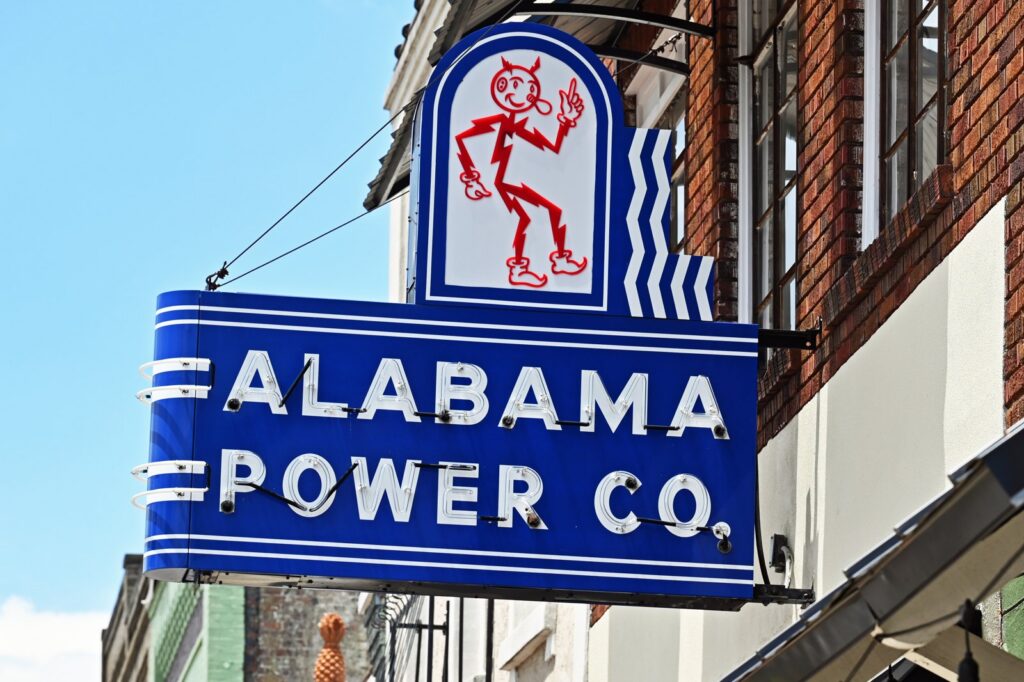
Photo: Bubba73 (CC BY-SA 4.0)