
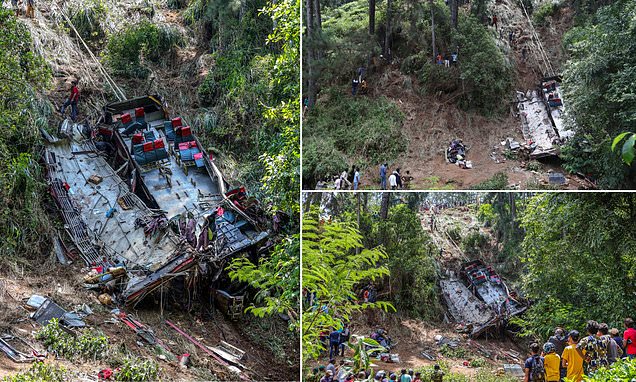
Sri Lanka, May 11, 2025 — cybernewschronicle.com — The bus that swerved off a cliff in Kotmale on May 11 was carrying Buddhist pilgrims. Twenty-one of them are dead. Thirty-five more are injured.
The accident site sits in Sri Lanka’s hill country, where roads are narrow and winding. That terrain is a known hazard.
It is not a new one. The victims were part of a religious journey. In Sri Lanka, such pilgrimages are common.
The island’s Buddhist majority frequently travels to temples and sacred sites, often on crowded buses along aging mountain roads. The crash happened on a Sunday.
The bus was full. Buddhism counts roughly 320 million followers worldwide, about 4.1 percent of the global population. Sri Lanka is one of its strongholds.
The faith’s teachings emphasize wisdom and mindfulness. In the aftermath of a disaster like this, those teachings become a source of comfort. But they do not fix the road.
Kotmale is a rural area. The roads there were not built for heavy traffic.
They wind through tea plantations and forested slopes. A single mistake — a driver losing focus, a mechanical failure, a patch of loose gravel — can send a vehicle over the edge. That is what happened here.
Authorities will investigate the cause. They will look at the driver, the bus, the road surface.
They will likely find that a combination of factors, not one single thing, led to the crash. This is not the first such accident in Sri Lanka. It will not be the last.
The country’s road safety record is poor. Buses are the primary form of public transport. Many are old.
Many are overloaded. Drivers work long hours for low pay.
The police enforce traffic laws unevenly. In rural areas, enforcement is even looser. The government has talked about improving road infrastructure for years.
Some roads have been widened. Some stretches have been given guardrails.
But the work is slow. Money is tight. And the terrain makes construction difficult.
In the hill country, building a safe road means cutting into cliffs, reinforcing slopes, and installing barriers at every curve. That costs time and money Sri Lanka does not have in abundance. The bus crash will likely prompt fresh calls for action.
Officials will promise investigations. They will announce new safety measures.
Then the news cycle will move on. The families of the 21 dead will not move on. Neither will the 35 injured, many of whom face long recoveries.
The Buddhist community will draw on its traditions of compassion and resilience. That is what it does.
But compassion does not replace a guardrail. Resilience does not fix a bad road. The global Buddhist population is large, but it is spread across many countries.
In Sri Lanka, the faith is woven into daily life. Pilgrimages are acts of devotion. They are also acts of trust — trust that the bus will stay on the road, that the driver will stay awake, that the journey will end safely.
On May 11, that trust was broken. The accident is a reminder of something basic: roads kill people.
In wealthy countries, that fact is managed with strict regulations, modern vehicles, and well-maintained infrastructure. In Sri Lanka, the gap between what is needed and what exists is wide. The bus crash in Kotmale is a symptom of that gap.
It is a tragedy, yes. But it is also a predictable one.




