
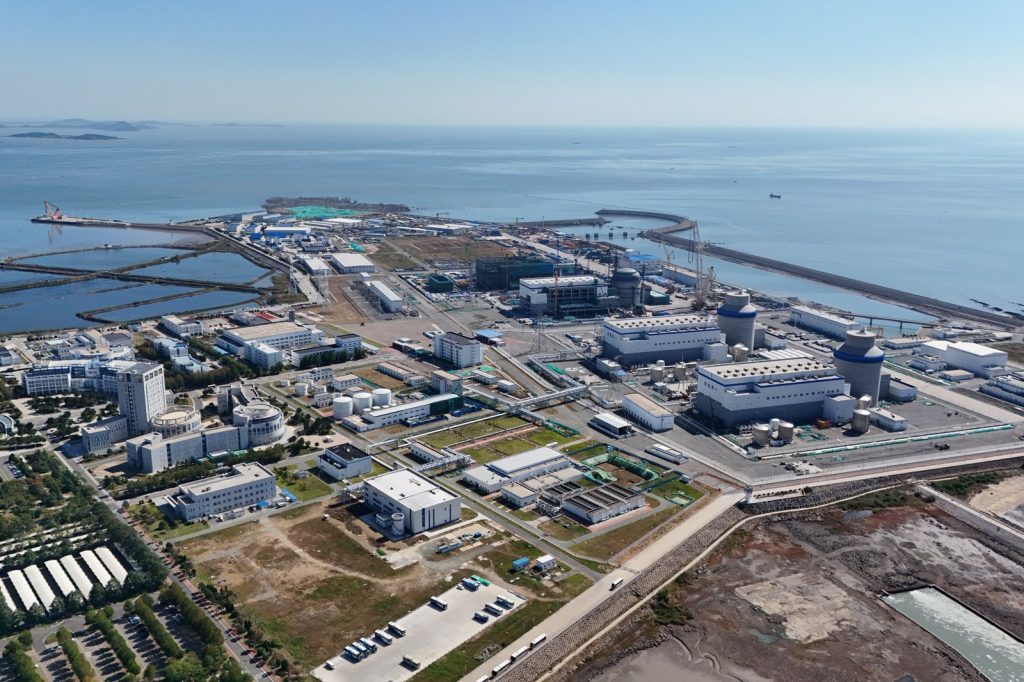
China, December 6, 2023 — cybernewschronicle.com — For years, nuclear energy advocates argued that safer, more efficient reactors were just over the horizon. That horizon arrived this week in eastern China. The Shidao Bay Nuclear Power Plant in Shandong province has begun commercial operations with what Beijing is calling the world’s first fourth-generation reactor.
The technology is not a minor upgrade. It represents a fundamental shift in how nuclear fission can be managed.
The reactor runs hotter than its predecessors. That higher operating temperature is not a trivial engineering detail. It allows the plant to convert more of its heat into electricity, meaning less fuel burned per megawatt produced.
Waste production drops sharply as a result. For a country that burns more coal than any other, the math is straightforward.
China’s energy needs are enormous. It is the world’s second-most populous nation, and its industrial base runs around the clock. The government has been pouring resources into nuclear capacity for a decade.
This reactor is the payoff. It was developed through a collaboration of Chinese and international companies. That detail matters.
It signals that China is not merely buying foreign designs and stamping them into the ground. It is co-developing the next generation of the technology itself.
The safety system is the headline feature. It is passive. That means it does not rely on pumps or generators or human intervention to cool the core if something goes wrong.
Physics does the work. Convection, gravity, the natural behavior of materials — these keep the reactor stable without an outside power source.
The 2011 Fukushima disaster was triggered when a tsunami knocked out backup generators. This design is a direct answer to that failure mode. Commercial operation is the key phrase.
Prototypes and test reactors have existed for years. This is the first time a fourth-generation unit has entered the commercial power market, selling electricity into the grid like any other plant. That changes the conversation.
It moves the technology from laboratory curiosity to industrial reality. The implications extend beyond China’s borders.
Other countries are watching. If Shidao Bay runs reliably for the next decade, the export potential is real. China is already a major builder of conventional nuclear plants abroad, particularly along the Belt and Road routes.
Fourth-generation reactors could become a signature export product. They are smaller, safer, and produce less waste.
Those are selling points that developing nations with limited regulatory infrastructure may find hard to ignore. There are risks. Passive safety does not mean zero risk.
The fuel cycle for fourth-generation designs can involve different materials and different waste streams. The long-term storage questions remain. But the trajectory is clear.
China is betting heavily that nuclear energy is part of its low-carbon future. This reactor is the strongest evidence yet that the bet is paying off.
The plant is located in Shandong province, on China’s eastern coast. The region already hosts significant industrial and energy infrastructure. Adding a fourth-generation reactor to that mix is a statement of intent.
Beijing wants to lead the global nuclear industry, not just follow it. With this launch, it has a genuine claim to the lead.




