
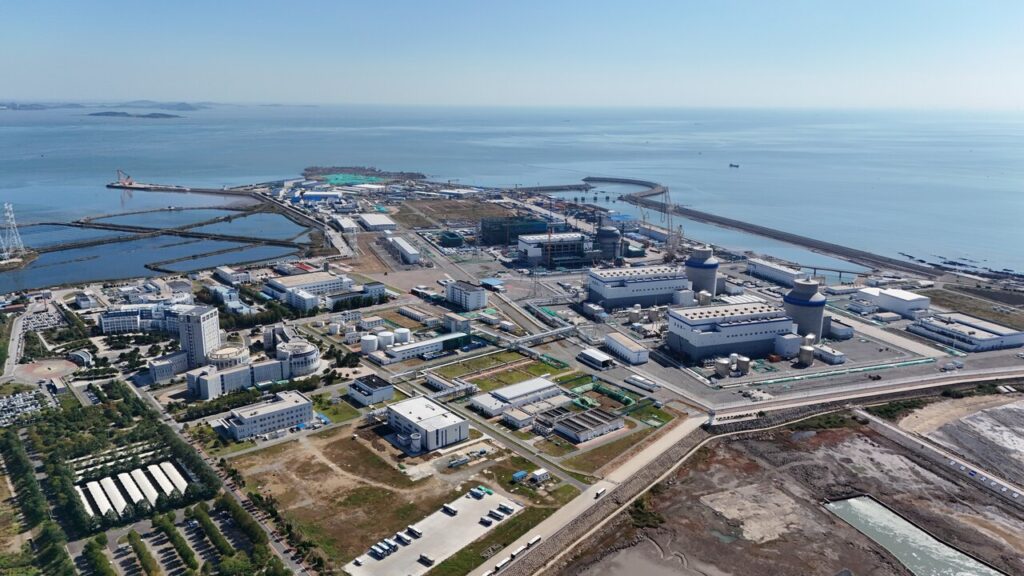
Beijing has declared that the Shidao Bay Nuclear Power Plant in Shandong province has entered commercial operation with the world’s inaugural fourth‑generation nuclear reactor. The milestone follows extensive research and development and is expected to usher in a new phase for China’s nuclear power strategy. The fourth‑generation design promises higher safety margins, greater thermal efficiency and a reduced environmental impact compared with earlier reactor classes.
By operating at elevated temperatures, the system improves the conversion of heat to electricity and cuts the volume of radioactive waste generated. A passive safety architecture enables the reactor to cool itself without external power, lowering the probability of an accident that requires active intervention.
These technical advances aim to make nuclear power a more attractive component of the global energy mix, especially for nations seeking to curb carbon emissions while meeting rising electricity demand. China’s energy appetite is among the largest in the world, reflecting its 1.4 billion‑plus population and rapid industrialisation. The successful launch of a fourth‑generation unit at Shidao Bay therefore carries significant implications for the country’s domestic power supply and its broader climate goals.
The plant adds a modern element to China’s expanding nuclear infrastructure and demonstrates the nation’s capacity to move beyond traditional reactor models. Development of the Shidao Bay unit was the result of cooperation between Chinese firms and international partners, highlighting the cross‑border collaboration that is driving innovation in the nuclear sector.
As China continues to invest heavily in nuclear capacity, it is poised to become a leading supplier of advanced reactor technology, potentially lowering costs and expanding access to low‑carbon electricity worldwide. Official plans call for a substantial increase in China’s nuclear generation capacity over the coming years, a target that hinges on the performance of next‑generation designs. Urban growth, expanding manufacturing and a shift away from coal all intensify the need for reliable, low‑emission power sources, making the deployment of fourth‑generation reactors a strategic priority.
The commercial start‑up at Shidao Bay is also likely to influence the global market. Nations pursuing decarbonisation may look to China’s experience as a template for adopting similar technology, which could accelerate the worldwide transition to cleaner energy systems.
By demonstrating that high‑temperature, passively safe reactors can operate commercially, China provides a proof‑point that may encourage broader adoption and drive down the cost of advanced nuclear plants. Analysts view the Shidao Bay operation as a pivotal step toward a more diversified and resilient energy future. While the reactor’s long‑term performance will be closely monitored, its initial success suggests that fourth‑generation technology could become a cornerstone of both China’s and the world’s energy strategies. As the international community intensifies efforts to meet climate targets, the rollout of safer, more efficient nuclear reactors offers a complementary pathway to renewable sources.
China’s entry into commercial service with this cutting‑edge reactor marks a notable achievement in that direction and sets the stage for further advancements in nuclear engineering.




