
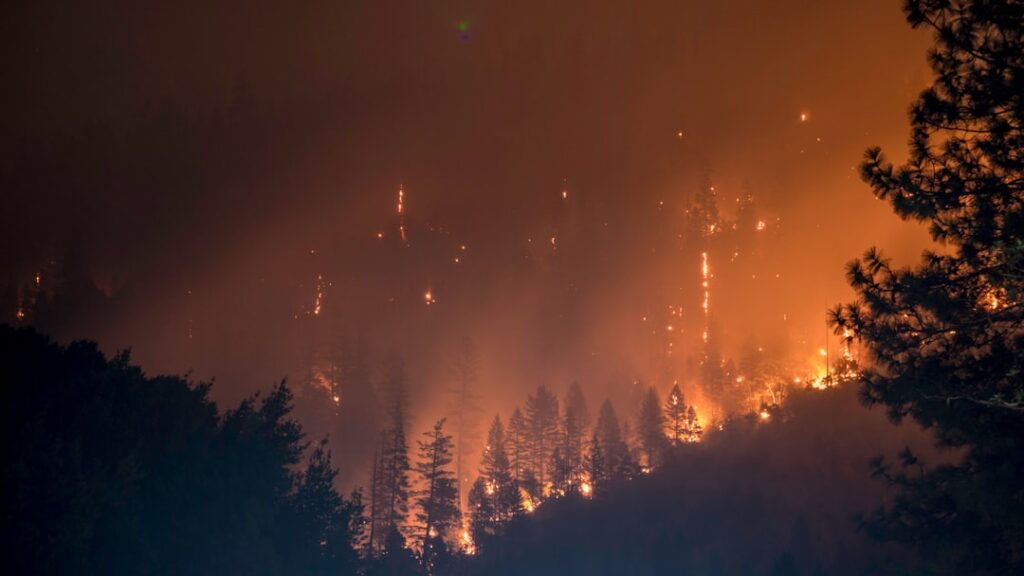
On July 22, twenty‑five thousand people left Jasper in a single day, effectively emptying the entire population of a small city. The evacuees included tourists, hotel employees, park staff, and families whose roots in the mountain town stretched back generations. They departed while flames were already advancing from fires that had ignited to the north and south of the resort.
The two fire fronts merged and swept through the community, reducing a significant portion of Jasper’s built environment to ash. When the smoke cleared, 358 of the town’s 1,113 structures had been destroyed—roughly one in three buildings. Losses were not limited to seasonal cabins; permanent homes, businesses, and a street grid that had stood for decades were consumed.
An evacuation order remained in place for nearly a month. Residents were not permitted to return until August 17, but even then the southern fire continued to burn uncontrollably. The homecoming was therefore a grim inspection, with people driving back to see what remained while active flames still lingered just beyond the town limits.
During the effort, one firefighter lost his life, a human cost that no financial tally can capture. Crews persisted, battling a fire complex that ultimately scorched 32,722 hectares (80,860 acres) of Jasper National Park. The blaze was not declared under control until September 7, marking more than six weeks of active burning in one of Canada’s most iconic landscapes.
Aftermath, Economic Toll, and Long‑Term Consequences
Insurance companies have so far paid out $880 million in claims related to the disaster, placing the Jasper wildfire among the costliest natural events in Canadian history. That figure reflects only insured losses; uninsured damages, the economic drag of a month‑long shutdown in a tourism‑dependent town, and the expenses of the firefighting operation itself sit atop the $880 million total.
Jasper’s economy hinges entirely on its setting within the national park—mountains, wildlife, trails, and lodges draw visitors from across the country and abroad. When the park burns, the town’s economic engine stalls. The evacuation and ensuing fire closure occurred at the peak of the summer tourism season, eliminating revenue that cannot be recovered, as July and August are the months that fund the remainder of the year for a resort community.
Even after residents were allowed back, the southern fire persisted, meaning the threat did not end with the evacuation lift. Those who returned found a community still ringed by active fire and a landscape permanently altered. The forests that once attracted visitors worldwide have been lost across the 32,722‑hectare burn area. Regrowth will take decades, if it occurs at all under a warming climate.
This episode illustrates how modern wildfires disregard municipal boundaries, ignore park gates, claim lives, destroy a sizable share of a community’s structures, generate massive insured costs, and continue to burn long after evacuees are permitted to go home.




