
ROME, July 8 — The shift is subtle but unmistakable: grid energy storage is no longer a niche engineering question. It is becoming the backbone of how modern power systems handle renewable energy. The numbers tell the story.
Pumped hydro storage remains the heavyweight champion, with 129 gigawatts installed globally as of 2020, representing about 93 percent of the world’s storage capacity. That technology is mature, proven, and still dominant.
But what’s changing is the speed of the battery revolution. Lithium-ion battery storage has grown from 1 gigawatt of global installed capacity in 2015 to 16 gigawatts in 2020. In the United States alone, utility-scale battery storage capacity jumped from 1.2 gigawatts in 2020 to 9.0 gigawatts in 2023, according to the U.S. Energy Information Administration.
The trend underneath is cost. BloombergNEF data shows the price of lithium-ion battery packs fell from $1,100 per kilowatt-hour in 2010 to $137 per kilowatt-hour in 2020.
When the hardware gets that cheap, the economics of grid storage shift dramatically.
Beyond Lithium: The Long-Duration Push
Lithium-ion is fast, but it is not the only game in town. Flow batteries — particularly vanadium redox flow batteries — offer something different: longer duration storage, typically four to twelve hours. These systems are still in pilot projects, but the logic is straightforward.
For a grid that needs to cover overnight lulls in solar or wind, longer discharge times matter. Compressed air energy storage, or CAES, has been operating for decades.
Two plants exist: the 290-megawatt facility in Huntorf, Germany, built in 1978, and the 110-megawatt plant in McIntosh, Alabama, built in 1991. That is not a crowded field. The technology works, but it has not scaled the way batteries have.
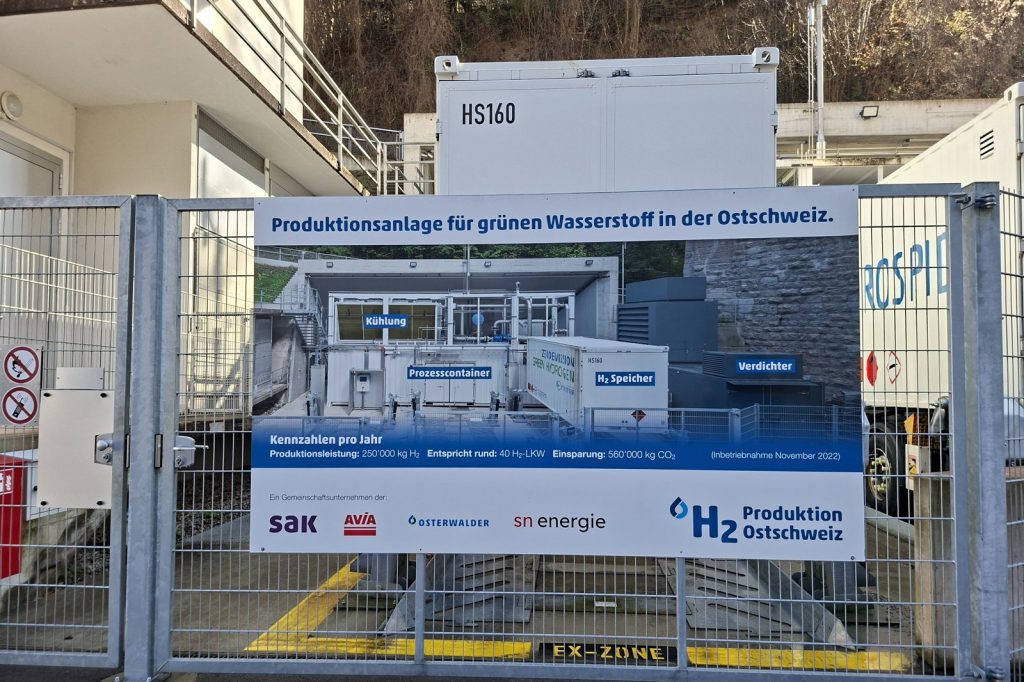
Then there is green hydrogen. The concept is elegant: use renewable electricity to split water via electrolysis, store the hydrogen, and later burn it in fuel cells or combustion turbines.
The U.S. Department of Energy launched the Hydrogen Shot in 2021, aiming to cut the cost of clean hydrogen to $1 per kilogram by 2031. That is an ambitious target, and the clock is ticking. The DOE also announced the Long Duration Storage Shot in 2021, targeting a 90 percent cost reduction for grid-scale storage by 2030.
Watch this space. If those cost targets are met, the storage landscape will look very different.
What the Numbers Mean for Grid Operators
The practical implication is that grid operators now have options. Pumped hydro works where geography allows. Lithium-ion works for short-duration frequency regulation and peak shaving.
Flow batteries and CAES fill the medium-duration gap. Hydrogen, if it reaches cost parity, could handle seasonal storage.
The U.S. Energy Information Administration’s data on the domestic battery buildout is striking. From 1.2 gigawatts in 2020 to 9.0 gigawatts in 2023 — that is a sevenfold increase in three years. That pace suggests the technology is crossing from early adoption into mainstream deployment.
The cost trajectory matters most. When lithium-ion packs cost $1,100 per kilowatt-hour in 2010, grid storage was a luxury.
At $137 per kilowatt-hour in 2020, it became a viable investment. If the DOE’s Long Duration Storage Shot succeeds, the economics of storage at scale will transform again.
Forward-Looking: The Storage Stack
The future likely involves a mix. No single storage technology solves every grid problem. Pumped hydro will remain the baseline for bulk energy.
Lithium-ion will handle fast-response needs. Flow batteries and CAES will cover multi-hour gaps.
Green hydrogen will sit in the background, waiting for its cost curve to bend. The Hydrogen Shot’s $1-per-kilogram target by 2031 is the marker to watch. If that number becomes reality, hydrogen storage could link renewable generation to power systems that need weeks of backup, not just hours.
The shift is real. Grid energy storage is moving from a supporting role to a starring one.
The numbers from 2020 through 2023 show the acceleration. The cost declines show the mechanism. The DOE’s shots — both Hydrogen and Long Duration — show the ambition.
What comes next is deployment at scale. Watch this space.




